Hey everyone, if you’ve ever been in the market for warehouse automation or industrial logistics gear, you’ve probably heard the term “hybrid robot” thrown around a lot lately. Let’s cut through the tech jargon right off the bat—today we’re talking about something pretty straightforward that I get asked weekly: how fast is a hybrid robot, really? As the founder of a small, busy hybrid robot supply company, I deal with this question almost every single day from warehouse managers, operations leads, even small manufacturing owners who’ve outgrown slow manual workflows and tired old fixed robots. Let’s break this down, no fancy lectures, just real, usable info that actually matters for your team. Hybrid Robot
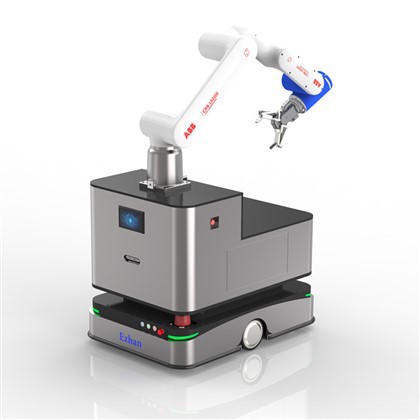
First off, let’s get on the same page about what a hybrid robot even is, because half the confusion around speed comes from mixing it up with other types of automation. A lot of folks see “hybrid” and think it’s just a regular automated guided vehicle (AGV) mashed with a robotic arm—but that’s only part of it. Our hybrid robots, and most of the ones you’ll actually want for real work, are mobile manipulators: they can drive around your facility and manipulate things (like picking boxes, moving pallets, loading conveyor belts) all in one single unit, no extra bulky gear. Unlike old fixed industrial robots that bolt down in one spot and only work within a tiny cubic foot, these things move, and that’s where their speed comes from—split into two separate, critical parts: driving speed, and manipulation (that’s the arm) speed.
That’s the first big myth I hear all the time: people treat “robot speed” like it’s a single number, like a car’s top speed. Nope. For hybrid mobile manipulators, you’ve got to look at both moving around the space and doing the actual task you bought it for. Let’s start with driving speed, because that’s the part most people ask about first.
If you look at basic specs from random companies, you’ll see numbers like 1.2 m/s, or 2 m/s, and that sounds fast—until you realize most facilities, especially warehouses with tight aisles, people walking around, and stuff stacked everywhere, don’t let robots hit that top speed. Wait, why? Safety, mostly. We test our hybrid robots to a maximum driving speed of ~1.8 m/s (that’s about 6.5 km/h, or 4 mph, for anyone who doesn’t use metric) on open, clear paths. But in practice, what we tell our customers is average driving speed is way lower—usually between 0.6 and 1.2 m/s, depending on your facility.
Let me explain that with a real example, something I talk through every time I demo our bots. If a robot’s path is wide open, no people, no pallet jacks, no stacked gear blocking the way? It can cruise at that 1.5–1.8 m/s no problem, which means it can cross a 50-meter warehouse aisle in about 30 seconds. But if it’s going through a tight picking aisle (we’re talking 1.2 m wide aisles, standard for a lot of mid-sized warehouses)? We set a slow, safe max speed of 0.3–0.5 m/s there—because if a worker steps out from behind a pallet, we need the robot to stop fast. That’s not a flaw, by the way. That’s why hybrid robots are better than old AGVs: they use 2D LiDAR and camera vision to read their surroundings in real time, so they slow down automatically for obstacles, no one has to program a speed for every inch of the floor.
Now the other part, the manipulation speed, is where a lot of companies lowball (or overhype) their specs, and that’s where the actual productivity happens. Like, sure, a robot can drive 2 m/s, but if its arm takes 10 seconds to pick up a 10kg box and move it to a conveyor, that driving speed is totally useless. Our hybrid robot arms have a max joint speed of around 120 degrees per second, and end effector (the gripper or suction cup, whatever we use for your specific task) speed of about 0.8 m/s. But again, like driving speed, that’s peak speed in open space. When a robot is picking a box from a shelf that’s only 10cm away from the shelf next to it, it slows down the arm to 0.2–0.4 m/s to avoid knocking over adjacent boxes. That’s a non-negotiable for most users—you don’t want a $50k robot smashing inventory, so we prioritize controlled speed over raw max speed every time.
Wait, but what about when you’re comparing to other automation? Like, how fast is a hybrid robot vs. a fixed robotic arm vs. a traditional AGV? That’s the question customers actually care about. Let’s do a quick, real-world comparison, no made-up stats: a fixed industrial arm (like the ones used for assembly lines) can move a part from start to finish in 2–3 seconds, but it’s bolted in one spot—you can’t move it to another part of the facility. A traditional AGV (the ones that just drive, no arm) might move a pallet in 2 minutes, but it has to wait for a fixed conveyor or a human to load it, so total cycle time is way longer. Our hybrid robot? For a standard order pick (grab 5 boxes from 3 different shelves in 2 aisles, drop them at a packing station), total cycle time is 4–6 minutes. That’s 3–4x faster than a person doing the same task, and you don’t have to pay overtime or give them breaks.
But here’s the thing I wish more people got: “speed” for a hybrid robot isn’t just how fast it moves or how fast its arm works—it’s cycle time. Cycle time is the total time it takes to complete a full task, from start to finish, and that’s the number that actually impacts your bottom line. A robot that’s fast in a straight line but gets stuck 10 times a day because it can’t navigate tight aisles, or crashes into pallets, isn’t actually fast at all. We had a customer last year who bought a cheap hybrid robot from a big box tech supplier that claimed a 2 m/s driving speed. When they deployed it, it kept triggering its safety stop every 2 minutes because the supplier didn’t calibrate its obstacle avoidance for their narrow aisles. Their average cycle time ended up being 12 minutes per pick, which was slower than their existing manual process. That’s a nightmare—don’t fall for the max speed numbers. They’re marketing fluff, basically.
What factors actually change a hybrid robot’s speed? Let’s list the ones we walk through with every customer, because it depends so much on your space and your tasks:
-
Facility layout: Tight aisles mean slower average driving speed. Open floors with clear paths mean faster. We recently deployed a unit for a 100,000 sq ft e-commerce warehouse with 1.8 m wide aisles—their average driving speed ended up being ~1.1 m/s, which was perfect for them. Another customer is a small parts manufacturing plant with 1.2 m aisles, so their average is ~0.4 m/s, but they only need short trips between the machine shop and the packaging area, so total cycle time is still better than manual.
-
Task type: If your work is just moving empty pallets from a loading dock to the storage area, the robot’s arm isn’t doing much, so driving speed is the main factor, and that’s way faster than if you’re picking small, fragile parts that need super slow, precise arm movement. We built custom end effectors for a medical device client that needed to pick tiny plastic components—their arm speed maxes out at 0.3 m/s, but that’s non-negotiable for not breaking parts.
-
Battery life: Wait, that’s a weird one, but it matters. If a robot’s battery is dying, it slows down automatically to save power—most good hybrid robots have a “slow mode” for low battery, and some even pause to charge, which adds to cycle time. Our models have a fast-charge feature that tops up 20% battery in 5 minutes, so that slowdown barely ever happens, but it’s still a factor.
-
Navigation system: If your robot uses old, outdated magnetic tape or wire guidance, it has to slow down a lot to stay on path. But our hybrid robots use SLAM (simultaneous localization and mapping) with LiDAR and visual odometry, so they’re building a map of your facility as they go, and they can adjust speed in real time without any extra infrastructure. That’s why their average speed is way more consistent than older types of automation.
Now, a common follow-up question: can you make a hybrid robot go faster? Yes, but only if it’s safe and makes sense for your use case. We don’t crank up max driving speed if you don’t need it, because safety is non-negotiable. But if your facility is wide open, no workers walking around during peak hours, you can ask us to calibrate the speed settings a little higher. We had a customer who uses their robots only overnight, when the warehouse is empty, so we bumped their max speed to 2 m/s, and their cycle time dropped by 30%—that’s a win. But if you crank up speed in a facility with foot traffic, you’re just asking for accidents, and those accidents will cost way more than any speed gain.
I also want to mention something we’ve learned from working with 50+ clients over the last 3 years: most people don’t need the fastest robot on the market. They need the right speed for their job. A big box retailer might care more about speed because they’re processing 10,000 orders a day, while a small local manufacturer with 10 employees might care more about consistent, reliable speed that doesn’t require constant maintenance. Our sweet spot is average cycle times between 4–8 minutes for standard tasks, which works for 80% of the clients we work with. The other 20% get custom calibration—we’ll adjust speed settings, tweak the arm’s movement, whatever fits their space.
Let’s wrap this up with what actually matters if you’re shopping for a hybrid robot, instead of chasing a random max speed number. First, ask for average cycle time for your specific task and facility, not the top speed from the spec sheet. Second, test the robot in your space if you can—we offer free 2-week trials, so you can see how it works in your aisles, around your pallets, doing your tasks. Third, don’t forget about safety features—those are what keep the robot moving at a usable speed, not pausing every 10 seconds because it can’t detect a worker.

If you’re looking to upgrade your automation, and you want a hybrid robot that’s actually fast for your needs, not just marketing claims, hit us up to chat through your workflow. We can walk through different options, test a unit in your facility, and figure out the right speed (and setup) that makes sense for your team. Don’t get stuck on vague max speed numbers—focus on what the robot will actually do for you, day in and day out.
Robot Accessories References
- International Organization for Standardization (ISO 10218-1:2011), Robots and robotic devices — Safety requirements for industrial robots — Part 1: Robots
- Industrial Robot Journal (2022), “Mobile Manipulator Performance Metrics for Warehouse Automation”
- Association for Advancing Automation (A3), 2023 Report on Mobile Robot Speed and Productivity in Industrial Settings
Shenzhen Ezhan Technology Co., Ltd.
We’re known as one of the most reliable hybrid robot manufacturers and suppliers in China. With abundant experience, we warmly welcome you to buy bulk customized hybrid robot from our factory. If you have any enquiry about cooperation, please feel free to email us.
Address: Room 1808, 1809, 1810, Building 2, Aipark, Baolong 4th Road, Longgang District, Shenzhen City
E-mail: sales01@ezhankeji.com
WebSite: https://www.ezhanrobot.com/
