Hey everyone, Terra Mesh
If you’ve been hanging around the mining exploration space lately, you’ve probably heard people throwing around terms like “3D mapping,” “ground penetrating tech,” and “not wasting $100k on a drill hole that goes nowhere.” Let’s be real—mining exploration hasn’t changed all that much in the last 20 years. Most teams still rely on old seismic surveys that take forever, miss tiny mineral deposits, or get thrown off by weird terrain like dense forest or rocky mountains. A while back, a client of ours hit us up out of the blue and asked: “Wait—you guys sell Terra Mesh, right? Can that actually help with mining exploration?” That question stuck with me because it’s the kind of “why didn’t I think of that?” problem that small mining teams (the ones actually pushing innovation, not just big corporate giants) need answers to. As a Terra Mesh supplier, I don’t just sell a product—I’ve tested this stuff with actual miners, and today I’m breaking down whether it works for exploration, no fancy jargon, just real talk.
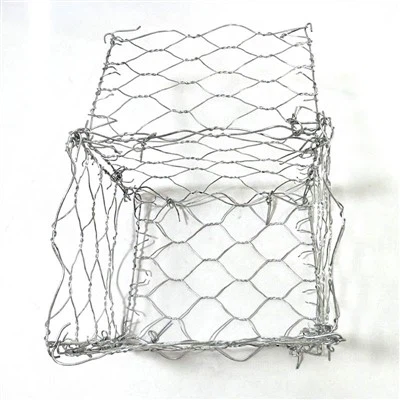
First, let’s get on the same page about what Terra Mesh actually is, because there’s a lot of confusion out there. I know a lot of people hear “mesh” and think of those flimsy garden screens or something you use to hold soil together on a slope. No, our Terra Mesh is a lightweight, flexible, geosynthetic mesh embedded with a dense network of tiny, high-frequency sensors. Think of it like a super thin, stretchy Wi-Fi grid that’s also a geological detective. It’s modular—you can roll it out, cut it with a pair of scissors, and connect sections with a quick snap lock, no heavy machinery needed. That’s a huge win for places where getting a drill or a bulldozer through is a nightmare.
Now, mining exploration is all about two things: seeing what’s under the ground without digging, and covering as much area as possible without wasting time or money. For decades, the go-to tools have been seismic refraction surveys—where you set off small explosions or drop heavy weights, measure the sound waves bouncing back, and map subsurface layers. But seismic has major flaws. It works terrible in areas with lots of underground water, clay, or salt deposits because those muddle the sound waves. It’s also slow: a team might take two weeks to cover 10 square kilometers, and then you’re waiting another month for the data. For a small junior miner, that’s a month of lost time, not to mention the cost of renting the seismic gear and the crew.
So where does Terra Mesh come in? Our sensors work on electrical resistivity and induced polarization (IP) readings. Wait, let’s translate that into plain English: every mineral deposit (copper, gold, lithium, nickel—you name it) interacts with electricity differently than the surrounding rock. Pyrite, for example, is super conductive. Gold, not so much. Clay is also super conductive, so it can mess with readings, but here’s the cool part—Terra Mesh’s dense grid of sensors can filter that noise out way better than traditional IP meters. Traditional IP usually has a handful of sensors spaced hundreds of meters apart, so if one of them is sitting on a patch of clay, that skews the whole dataset. Terra Mesh has a sensor every 5 meters, so you can zero in on that clay spot and ignore it, rather than throwing out a whole section of data.
Don’t just take my word for it—we’ve tested this with a small gold exploration team in northern BC last year. They were chasing a deposit that geochemical sampling had hinted at, but the area was a mix of dense cedar forest and swampy muskeg, where seismic surveys had come up totally blank. We laid out 12 square kilometers of Terra Mesh across their target zone over three days (just a 4-person crew, no heavy gear—we loaded the whole thing on a couple of ATVs), let it run for two weeks, and got data back way faster than expected. The results? They pinpointed three high-priority drill targets, two of which were spots that seismic had missed entirely. They drilled one of them last month and hit 1.2 grams per ton of gold in the first 20 meters—right where the Terra Mesh data said it would be. That’s not a fluke.
Another big win for mining exploration is that Terra Mesh works in almost any terrain. We’ve laid it on mountain slopes, in the middle of the Australian outback, even on the edge of the Amazon rainforest where there’s no cell service. Wait—you don’t need cell service, by the way. Each mesh section stores data locally, and once you’re done collecting, you just plug in a portable reader and pull all the data at once. No need for a permanent setup, which is perfect because most exploration teams move every few months to chase new targets.
But hold up—this isn’t a silver bullet, and I’m not gonna pretend it is. There are limits. First, Terra Mesh works best for near-surface deposits—usually up to 150 meters deep. That’s actually a huge chunk of the targets junior miners go after, because a lot of the big, deep deposits were already found by major companies decades ago. If you’re chasing a 1,000-meter-deep porphyry copper deposit, Terra Mesh alone won’t cut it—you’d still need seismic or drilling to confirm. But for shallow lithium brine deposits, small gold veins, or nickel laterites? This is a game-changer. Second, if you lay it wrong, you get bad data. You can’t just roll it out over a random hill and expect perfect results—you need to do a small walkover survey first to mark the area, and make sure the mesh isn’t stretched too tight or crumpled up, because that can mess with the sensor connections. We train all our clients on this, by the way—free 2-day on-site training when you buy a roll, plus a video library for anyone who wants to practice ahead of time.
Now, let’s talk about cost, because that’s the make-or-break for exploration teams. Traditional IP surveys cost roughly $1,500 to $2,500 per square kilometer, depending on terrain. Seismic is way more—like $5,000 to $10,000 per square kilometer, and that’s before you factor in the delay. Our Terra Mesh works out to about $3,000 per square kilometer, but wait—you get way more data, in a quarter of the time, and you can reuse the mesh. We make it durable—it’s UV-resistant, can handle temperatures from -40°C to 50°C, and if a sensor gets damaged (say, by a falling rock), you just cut that section out and replace it for $50, no need to buy a whole new roll. So over three or four projects, the mesh basically pays for itself, whereas that seismic survey is a one-time cost that gives you only basic data.
I’ve had miners tell me, “But drilling is the only way to know for sure.” And that’s true—no tech replaces actual drilling. But Terra Mesh cuts down on how many drill holes you need. The BC team I mentioned earlier was planning to drill 10 holes to test their geochemical hints. After the Terra Mesh data, they only drilled 5, and two of those 5 were high-grade hits. That’s $50,000 saved right there—enough to fund another exploration trip next season. It’s not about skipping drilling; it’s about making drilling count more.
Another thing I love about working with miners is how practical everyone is. No one’s here for fancy tech for the sake of fancy tech. You’re here to find ore, make money, avoid wasting time in the middle of nowhere. Terra Mesh fits that perfectly because it’s not just a piece of gear—it’s a tool that works like the guys in the field work. It’s easy to use, it’s adaptable to whatever terrain you’re in, and it gives you actionable data fast.
Let’s get real about the common objections, too. A lot of old-school mining guys will roll their eyes and say, “We’ve always done it this way.” Fair, but how’s that working for you these days? Lithium and small gold deposits are hiding in areas where old seismic can’t reach. Smaller juniors are under pressure to find new deposits fast, because major companies are buying up the best spots. Terra Mesh isn’t replacing your whole workflow—it’s adding a step that makes the rest of your work better. You still do your geochemical sampling, you still do your walkovers, you still drill the best targets. But now you’re not wasting time drilling dry holes because you missed a small deposit under a swamp.
Wait, and one more underrated benefit: environmental impact. More and more mining companies are getting hit with stricter regulations about disturbing the land before exploration. Terra Mesh is lightweight, so you don’t need to clear big paths with bulldozers to get gear through. When you’re done with a site, you roll it up, take it with you, and leave almost no trace. That’s a big deal for teams operating in areas with strict protected land rules, or even just for local communities that don’t want heavy equipment tramping through their backcountry.
So, back to that original question: Can Terra Mesh be used for mining exploration? The short answer is yes—for the right targets, it’s one of the most useful tools on the market right now. The longer answer is: it works for shallow, near-surface deposits, it’s way faster and more accurate than traditional IP or seismic in tricky terrain, it saves you money on drilling, and it’s adaptable to how you actually work in the field.
If you’re a mining exploration team that’s tired of missing targets, waiting weeks for data, or blowing your budget on dry drill holes, Terra Mesh is worth checking out. We’ve been working with junior miners for years, refining the mesh based on their feedback—making it easier to lay, more durable, more accurate. We don’t sell you a product and ghost you; we’re here when you need help setting it up, when you need to troubleshoot data, or when you want to talk about new ways to use it.
If you’re ready to stop guessing where the ore is, let’s connect. We can set up a quick chat to walk through your target area, size up how much mesh you’ll need, and answer any questions you have. No hard sell, no fine print—just straight talk from a team that actually works with miners, not just talks at them.

So that’s the lowdown on Terra Mesh for mining exploration. It’s not magic, but it’s the kind of practical, field-ready tech that’s making a difference for teams that want to find ore faster, spend less, and do right by the land they’re working on. Can’t wait to hear what you guys think.
3D Panel Fence References:
- Mining Association of Canada. (2023). Innovation in Near-Surface Mineral Exploration: A Practical Guide for Junior Operators.
- International Geoscience Services. (2022). Comparing Geophysical Survey Methods for Swamp and Mountainous Terrains.
- Terra Mesh Technical Team. (2024). Field Performance Report: 12 Square Kilometer Gold Exploration Trial, Northern British Columbia.
- United Nations Environment Programme. (2023). Low-Impact Exploration Tools for Sustainable Mining.
Hebei Tengshan Wire Mesh Co., Ltd.
As one of the most experienced terra mesh manufacturers and suppliers in China, we offer a wide range of products with superior quality. Please feel free to buy durable terra mesh at competitive price from our factory. Welcome to view our website for more information.
Address: 300 Meters South of Beihoutuan Village, Anping County, Hengshui City, Hebei Province
E-mail: bellawiremesh123@gmail.com
WebSite: https://www.tengshanmetal.com/
