If you’ve ever walked through a building’s basement utility room, stared up at the crisscrossing network of wires snaking through ceiling conduits, or stood in the middle of a commercial kitchen during a busy dinner service, you’ve probably seen fire-resistant cables and never realized it. I’m the owner of a fire-resistant cable supply company, and for the better part of 12 years, I’ve spent my days talking to electricians, building engineers, and even fire marshals who ask the same question over and over: “What’s the actual breaking strength of these things?” Fire-resistant Cable

It’s a fair question. When you’re wiring a 20-story office tower, a hospital’s critical care wing, or a municipal power substation, breaking strength isn’t just a number on a spec sheet—it’s the difference between a fire that is contained to a single floor and one that disables life-saving equipment. Too many people confuse fire resistance with general durability, like thinking a fire hose is tough enough to tow a truck. They’re not. Fire-resistant cables have two separate jobs: they need to carry power or data when surrounded by flames, and they need to hold together long enough for first responders to do their job, even when pulled, twisted, or jostled.
Let’s break this down like I do for every new client who walks through my door. First, we have to define what “breaking strength” actually means in the context of fire-resistant cables, because it’s not the same as the breaking strength of a standard copper wire. A typical 14-gauge household wire has a tensile breaking strength of around 50 to 60 pounds, give or take. That means you can hang a 50-pound weight on it and it will snap. But fire-resistant cables? They’re built entirely different, because their primary requirement isn’t just to hold weight—it’s to hold integrity when their insulation is melting, when they’re being stretched by falling debris, or when firefighters are yanking them out of a wall to cut power during a rescue.
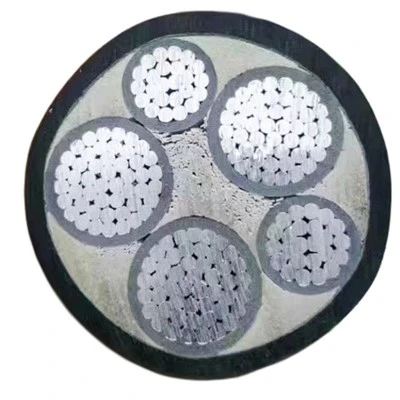
The core of a fire-resistant cable is usually a stranded copper conductor, wrapped in layers of insulation and a fire barrier. The most common fire barrier material is mica, a mineral that’s heat-resistant up to 1,500 degrees Fahrenheit, and it doesn’t burn, melt, or crumble when exposed to flame. Around that mica, we add a jacket that’s usually cross-linked polyethylene (XLPE) or a silicone compound, which adds mechanical strength. Now, when we test breaking strength, we’re measuring two things: tensile breaking strength (the amount of pull force required to snap the conductor or cable jacket) and transverse breaking strength (the amount of force required to crush or slice through the cable).
For standard commercial fire-resistant cables used in office buildings and retail spaces, the tensile breaking strength is tested at a minimum of 1,000 pounds per square inch (PSI) for the conductor, and 200 pounds of pull force for the assembled cable. Wait, that sounds high, right? Let’s put that in perspective. A 200-pound pull is like having two full-grown adults hanging off a 10-foot length of cable. Why so high? Because during a fire, a lot of cables get stretched. When a wall collapses, the cable running through it might be pulled taut by the weight of debris, or a firefighter might need to yank a cable loose to turn off a power source without getting burned. If the cable snaps during that, you lose power to elevators, emergency lighting, or fire alarm systems—things people rely on to get out safely.
But here’s the part that most people don’t tell you: breaking strength isn’t a fixed number. It depends entirely on the type of cable, the environment it’s going into, and the standards it’s certified to. If you’re wiring a hospital’s intensive care unit, you need a higher breaking strength than if you’re wiring a small retail store. Hospital fire-resistant cables, often referred to as “essential electrical systems” (EES) cables, have a tensile breaking strength of at least 1,500 PSI for the conductor and a minimum pull strength of 300 pounds. That’s a big jump, and it’s not just a marketing gimmick. The reason is simple: hospitals have critical equipment that can’t go out for even a few seconds during a fire—ventilators, cardiac monitors, life support systems. If a cable snaps, lives are at stake.
Then there are the more specialized applications, like fire-resistant cables used in power plants or subways. For those, we test breaking strength at a minimum of 2,000 PSI for the conductor and 500 pounds of pull force. Why? Those environments have extreme heat, heavy equipment moving nearby, and the risk of falling debris from explosions or structural damage. I had a client a few years back who runs a coal-fired power plant. He told me that during a minor equipment failure a few years prior, a fire broke out in the turbine room. The standard cables they used back then snapped when a technician tried to pull them loose, leaving the plant without power for 20 minutes—enough to shut down a critical cooling system and create a near-disaster. Since then, he’s been using our high-breaking-strength fire-resistant cables, and he said during a smaller fire last year, those cables pulled loose without snapping, and power was restored in 90 seconds. That’s the kind of real-world result that makes the number on the spec sheet matter.
But breaking strength doesn’t just apply to pulling force. There’s also what’s called compressive breaking strength—how much force it takes to crush a cable. A lot of people don’t think about this, but during a fire, a ceiling tile could fall, a wall stud could shift, or a piece of equipment could be pushed against a cable. For standard fire-resistant cables, the compressive breaking strength is tested at 1,000 pounds per square inch—meaning you can put 1,000 pounds of pressure on a 1-square-inch section of the cable and it won’t crush. For specialized industrial cables, that number jumps to 2,500 PSI. I once had a construction engineer call me panicking because he had a cable run through a parking garage that’s used for heavy vehicle traffic. He was worried that a truck driving over the cable would crush it during a fire. We used our industrial-grade fire-resistant cables, which have a steel-reinforced core, and their compressive breaking strength is 3,000 PSI—enough to hold the weight of a 10,000-pound truck driving over them. That’s the kind of detail that separates a good cable from a great one.
Now, I know what you’re thinking: “This all sounds impressive, but how do I know the numbers aren’t just made up?” That’s a valid concern, and it’s why all our fire-resistant cables are tested to international standards—specifically IEC 60331, UL 2196, and CSA C22.2 No. 140. Those aren’t random tests. IEC 60331, for example, requires that cables hold integrity and breaking strength when exposed to 950 degrees Celsius (1,742 degrees Fahrenheit) for 90 minutes, while being pulled with a 200-pound force. UL 2196 tests for three hours of fire exposure, plus pulling force and mechanical stress. If a cable doesn’t pass those tests, it doesn’t leave our warehouse period. I’ve seen too many cut-rate cables that claim to be fire-resistant, but when you pull them, the mica layer falls apart, or the conductor snaps at way less than the rated strength. That’s not just bad business—it’s dangerous.
Last year, I worked with a fire marshal in Chicago who showed me a case study of a commercial building fire where a cut-rate fire-resistant cable snapped during the blaze. The building was only partially evacuated because the fire alarm system lost power. The fire spread to three floors, and two people were injured because the emergency lighting didn’t work. When they tested the cable, it turned out the breaking strength was less than 50 pounds—way below even the minimum standard. That’s why I’m so passionate about this: these numbers aren’t just specs, they’re safety.
Now, let’s talk about what happens when a cable exceeds its breaking strength during a fire. It’s not just that the cable snaps—when the conductor snaps, it can create an arc, which can ignite nearby materials, making the fire worse. It can also disable all the emergency systems, trapping people inside. I’ve had electricians tell me stories of being on job sites where they used a cheap cable because it was $0.05 cheaper per foot, and a month later, they were on a call to fix a snapped cable that failed a building inspection. That $0.05 difference ended up costing them thousands in rework, not to mention putting the building’s occupants at risk.
So, what should you be looking for when you’re choosing a fire-resistant cable? First, forget the hype. Look for the certified breaking strength numbers, and match them to your application. If it’s a small office, 200-pound pull strength is enough. If it’s a hospital, go for 300 pounds. If it’s an industrial site, 500 pounds minimum. And don’t forget about the compressive strength—make sure the cable can hold up to the environment it’s going into.
I’ve been in this business long enough to know that trust is everything. Building engineers, electricians, and property managers don’t just buy cables—they buy peace of mind. When a fire breaks out, you don’t want to be the person who checked the spec sheet and realized the breaking strength was too low. You want to know that the cable holding your emergency lighting, your fire alarms, your life support systems, is going to hold up when it matters most.
If you’re working on a project right now, and you’re not sure what breaking strength you need, or if you have questions about the testing standards, I’m here to help. I’ve walked through job sites, sat in on fire marshal meetings, and talked to hundreds of clients about their specific needs. This isn’t a one-size-fits-all industry, and the right cable for your project isn’t just the cheapest one—it’s the one that meets your breaking strength requirements, fits your application, and has the certification to back it up.
If you’re ready to discuss your fire-resistant cable needs, or just have questions about breaking strength, feel free to reach out. We can walk through your project, review the specs, and make sure you get exactly what you need to keep people safe when it counts.
Aluminum Core Cable References:
IEC 60331: Test for electric cables under fire conditions – Circuit integrity
UL 2196: Standard for Safety for Fire-Resistant Cables
CSA C22.2 No. 140: Fire-Resistant Power, Control, and Communications Cables for Use in Industrial Installations
National Fire Protection Association (NFPA) 70: National Electrical Code, Article 725 (Fire Resilient Cables)
Hebei Fengbo Electrical Equipment Co., Ltd.
As one of the most professional fire-resistant cable manufacturers and suppliers in China, we warmly welcome you to wholesale durable fire-resistant cable for sale here and get quotation from our factory. All custom made cables are with high quality and competitive price. Also, OEM service is available.
Address: No.100 meters south, East Ring Road & Wei’er Road intersection, Huang’erying East Village, Jiajiakou Town, Ningjin County, Xingtai City, Hebei Province, China
E-mail: fonbocable@gmail.com
WebSite: https://www.fonbocable.com/
