When dealing with industrial components such as stainless – steel rollers, one frequently asked question is whether these rollers have a smooth or rough surface. As a stainless – steel roller supplier, I’ve encountered this query in numerous client conversations, and it’s a topic that warrants in – depth exploration. Stainless Steel Roller
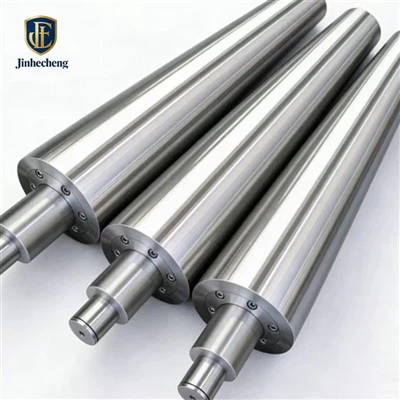
Let’s first understand the production process of stainless – steel rollers. The process begins with the selection of high – grade stainless – steel materials. These materials are chosen for their excellent corrosion resistance, high strength, and aesthetic appeal. Once the raw material is selected, it goes through a series of machining steps. Initially, the stainless steel is cut to the appropriate size and shape, followed by rough turning on a lathe. This step gives the roller its general cylindrical form.
After rough turning, the decision of surface finish is made. For a smooth – surfaced stainless – steel roller, the next step is usually a fine – turning process. This involves using sharp cutting tools and precise machining settings to reduce the surface roughness. Subsequently, a grinding process may be employed. Grinding uses abrasive wheels to further refine the surface, removing any small irregularities left after turning. The smoothness achieved can be extremely high, with surface roughness values reaching as low as a few micrometers. This is often measured using a profilometer, a device that scans the surface and provides a detailed profile of its roughness.
On the other hand, creating a rough – surfaced stainless – steel roller is a deliberate process. After the initial turning, additional processes are used to introduce texture. One common method is shot – blasting. In shot – blasting, small metal or ceramic particles are propelled at high speed onto the roller surface. These particles impact the surface, creating pits and bumps, which result in a rough texture. Another approach is knurling. Knurling uses a special tool with a patterned wheel that presses into the surface of the roller, creating a regular pattern of ridges and grooves.
Now, let’s discuss the applications where smooth and rough surfaces are preferred.
Smooth – surfaced stainless – steel rollers are ideal for applications where precision and cleanliness are critical. In the food and beverage industry, these rollers are used in conveyor systems. The smooth surface ensures that food products can move smoothly along the conveyor without getting caught or damaged. Moreover, the smooth surface is easy to clean, which is essential for maintaining high – hygiene standards. The pharmaceutical industry also benefits from smooth rollers. In tablet – pressing machines, for example, smooth rollers are used to ensure that the tablets are formed evenly and without any marks that could affect their quality.
In the printing industry, smooth – surfaced rollers play a vital role in transferring ink evenly onto paper. The smooth surface allows for a consistent ink film thickness, resulting in high – quality printed products. In addition, smooth rollers are used in the manufacturing of thin films and ribbons. They help in the production of uniform – thickness materials by applying pressure evenly across the surface.
Rough – surfaced stainless – steel rollers, however, find their applications in areas where grip and traction are required. In the textile industry, rough – surfaced rollers are used in spinning and weaving machines. The rough surface helps in gripping the yarn and preventing it from slipping during the manufacturing process. This is crucial for maintaining the correct tension and ensuring the quality of the final textile product.
In the construction industry, rough rollers are used in asphalt paving machines. The rough surface provides better traction on the asphalt, allowing the machine to move smoothly and evenly distribute the asphalt. Additionally, in wood – processing plants, rough – surfaced rollers are used to transport wooden boards. The texture provides enough grip to move the heavy boards without causing slippage, which can lead to misalignments and damage.
From a cost perspective, smooth – surfaced stainless – steel rollers generally cost more to produce. The fine – turning and grinding processes are time – consuming and require high – precision machinery and skilled operators. The materials used for achieving a smooth finish also tend to be of higher quality. In contrast, rough – surfaced rollers can be made relatively quickly and with less – expensive machining processes such as shot – blasting or knurling.
However, the cost difference doesn’t always mean that one type is superior to the other. It depends entirely on the specific requirements of the application. For instance, in a high – volume food production line, the cost of smooth rollers is justified by the improvement in product quality and the ease of maintenance. In a less – precise application like simple material handling in a warehouse, rough – surfaced rollers would be a more cost – effective choice.
The choice between smooth and rough – surfaced stainless – steel rollers also depends on the environmental conditions. Smooth – surfaced rollers are more suitable for clean and controlled environments. They are less likely to accumulate dirt and debris, which can be a problem in industries such as electronics manufacturing. In a dirty or dusty environment, a rough – surfaced roller may be better as the surface texture can help to channel and disperse the dirt, preventing it from building up and affecting the roller’s performance.
Moreover, the chemical environment also plays a role. In acidic or alkaline environments, the smooth surface of a stainless – steel roller can be more resistant to corrosion. The uniform surface is less likely to have areas where corrosive agents can accumulate. However, in some cases, a rough – surfaced roller may be treated with special coatings to enhance its corrosion resistance.
As a stainless – steel roller supplier, I work closely with clients to understand their specific needs. I take into account the application requirements, environmental conditions, and budget constraints. I offer a wide range of stainless – steel rollers, from ultra – smooth ones for high – precision applications to rough – textured ones for heavy – duty and traction – intensive tasks.
If you’re in need of stainless – steel rollers, whether it’s for a start – up project or an upgrade to your existing equipment, I encourage you to reach out for a discussion. We can explore together which type of surface finish would be most suitable for your specific situation. Our team of experts is ready to assist you in making the right choice, ensuring that you get the best – performing stainless – steel rollers for your investment.

In conclusion, both smooth and rough – surfaced stainless – steel rollers have their unique advantages and applications. Understanding these differences is crucial for making informed decisions in industrial operations. If you have any questions or are interested in purchasing stainless – steel rollers, don’t hesitate to contact us for further details and to start a procurement discussion.
Chrome Plated Rollers References
- ASM Handbook Volume 7: Powder Metal Technologies and Applications
- Machinery’s Handbook, 31st Edition
- Industrial Roller Design and Application Guide
Qingdao Jinhecheng Machinery Co., Ltd.
Qingdao Jinhecheng Machinery Co., Ltd. is one of the most professional stainless steel roller manufacturers and suppliers in China, featured by quality products and low price. Please rest assured to buy discount stainless steel roller made in China here from our factory. Customized orders are welcome.
Address: Aishan Industrial Park, Yanghe Town, Jiaozhou, Qingdao City, Shandong Province
E-mail: alice@jhcroller.com
WebSite: https://www.jhcroller.com/
