If you’ve ever stood inside a busy warehouse yard or a construction supply lot, you’ve probably seen big lift machines moving around, but you might not have stopped to tell them apart. As a warehouse forklift supplier, I get this question all the time: what’s the real difference between a warehouse forklift and a telehandler? It’s not just about the shape of the mast or the arm sticking out—there’s a ton of practical stuff that matters a lot, especially if you’re trying to pick the right machine for your daily work. Warehouse Forklift
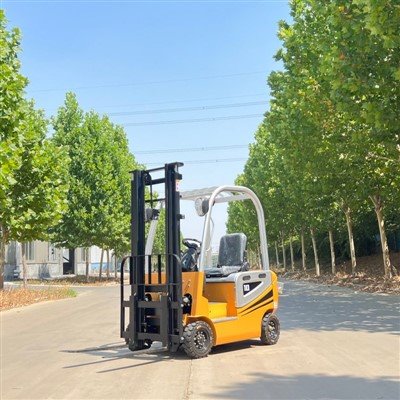
Let’s start with the basics, because that’s where most people mess up. A warehouse forklift (we often just say “forklift” around the shop, no need for the fancy full name unless we’re talking official specs) is built for tight, flat, indoor spaces. Think retail storage warehouses, food distribution centers, or small manufacturing bays. Its main job is to lift pallets straight up and down, then slide the forks under those pallets to move ’em around. No weird angles, no reaching over obstacles—just straight, predictable vertical movement. Telehandlers? Those are the ones with that long, adjustable arm (it’s called a boom, but we say “arm” more casually) that can extend forward, up, or even sideways. They’re made for outdoor jobs, mostly: construction sites, lumber yards, farm equipment storage, places where the ground isn’t perfectly smooth and you need to reach over stuff like piles of bricks or trailer sides.
Now let’s dive into the physical stuff, because that’s what you’ll notice first when you see both. A standard warehouse forklift has a compact, boxy frame, usually 4 to 6 feet wide, with solid rubber tires (sometimes air-filled, but mostly solid for rough warehouse concrete). The mast—the tall vertical part holding the forks—only moves vertically, and its maximum lift height tops out around 20 feet for most models. Why? Because warehouse ceilings are rarely higher than that, and you don’t want a huge mast taking up extra space when you’re trying to squeeze between storage racks. Telehandlers, on the other hand, have a longer, lighter frame, usually 8 to 10 feet wide, with big, air-filled knobby tires that grip uneven dirt or gravel way better. Their boom is hydraulic, so it can stretch 30 to 55 feet out, plus tilt up and down to reach stuff on upper floors of a building or load heavy lumber onto a flatbed truck that’s 10 feet high. That’s a total game-changer for outdoor work—you can’t do that with a warehouse forklift, no matter how hard you try.
Wait, here’s a big one: load handling. A warehouse forklift’s forks are fixed at the end of that vertical mast, so they only carry pallets or flat, skid-based loads. The maximum load capacity is usually 5,000 to 12,000 pounds, perfect for moving pallets of soda, boxes of clothes, or raw materials inside a warehouse. If you try to stick a pallet of bricks on a warehouse forklift and take it outside, the solid tires will slip on loose dirt, and the short mast can’t reach over a trailer’s side without tipping. Telehandlers aren’t just for pallets, either. You can swap attachments: put a bucket on the end and move gravel, a fork extension and pick up long pipes, even a basket and lift a worker up to fix a warehouse’s outdoor sign. Their load capacity is higher too—some models can lift up to 15,000 pounds, but because the boom is so long, the maximum safe lift for far-out loads is lower, like 4,000 pounds, to keep it from tipping. That’s the tradeoff: warehouse forklifts are stable for short, close-up loads, telehandlers sacrifice a bit of stability for reach and versatility.
Now, let’s talk about the spaces each machine works in, because that’s where their real limits show. I’ve had customers come in confused because they bought a telehandler thinking it would work inside their small warehouse, and it got stuck between the racks. Telehandlers are too big and too heavy for tight indoor spaces—their long boom gets in the way of overhead beams, and their frame won’t fit down aisles that are only 8 feet wide. Warehouse forklifts, though, are made for those exact aisles. The turning radius is way smaller—like 5 feet, so you can spin around a 10-foot aisle without hitting the racks. The ground has to be flat, though: if a warehouse has a sloped floor (rare, but some old ones do), a forklift might tip. Telehandlers, while good on uneven ground, can handle slopes up to 15 degrees, but they’re way too big for indoor use.
Durability and maintenance? That’s something every fleet manager cares about. Warehouse forklifts run on either electric or diesel. Electric models are super quiet, no exhaust fumes, perfect for indoor spaces where you don’t want fumes building up. They need less maintenance, too—no fuel filters, no engine tune-ups, just battery checks and tire changes. Diesel forklifts are a bit more powerful for heavy loads, but still indoor-friendly. Telehandlers, almost all diesel because they’re for outdoor work, have bigger engines, hydraulic systems for the boom, and extra parts for the big tires and frame. That means more maintenance: oil changes, hydraulic fluid checks, tire rotations, and if the boom gets damaged, it’s way more expensive to fix than a warehouse forklift mast. Also, telehandlers have way more moving parts, so there’s more that can break if you don’t take care of ’em.
Here’s a common myth I hear all the time: “I can use a telehandler instead of a forklift and save money.” Yeah, no. Let’s say you’re a small warehouse that needs to move pallets 50 feet apart and stack ’em 15 feet high. A telehandler would do that, but you’re paying way more for a machine that’s too big for your aisles, uses more diesel, and has higher insurance because it’s a bigger, heavier vehicle. A warehouse forklift is cheaper to buy, cheaper to run, and does the exact job you need every day. On the flip side, if you’re a construction company that needs to move lumber to the top of a 2-story building, a warehouse forklift won’t reach that height, and its tires can’t handle the dirt lot. Telehandler is your only choice there.
Another big difference: operator training. Both need certification, but telehandler training is way more detailed. Operators have to learn how the boom’s extension changes the machine’s balance—if you stretch the boom out 40 feet, you can’t lift half the weight you can when it’s tucked in. Forklift operators only need to learn how to move the forks, adjust the mast, and handle pallets, since the load is always close to the machine’s center. That means easier to find trained forklift drivers, which is a huge plus for small businesses that don’t have a big HR team.
From a supplier’s perspective, I see this every day: customers come in with a list of jobs, and they often mix up which machine fits. Last month, a guy from a small construction yard asked for a forklift to move pallets of lumber. I asked him where he was moving ’em, and he said he needed to stack ’em on a 3rd-floor deck of a new house. A forklift would only get him to 20 feet, and the deck was at 28. We sold him a telehandler instead. Last week, a woman from a retail warehouse came in saying she needed a telehandler because she thought it was “stronger for pallets.” I explained that a warehouse forklift is more than enough for her 8,000-pound pallets, and a telehandler would be overkill for her tight aisles. That’s the kind of call that matters—getting the right machine saves your money on fuel, maintenance, and downtime.
Let’s break down the key differences in a quick, easy to remember way: Use a warehouse forklift if you work indoors, on flat concrete, moving pallets short distances, lifting up to 20 feet, and need a compact, easy to operate machine. Use a telehandler if you work outdoors, on uneven ground, need to reach high places or move long loads, and don’t care about squeezing between tight spaces.
At the end of the day, it all comes down to your specific needs. If you’re running a warehouse, a warehouse forklift is built for that exact job—we design and build ours to handle daily warehouse wear, fit your storage aisles, and keep your team safe. If you’re working outside, a telehandler’s reach and versatility can’t be beat. But don’t fall for the “one machine does all” hype—using the wrong one will cost you more in repairs, fuel, and downtime than just getting the right machine in the first place.
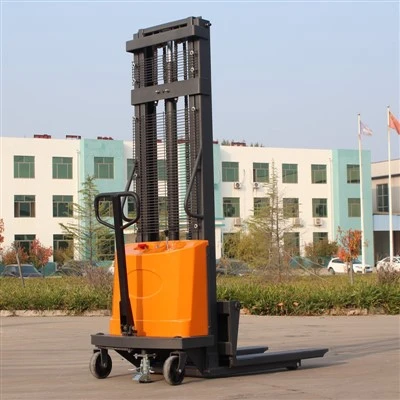
If you’re not sure which machine fits your daily operations, feel free to reach out to talk through your needs—we’ve helped all kinds of businesses pick the right lift equipment over the years, and we’re here to answer any questions you have.
Diesel Forklift References:
- OSHA. (2023). Forklift Safety Standards. Occupational Safety and Health Administration.
- Industrial Truck Association. (2022). Forklift vs. Telehandler: Key Performance Differences. ITA Technical Report.
- Construction Equipment Association. (2021). Telehandler Specifications for Industrial and Outdoor Applications. CEA Industry Guide.
- Warehouse Education and Research Council. (2022). Compact Lift Equipment for Indoor Warehouse Operations. WERC Best Practices.
- National Agri-Marketing Association. (2023). Agricultural Lift Machine Use: Telehandler vs. Forklift. NAMA Farm Equipment Report.
Qingdao Dawnshine Heavy Industry Co., Ltd.
As one of the most professional warehouse forklift manufacturers and suppliers in China, we have world-leading production equipment and strong manufacturing capabilities. Welcome to wholesale discount warehouse forklift in stock here and get quotation from our factory. For price consultation, contact us.
Address: South Side of Qiwang Road, Yueshan Village, Naoshan Economic Development Zone, Qingzhou City, Shandong Province, China
E-mail: laven.wang@china-dawnshine.com
WebSite: https://www.ds-forklift.com/
