If you’re in the industrial electrical space, you’ve likely encountered the MNS switch cubicle—one of the most widely used low-voltage (LV) distribution systems for factories, commercial buildings, and large-scale infrastructure. For years, customers have come to me as an MNS switch cubicle supplier asking the same question: “Is this cubicle compatible with single-phase power?” It’s a fair question, too, because single-phase power is often the default for smaller auxiliary loads, and many operators assume their existing distribution gear needs to support both three-phase (the core for heavy machinery) and single-phase (for lighting, office equipment, or small motors). The answer isn’t a simple yes or no, so let’s break down the science, design, and real-world applications that make or break MNS switch cubicle compatibility with single-phase power. MNS Switch Cubicle
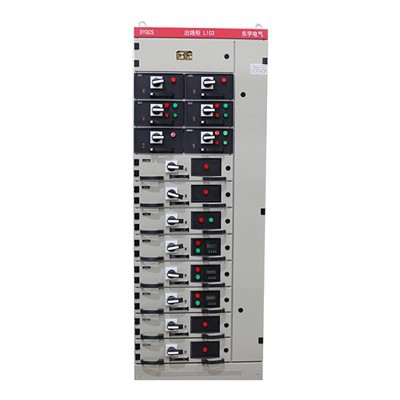
First, let’s ground ourselves in what an MNS switch cubicle actually is. Designed by ABB in the 1980s as a modular, withdrawable LV distribution system, MNS cubicles are built to house circuit breakers, contactors, busbars, and protection relays in a compact, configurable frame. Their core design is centered on three-phase power—after all, 90% of industrial heavy loads run on three-phase, which delivers more power per wire and is more energy-efficient for large motors. That core design starts with the main busbars: MNS cubicles typically have three parallel main busbars (Phase A, Phase B, Phase C) plus a neutral busbar, arranged in a vertical stack inside the cabinet. These busbars are sized to carry three-phase currents ranging from 630 A up to a maximum of 5000 A, depending on the cubicle rating.
So why would someone want single-phase compatibility? Let’s use a real example from a recent customer of mine: a food processing plant that bought two MNS cubicles last year for their main production line. Their main distribution is 480V three-phase, but they also needed to power 200+ single-phase loads—LED lighting, small refrigeration units for ingredient storage, and control panels for their assembly robots. The plant’s maintenance team initially planned to tap the three-phase busbars and pull a single phase plus neutral to power these loads, but that would require modifications to the cubicle that could void the warranty and create safety risks. That’s where the confusion starts: you can’t just “use one phase” from a three-phase bus without understanding the cubicle’s internal design, and there are specific, approved ways to integrate single-phase loads into an MNS system.
The first key point: an unmodified standard MNS switch cubicle is not designed for integrated single-phase operation as its primary power supply. Wait, let’s clarify that. If single-phase is your only power source, you can’t use an MNS cubicle—because its core busbars are three-phase, and most internal components (like main circuit breakers) are rated for three-phase use. But if you have a three-phase MNS cubicle for core loads, you absolutely can add single-phase branch circuits, and that’s the compatibility most customers are asking about. That’s a critical distinction I spend time explaining to every customer, because mixing up “primary power source” and “branch load” leads to costly mistakes.
Now, let’s get into the engineering details that make this work (or not work). Inside an MNS cubicle, each outgoing branch unit is a modular, withdrawable device that connects to the main busbar system. For three-phase branch units, the device connects to all three phase busbars. For single-phase branch units, the module connects to one phase busbar plus the neutral busbar. Here’s the catch: MNS cubicles are engineered to maintain balanced load on the three-phase busbars. When you connect single-phase loads, you have to distribute them evenly across the three phases to avoid voltage imbalance, which can damage motors, cause overheating in busbars, and trigger unnecessary trips in protection relays. A common mistake I see is a customer connecting all their single-phase loads to a single phase—this can create a neutral current that’s 2-3 times higher than the phase current, and MNS cubicles are not built to handle that level of unbalance long-term.
But here’s the good news: MNS cubicles are designed to support single-phase branch loads when configured correctly. Our team works with every customer to map their load profile before manufacturing, so we can pre-configure the neutral busbar’s ampacity and the branch unit slots to handle single-phase loads safely. For example, if a customer has 100 kW of single-phase load, we’ll split that into three approximately 33 kW groups, each connected to a separate phase—Phase A, Phase B, Phase C—so the load is balanced. This isn’t a modification; it’s part of the standard MNS cubicle’s design flexibility. The neutral busbar in an MNS system is rated for up to 100% of the main busbar’s ampacity, which is more than enough to handle balanced single-phase loads, and the branch units are available in both three-phase and single-phase variants, so you don’t have to use an adapter that could fail.
Let’s address a common myth I hear all the time: “If I use a single-phase circuit in an MNS cubicle, I’ll have to derate the system.” That’s partially true, but only if you’re not balancing the loads. If you properly distribute single-phase loads across three phases, you don’t need to derate at all. Our recent food processing plant project is a perfect case in point: they had 80 kW of single-phase load, split into three groups of 26 kW, each connected to a different phase. Their MNS cubicle was rated for 2000 A three-phase, and the balanced single-phase loads added only 1.2% to the neutral current—well within the MNS system’s design limits. The plant saved $15,000 on auxiliary distribution gear because they didn’t have to install a separate panel for single-phase loads, all thanks to proper configuration of the MNS cubicle.
Now, what about the edge cases? Let’s say a small business with only single-phase power, no three-phase, and they want to use an MNS cubicle. Is that possible? The short answer is no. Standard MNS cubicles are built around three-phase main busbars and main breakers, which means they’re not designed to operate on single-phase as their primary power source. If a customer comes to us with that need, we don’t try to shoehorn a solution—we point them to smaller, LV single-phase distribution panels that are purpose-built for that use. Trying to run an MNS cubicle on single-phase power would mean modifying the main busbars, which violates the International Electrotechnical Commission (IEC) standards that MNS cubicles are certified to. Modifications also void the warranty, which is a big risk for any industrial facility, so we always emphasize that compliance with standards is non-negotiable.
Another concern we get from customers is safety. MNS cubicles are tested to IEC 61439-1 and IEC 61439-2, which set strict requirements for electrical safety, insulation, and arc flash protection. When you add single-phase branch loads as part of the standard configuration, the cubicle passes all arc flash tests and insulation checks. But if a customer tries to add single-phase loads outside the manufacturer’s specifications—like tapping two phases instead of one, or overloading the neutral busbar—it creates a major hazard. A few years ago, we had a customer who tried to install unapproved single-phase adapters in their MNS cubicle; the adapter overheated, melted the busbar insulation, and caused an arc flash that shut down their factory for three days. That’s a avoidable mistake, which is why as an MNS switch cubicle supplier, we always stress that any single-phase integration has to follow our pre-approved guidelines.
Let’s also talk about future-proofing. A lot of customers don’t just need single-phase loads today—they might add three-phase machinery next year, or expand their auxiliary loads. MNS cubicles’ modular design makes this easy. When we configure a cubicle with extra branch slots for single-phase loads, those same slots can be converted to three-phase branch units later, without modifying the main busbar system. That flexibility is one of the reasons MNS is so popular in industrial settings, and it also means you don’t have to commit to only single-phase or only three-phase. A customer might start with 20% single-phase loads, then expand to 50% a few years later—we can adjust the configuration (without replacing the entire cubicle) to keep the load balanced and safe.
I want to share one more real-world example to make this concrete. Last year, a construction company came to us with a project for a 10-story office building. Their main distribution is 208V three-phase, and each floor has single-phase loads: elevators (wait, no, elevators are three-phase—each floor’s lighting, outlets, and HVAC controls are single-phase). The company initially planned to install four separate distribution panels per floor, one for each phase, but that would have taken up a lot of space in the building’s electrical room. Instead, we configured two MNS cubicles for the entire building, with 32 single-phase branch slots pre-wired to balance the load across the three main phases. This cut their panel count by 50%, reduced installation time by 30%, and kept their total cost 25% lower than the initial plan. That’s the value of knowing how to make MNS switch cubicles work with single-phase power, and that’s the service we provide as a supplier—not just selling equipment, but helping customers design systems that fit their specific needs.
Now, let’s wrap up the key takeaways to make sure there’s no confusion:
- A standard MNS switch cubicle is not designed to run on single-phase power as its primary source. If you have only single-phase input, this is not the right system for you.
- MNS cubicles are fully compatible with single-phase branch loads, provided those loads are evenly distributed across the three main phases and use manufacturer-approved single-phase branch units.
- Improper configuration (overloading a single phase, using unapproved adapters) leads to safety hazards, equipment damage, and warranty voidance—always work with a qualified supplier or electrician.
- The modular design of MNS makes it easy to adjust single-phase load counts or convert slots to three-phase as your needs change.

If you’re an operator planning a new distribution system, or you’re looking to add single-phase loads to an existing MNS cubicle, don’t guess at the configuration. Every facility’s load profile is unique, and getting it right means avoiding downtime, safety risks, and unnecessary costs. Our team has decades of experience configuring MNS switch cubicles for applications ranging from small commercial buildings to heavy industrial factories, and we can help you design a system that balances your three-phase core loads and single-phase auxiliary loads safely and compliantly. We work with electrical engineers, maintenance teams, and project managers to walk through load calculations, configuration options, and testing requirements, so you don’t have to worry about the details. If you’re ready to discuss your project or get a quote, reach out to our team to connect and collaborate on a solution that fits your needs.
Low Voltage Switchgear References
- International Electrotechnical Commission. IEC 61439-1: Low-voltage switchgear and controlgear assemblies – Part 1: General rules, 2019.
- International Electrotechnical Commission. IEC 61439-2: Low-voltage switchgear and controlgear assemblies – Part 2: Power switchgear and controlgear assemblies, 2019.
- ABB. MNS Switchgear Technical Manual: Design, Installation, and Maintenance, 2021.
- National Electrical Manufacturers Association. LV Switchgear Compatibility Guidelines for Industrial Applications, 2022.
Zhejiang Dongyu Electric Co., Ltd.
As one of the most professional mns switch cubicle manufacturers and suppliers in China, we’re featured by quality products and good price. Please rest assured to buy customized mns switch cubicle made in China here from our factory. Also, pricelist is available.
Address: No.11 Baoqiao Road, Huaxi Industrial Park, Changxing County, Zhejiang Province
E-mail: dongyu178@163.com
WebSite: https://www.dongyuswitch.com/
