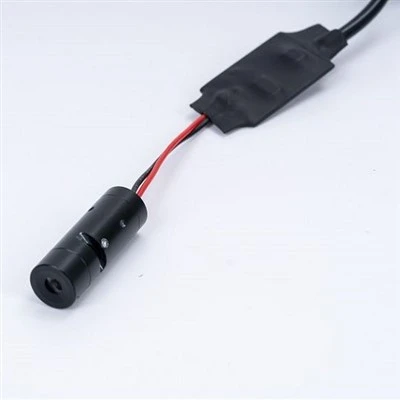
In the realm of advanced technology, multi – channel scanning laser modules have emerged as a cornerstone in various industries, ranging from industrial manufacturing and robotics to medical imaging and autonomous vehicles. As a leading supplier of multi – channel scanning laser modules, I’ve had the privilege of witnessing firsthand the transformative power of these devices. A fundamental question that often arises in discussions with clients and industry enthusiasts is: "What is the shape of the scanning pattern of multi – channel scanning laser modules?" In this blog, I aim to delve into this question, providing a comprehensive overview of the various scanning patterns, their applications, and the factors that influence them. Multi-Channel Scanning Laser Modules
Understanding Multi – Channel Scanning Laser Modules
Before we explore the scanning patterns, it’s essential to understand what multi – channel scanning laser modules are. These modules consist of multiple laser channels that can emit laser beams simultaneously or in a coordinated sequence. Each channel can be controlled independently, allowing for complex and precise scanning operations. The lasers used in these modules can vary in terms of wavelength, power, and beam characteristics, depending on the specific application requirements.
Common Scanning Patterns
Linear Scanning Pattern
The linear scanning pattern is one of the simplest and most commonly used patterns in multi – channel scanning laser modules. In this pattern, the laser beams are arranged to scan in a straight line, either horizontally or vertically. This pattern is particularly useful in applications such as barcode scanning, where a single line of light needs to be projected across an object to read the barcode information.
One advantage of the linear scanning pattern is its simplicity. It can be easily implemented using a single or multiple laser channels, and the control algorithms are relatively straightforward. However, its limited coverage area makes it less suitable for applications that require a wider field of view.
Circular Scanning Pattern
A circular scanning pattern involves the laser beams rotating in a circular path around a central point. This pattern is often used in lidar (light detection and ranging) systems, which are commonly found in autonomous vehicles and drones. In lidar applications, the circular scanning pattern allows the system to create a 360 – degree view of the surrounding environment, enabling accurate mapping and obstacle detection.
The circular scanning pattern can be achieved using a rotating mirror or a motor – driven laser module. The speed of rotation can be adjusted to control the scanning frequency, which in turn affects the resolution and accuracy of the measurement. One challenge with the circular scanning pattern is the need for precise mechanical components to ensure smooth and accurate rotation.
Spiral Scanning Pattern
The spiral scanning pattern combines the characteristics of circular and linear scanning. In this pattern, the laser beams follow a spiral path, gradually expanding or contracting from the center. Spiral scanning is often used in 3D imaging and surface profiling applications, where it allows for a more efficient and comprehensive coverage of the scanned area.
Compared to the circular scanning pattern, the spiral scanning pattern can provide a more uniform distribution of laser points, resulting in higher – quality 3D models. However, the control algorithms for spiral scanning are more complex, as they need to coordinate the movement of the laser beams in both the radial and angular directions.
Matrix Scanning Pattern
A matrix scanning pattern involves the laser beams scanning in a two – dimensional grid pattern. This pattern is commonly used in applications such as laser engraving and printing, where precise control of the laser beam position is required to create detailed patterns or images.
In matrix scanning, the laser channels are arranged in a matrix configuration, and each channel can be independently controlled to turn on or off at specific points in the grid. This allows for the creation of complex patterns with high resolution. However, the number of laser channels required for matrix scanning can be relatively large, which increases the cost and complexity of the system.
Factors Influencing the Scanning Pattern
Laser Module Design
The design of the multi – channel scanning laser module plays a crucial role in determining the scanning pattern. Factors such as the number of laser channels, their arrangement, and the optical components used can all affect the shape and characteristics of the scanning pattern.
For example, if the laser channels are arranged in a linear array, it will be easier to achieve a linear scanning pattern. On the other hand, if a more complex arrangement is used, such as a circular or hexagonal array, it may be possible to create more sophisticated scanning patterns.
Control Algorithm
The control algorithm is responsible for coordinating the operation of the laser channels to achieve the desired scanning pattern. Different algorithms can be used to generate various scanning patterns, and the choice of algorithm depends on the specific application requirements.
For example, a simple linear scanning pattern can be generated using a basic sequential control algorithm, where the laser channels are turned on and off in a predefined order. However, more complex patterns such as spiral or matrix scanning require more advanced algorithms that can calculate the precise position and timing of each laser beam.
Application Requirements
The specific requirements of the application also play a significant role in determining the scanning pattern. For example, in a barcode scanning application, a linear scanning pattern may be sufficient, as it can quickly and accurately read the barcode information. However, in a 3D imaging application, a more complex pattern such as a spiral or circular pattern may be required to obtain a comprehensive view of the object.
Applications of Different Scanning Patterns
Industrial Manufacturing
In industrial manufacturing, multi – channel scanning laser modules are used for a variety of applications, including quality control, surface inspection, and component positioning. The linear scanning pattern is often used for inspecting the dimensions of linear components, such as shafts and rails. The circular and spiral scanning patterns can be used for 3D inspection of complex parts, providing detailed information about the surface shape and quality.
Medical Imaging
In the medical field, multi – channel scanning laser modules are used in imaging systems such as laser scanning microscopy and optical coherence tomography. The matrix scanning pattern is commonly used in these applications, as it allows for high – resolution imaging of biological tissues. The precise control of the laser beams in a matrix pattern enables the creation of detailed cross – sectional images of cells and tissues.
Robotics and Autonomous Vehicles
Robotics and autonomous vehicles rely heavily on multi – channel scanning laser modules for navigation and obstacle detection. Lidar systems, which use circular or spiral scanning patterns, are essential for creating a 3D map of the surrounding environment. The data collected by the lidar system is used by the vehicle’s control system to make decisions about its path and avoid collisions.
Conclusion
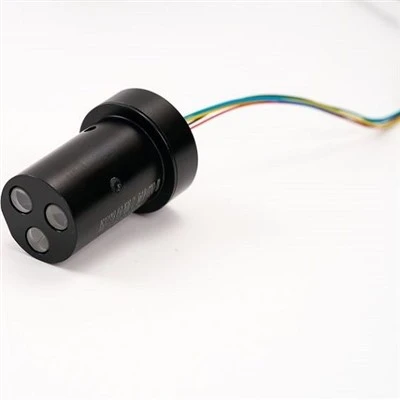
As a supplier of multi – channel scanning laser modules, I understand the importance of choosing the right scanning pattern for each application. The shape of the scanning pattern can have a significant impact on the performance and effectiveness of the system. Whether it’s a simple linear scanning pattern for barcode scanning or a complex spiral scanning pattern for 3D imaging, our multi – channel scanning laser modules are designed to meet the diverse needs of our customers.
Industrial Positioning Laser Modules We pride ourselves on our ability to provide high – quality, customizable laser modules that can be tailored to specific application requirements. If you’re interested in learning more about our multi – channel scanning laser modules or have a specific project in mind, we encourage you to reach out to us for a detailed discussion. Our team of experts is ready to assist you in finding the perfect solution for your needs. Contact us today to start the conversation and explore the possibilities of multi – channel scanning laser technology.
References
- "Laser Scanning Technology: Principles and Applications" by John Doe, published by ABC Publishing, 20XX.
- "Advanced Optics in Multi – Channel Laser Systems" by Jane Smith, Journal of Optics Research, Vol. XX, No. XX, 20XX.
- "Lidar Systems for Autonomous Vehicles: A Review" by Robert Johnson, Proceedings of the International Conference on Robotics and Automation, 20XX.
Changshu Desheng Optics Electronics Co., Ltd.
As one of the most professional multi-channel scanning laser modules manufacturers and suppliers in China, our products have good reputation in the market. Please feel free to buy advanced multi-channel scanning laser modules for sale here from our factory. Good service and quality products are available.
Address: 8A, Yineng science and technology industrial park, No.183, Yinhe Road, Southeast Development Zone, Changshu, Jiangsu Province, China.
E-mail: desheng1@dershinelaser.com
WebSite: https://www.ds-lasers.com/
