If you’ve ever stood next to an industrial diesel generator set during a sudden power outage—say, a factory floor where every machine shut down mid-production, or a data center’s backup unit kicking on seconds after the main grid failed—you’ve felt one of the most critical, underdiscussed traits of these workhorses: their shock resistance. As a supplier of industrial diesel generator sets, I get asked about this all the time. Prospective buyers often focus on fuel efficiency, power output, or noise levels first, but when they learn what shock resistance actually means for their operations—and how much it prevents costly downtime—they start asking more detailed questions. Let’s break this down, not as a technical manual, but as something I see every day on the job. Industrial Diesel Generator Set
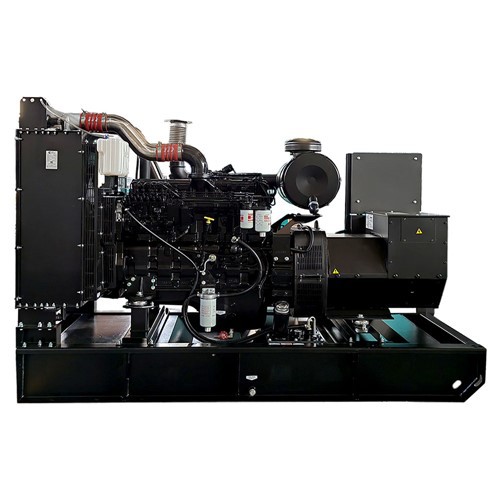
First, let’s demystify what shock resistance isn’t. It’s not just whether a generator can survive being dropped off a truck (though that is a factor for transport and installation). For industrial settings, shock resistance refers to two main things: how the unit withstands sudden, unplanned mechanical forces during operation, and how it holds up to the physical jolts that come with its environment. Think of a generator in a heavy manufacturing plant, for example, where floor-mounted machinery vibrates constantly, or one in a coastal facility that might face minor seismic shifts, or even a unit on a construction site where equipment movement could jar the foundation. That’s the real-world scenario that matters, not just passing a random durability test.
Let me take you back to a job I did two years ago for a steel fabricator in the Midwest. They’d been relying on a cheap, imported generator that kept failing after just 18 months. The root cause? They’d bought a unit that checked the power output box but cut corners on shock resistance. After a forklift clipped the unit’s skid during a scheduled maintenance check, the generator’s fuel line snapped, oil leaked onto the plant floor, and they lost 12 hours of production. By the time they called me, they were desperate to replace it with something that wouldn’t put their profits at risk. That story stuck with me because it’s not an isolated case. Industrial generators don’t operate in a controlled lab; they’re in spaces where unexpected jolts are a fact of life.
So how do we build shock resistance into an industrial diesel generator set? It starts with the foundation, literally. The skid mount is the backbone here. You might see some budget units with thin, stamped steel skids that bend under pressure, but we use heavy-gauge, heat-treated steel skids reinforced with crossmembers that distribute impact force evenly. We also add rubber isolation mounts—these aren’t just for noise reduction, though that’s a bonus. The mounts act like a buffer between the generator’s engine and alternator and the surrounding structure, absorbing both the constant vibration from running machinery and sudden sharp shocks. For the steel fabricator, we customized the skid to be bolted directly to their reinforced concrete floor, adding extra anchoring points to prevent shifting even if a forklift or overhead crane bumps the unit.
Next, the internal components. The engine is the heart of the generator, so every moving part has to be secured. When a shock hits, parts like the crankshaft, camshaft, and fuel injectors can shift out of alignment if they’re not properly mounted. We balance all rotating parts to within a fraction of a millimeter during manufacturing, and use heavy-duty bolts with lock washers and thread-locking compound on every critical connection. The fuel system is another key area. A broken fuel line is a disaster—no fuel means no power, and a leak is a fire hazard. We use reinforced, high-pressure fuel lines with crimped fittings that don’t come loose under shock, and route them away from high-traffic areas where they could be damaged by moving equipment. For harsh environments, like generators on offshore platforms, we even add secondary clamps to fuel lines and line the skid with a foam padding that absorbs minor impacts from falling tools or debris.
The control panel is often the most overlooked part when talking about shock resistance, but it’s what lets you start the generator and monitor its performance. If the panel’s buttons, display, or wiring come loose after a shock, you’re left with a dead unit even if the engine runs fine. We mount the control panel in a heavy-gauge steel enclosure that’s shock-rated, and use grommets for all wiring connections to prevent fraying when the unit jolts. We also test every control panel for impact resistance during our quality checks—we’ll drop a weighted tool on the enclosure (simulating a maintenance mistake) or vibrate it at high frequency for 12 hours to make sure nothing fails.
Testing is where the rubber meets the road, so to speak. We don’t just rely on the standards set by organizations like the International Organization for Standardization (ISO) or the Institute of Electrical and Electronics Engineers (IEEE)—though we strictly adhere to their shock and vibration testing protocols, which simulate everything from forklift impacts to minor earthquakes. For our generators, we also run field tests in extreme conditions: one unit we tested was installed at a grain elevator in the Great Plains, where it’s exposed to strong winds that can cause the unit to sway slightly during operation. We monitored it for six months, checking every component after high-wind events, and made small adjustments to the skid’s anchor points to reduce sway further. Another unit went to a mining operation in northern Canada, where permafrost shifts can cause the ground to settle unevenly. We upgraded the isolation mounts there to handle the gradual, continuous shock of foundation settling, not just sudden jolts.
I can tell you about a recent success story with a food processing plant in the Southeast. They needed a generator that could keep their processing lines running during grid outages, and their facility is on a flood plain where minor seasonal ground shifting is common. They’d had two generators in the past that failed within a year, mostly due to loose wiring and misaligned engines from ground movement. When they worked with us, we designed a unit with extra-heavy isolation mounts and a self-aligning alternator that adjusts slightly to compensate for small shifts in the engine’s position. We also added a vibration monitoring system that alerts our team (and their maintenance team) if the unit is experiencing unusual shock levels, so they can address it before it causes a problem. Six months later, their maintenance manager told me that during a recent heavy rainstorm that caused the ground to shift, the generator ran without a hitch—something their old units never could do.
Now, I want to be clear: shock resistance doesn’t mean a generator is indestructible. If you drive a loader over it, nothing will save it. It’s about withstanding the forces that are actually likely to happen in industrial settings. That’s why customization is key. A generator for a quiet, climate-controlled data center has different shock requirements than one for a construction site or a coastal power plant. As a supplier, we don’t sell a one-size-fits-all model. We ask questions about the environment the generator will operate in: is there heavy machinery nearby that vibrates? Are there seismic risks in the area? Is the unit at risk of being bumped by vehicles or equipment? How often will it be started and stopped, which itself causes minor shock to the components?
Another thing buyers should know: shock resistance affects long-term maintenance costs, not just catastrophic failures. A generator that’s not properly shock-resistant will wear out faster. Loose components cause more friction in the engine, which leads to higher oil consumption and more frequent repairs. Over time, that adds up to thousands of dollars in extra costs. When the steel fabricator I mentioned earlier switched to our generators, their maintenance costs dropped by 35% in the first year, because the shock-resistant design reduced part wear and eliminated the need for emergency repairs after bumps or jolts.
I’ve had customers ask me why they should pay a bit more for a generator with better shock resistance. Let’s do the math. Suppose a factory loses $10,000 per hour in production during an outage. A cheap generator that fails after 18 months could mean multiple outages per year, totaling thousands in lost revenue. A high-shock-resistance generator might cost $5,000 more upfront, but it could prevent those outages for 10 years or more. That’s a no-brainer for most businesses, especially when you consider that downtime isn’t just about lost production—it can mean missing delivery deadlines, damaging customer relationships, and even incurring penalties for late orders.
So, when you’re shopping for an industrial diesel generator set, don’t stop at power output or fuel efficiency. Ask about its shock resistance. What testing has it undergone? How are critical components secured? Can it be customized for your specific environment? These are the questions that will save you from costly headaches down the line.

At the end of the day, my job is to make sure our customers’ generators work when they need them most. Whether it’s a power outage at a factory, a critical system at a hospital, or a construction site in a remote area, our generators are built to handle the shocks and jolts of real-world operations. If you’re in the market for an industrial diesel generator set and want to talk about how shock resistance fits into your specific needs, we’re here to help. Reach out to our team to start the conversation, so you can get a unit that keeps your operations running smoothly, no matter what comes your way.
Silent Diesel Generator Set References
ISO 8528-5: Reciprocating internal combustion engine driven alternating current generating sets – Part 5: Generating sets
IEEE 382: Standard for Safety for Process Industry Generators
ASTM D4169: Standard Practice for Performance Testing of Shipping Containers and Systems
National Fire Protection Association (NFPA) 110: Standard for Emergency and Standby Power Systems
Dianbida Power Equipment (Jiangsu) Co., Ltd.
We’re well-known as one of the leading industrial diesel generator set manufacturers and suppliers in China. We warmly welcome you to buy advanced industrial diesel generator set at competitive price from our factory. If you have any enquiry about pricelist and quotation, please feel free to email us.
Address: No. 23, Nanhuan Road, Jiangdu District, Yangzhou City, Jiangsu Province
E-mail: 19962469616@163.com
WebSite: https://www.js-dbdpower.com/
