If you’ve ever walked through a power substation or driven past a row of utility transformers humming steadily on wooden platforms, you’ve probably glanced at their big, metal containers and wondered: Why do some of these tanks look like small storage bins, while others stretch twice the height of a parked pickup truck? As someone who’s been supplying transformer oil tanks for over a decade, I can tell you the answer isn’t random. Every size is tailored to a specific transformer’s job, location, and the amount of oil it needs to stay safe and efficient. Today, I want to break down the different sizes of transformer oil tanks available, share what makes each one unique, and explain how this translates to real-world needs for power grids, industrial sites, and renewable energy projects. Transformer Oil Tank
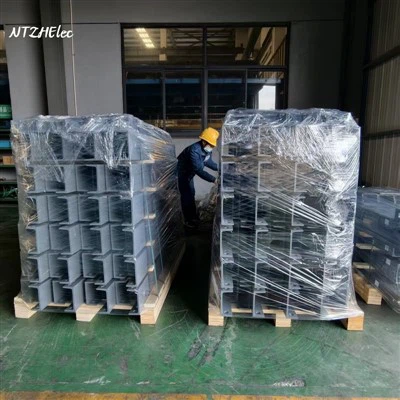
First, let’s get the basics straight, because I’ve seen too many new engineers mix up the terms transformer, oil, and tank, which leads to costly mistakes. A transformer’s core job is to step voltage up or down for long-distance power lines, factories, or neighborhood homes. But that process creates a lot of heat, and it also exposes the internal copper windings and steel core to air and moisture—both of which cause corrosion and wear over time. That’s where the insulating oil comes in: it cools the transformer and acts as a barrier to keep contaminants out. The tank isn’t just a box to hold the oil; it’s a pressure vessel, a cooling surface, and a protective shell all in one. Its size depends entirely on how much oil a transformer needs to do its job, and that oil amount ties directly to the transformer’s “kVA rating” (kilovolt-amperes, a measure of its power capacity) and voltage level. Smaller, lower-voltage transformers need small tanks, while the massive ones moving power across the country need tanks that weigh as much as a semi-truck when full of oil.
Let’s start with the smallest category—what we in the industry call “Distribution Transformer Tanks,” usually for units rated 10 kVA up to 500 kVA. These are the ones you see bolted to utility poles outside residential neighborhoods, or mounted on concrete pads at small convenience stores, gas stations, or elementary schools. I remember my first order of these, back in 2012, was for 120 units for a small rural power co-op in Iowa. Each tank was only about 3 feet tall, 2.5 feet wide, and 4 feet long—small enough to fit in the bed of a pickup truck, which was perfect because the co-op’s trucks couldn’t navigate the narrow dirt back roads to their remote routes. The oil capacity here is tiny: between 10 gallons (for the 10 kVA model) to around 55 gallons for the 500 kVA version. What makes these tanks unique is their compact design, because they don’t have extra cooling components built in. Since distribution transformers only handle local power, their heat load is low—they rely on natural air flow to cool the oil, so their tanks have thin metal walls and small radiators (fins) attached to the sides, no big fans or pumps needed. A common mistake people make here is skimping on tank thickness. I once worked with a contractor who tried to cut costs by using 1/8-inch steel instead of the standard 3/16-inch for a batch of 200 kVA pole-mount tanks. Within a year, 12 of them had rusted through at the bottom, where oil settles, leading to small leaks that required emergency oil top-ups and transformer replacements. That’s why we always emphasize: even for small tanks, material grade and thickness are non-negotiable, because they’re exposed to rain, snow, and UV rays for 20+ years.
Next up, moving to medium-sized tanks, which are for “Substation Distribution Transformers” rated 501 kVA up to 10,000 kVA (or 10 MVA, as we say in shorthand). These are the workhorses of the local power grid, sitting on concrete pads at neighborhood substations that feed 5 to 10 square miles of homes and businesses. Their size jumps up quickly: a 2,000 kVA tank is about 8 feet tall, 10 feet long, and 6 feet wide, with an oil capacity of around 300 gallons. A 10,000 kVA unit? More than twice that size, holding nearly 1,500 gallons of oil. The big difference here from small distribution tanks is the cooling system. These transformers handle more power, so they generate more heat—so their tanks come with large external radiators, sometimes with cooling fans that kick on when the oil temperature rises above 140°F. That means the tank isn’t just a hollow box anymore; it’s a complex assembly with welded seams for the radiators, pressure relief valves (critical to prevent the tank from exploding if the transformer overheats), and sight glasses to check oil levels without opening the tank. I’ve delivered dozens of these medium tanks over the years, and the biggest challenge isn’t the size—it’s fitting them through access gates at substation sites. Last year, a utility in Ohio ordered three 8,000 kVA tanks, and the substation’s gate was only 11 feet wide. Our standard tank width was 12 feet, so we had to adjust the design to split the radiators into two sections that bolt on after delivery, which saved them the cost of modifying the gate. That’s the kind of tailored solution we focus on, because one size never fits all.
Now we get to the heavy hitters: Power Transformer Tanks, for units rated 10 MVA up to 500 MVA, and even larger for ultra-high-voltage (UHV) applications that move power hundreds of miles. These are the tanks you see at major transmission substations, attached to power lines that stretch across state lines or connect to wind and solar farms. A 50 MVA tank is already massive—around 15 feet tall, 25 feet long, and 12 feet wide, holding more than 6,000 gallons of oil. The 500 MVA units? They’re almost the size of a two-car garage, standing 22 feet tall, 40 feet long, and 18 feet wide, with an oil capacity of over 30,000 gallons. These tanks aren’t just built for holding oil; they’re engineered to handle extreme pressure and heat. Unlike smaller tanks that use natural or air-forced cooling, these use oil circulation systems with pumps, and some even have water coolers for the hottest, highest-load units. They also have heavy insulation and pressure monitoring sensors, because a failure here could take down an entire regional power grid. I remember a delivery we did in 2019 for a UHV substation in Texas, just outside Houston. The tank was so big that we had to transport it on a specialized oversize load truck, escort by three police cars, and close a 10-mile stretch of highway for an hour to get it to the site. Even with all that, the final assembly took two weeks, because we had to carefully weld on the large radiators, mount the cooling system, and pressure-test the tank for leaks to make sure it could hold 30,000 gallons of oil without failing. These tanks have a design life of 30 to 40 years, so every weld, every seam, and every component is tested to industry standards to avoid failures that would cost millions in downtime.
Wait, I should also mention two specialized sizes that we see a lot of demand for lately, as renewable energy becomes more common. First are the “Transformer Tanks for Renewable Energy Generation,” which for the most part fall into the medium to large power tank categories, but with a key difference: they’re built to handle variable load. Wind and solar farms don’t produce constant power—output goes up and down with wind speed or sunlight—so the transformers connected to them experience more frequent temperature changes, which means their tanks need to be more flexible. That translates to thicker steel and better pressure relief systems to handle the expansion and contraction of oil as it heats and cools hundreds of times a year. The other specialized size is “Pad-Mounted Substation Tanks,” which are a step up from pole-mount distribution tanks but smaller than substation units, usually rated between 100 kVA and 2,000 kVA. These are installed on concrete pads in industrial parks, shopping centers, or new housing developments where there’s no space for a full substation. They’re enclosed and often locked, making them more secure than pole-mounted units, and their size is tailored to the specific load of the site—for example, a 1,500 kVA tank for a new strip mall with 20 retail stores will hold about 400 gallons of oil, which is enough to handle the power needs of all the stores plus the parking lot lights.
I also want to address a common question I get from new customers: how do I choose the right size tank for my transformer? It’s not just about the kVA rating, though that’s the biggest factor. You also have to consider the environment: if the transformer is in a hot desert, you need a larger tank with more cooling fins, because the oil will get hotter faster than in a temperate climate. If it’s in a cold, snowy area, you might need a tank with a heater to keep the oil from thickening in winter, which means a slightly different design. Location also matters: is the transformer in a remote area where delivery is hard, so you need a smaller, modular tank that can be shipped in parts? Or is it in a major substation with heavy lift equipment, so you can go with a larger, pre-assembled tank to speed up installation. And don’t forget about compliance—most utilities and industrial sites follow standards from the IEEE (Institute of Electrical and Electronics Engineers) or IEC (International Electrotechnical Commission), which have specific rules for tank size, material, and pressure testing based on transformer voltage and kVA. I always tell customers to share their site details, environment, and transformer specs, and we can help size the right tank instead of making them guess.
Another point that’s important: the size of the tank also impacts maintenance. Smaller distribution tanks are easy to inspect—you can climb up a pole or kneel next to a pad to check the oil level and look for leaks. Medium substation tanks need a small crew with basic lifting equipment, while large power tanks might require heavy cranes and certified technicians to open and inspect, because they hold so much oil and operate at high voltage. That’s why we also offer maintenance kits tailored to each tank size, from simple oil sample bottles for small units to custom leak detection systems for large power tanks that alert operators to issues before they become major problems.
Over the past 12 years in this business, I’ve seen how much the demand for different tank sizes has shifted. Ten years ago, 70% of our orders were small distribution tanks for residential areas. Now, that’s flipped: 60% of our orders are medium to large tanks for wind farms, solar projects, and new industrial facilities, as countries around the world upgrade their power grids to meet renewable energy goals. That means we’ve had to adapt our production processes, investing in larger welding stations and oversize transport preparation to handle these bigger units, while still keeping our small distribution tanks available for rural areas that still need them.
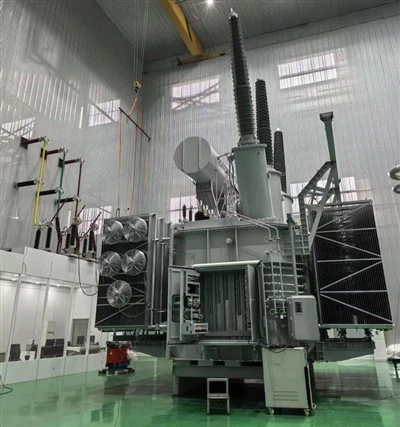
If you’re a utility company, industrial plant manager, renewable energy developer, or contractor who needs a transformer oil tank—whether it’s a small pole-mount unit for a neighborhood or a massive power tank for a new transmission line—we have the expertise to help. Our team has installed tanks across North America, from the remote Alaskan bush to the Texas Gulf Coast, and we tailor every design to your specific site needs, not just a one-size-fits-all product. We don’t cut corners on materials, we test every tank before it leaves our facility, and we stand behind our work for the life of the unit.
Power Transformer Oil Tank If you’re looking to source a transformer oil tank, reach out to us to discuss your project, share your transformer specs and site details, and we can put together a customized solution that meets your needs and budget. Whether you need a single small tank or a dozen large power units for a wind farm, we have the experience and equipment to deliver on time and on spec.
References
- IEEE Std C57.12.00-2020, Standard for General Requirements for Liquid-Immersed Distribution, Power, and Regulating Transformers
- IEC 60551:2017, Guide for the Selection of Insulating Liquids for Transformers
- National Electrical Safety Code (NESC) 2023, Section 23: Transformers, Regulators, and Equipment on Poles and Other Structures
- North American Electric Reliability Corporation (NERC) Transmission Equipment Standards, TOP-002-5: Transformer and Reactor Capacity and Performance Requirements
Nantong Zhihe Electric Co., Ltd.
As one of the most professional transformer oil tank manufacturers and suppliers in China, we’re featured by quality products and low price. Please rest assured to wholesale cheap transformer oil tank made in China here from our factory. Customized orders are welcome.
Address: NO.202 Jianghai West Road, Hai’an Town, Hai’an City, Jiangsu Province
E-mail: colt.ntzh@gmail.com
WebSite: https://www.ntzhelectric.com/
