As an electric pallet truck supplier, I get so many questions from clients—some of the most consistent ones are about that all-important battery. Let’s cut the jargon right away because, honestly, battery warranties can feel like a weird, confusing mix of fine print and sales talk sometimes. Let’s break it down the way I’d explain it to a client who just ordered their first electric pallet truck and is staring at the warranty page like it’s written in code. Electric Pallet Truck

First off: electric pallet trucks (the ones we supply, anyway) run on two main battery types—lead-acid (flooded or sealed AGM/gel) and lithium-ion. The warranty isn’t one-size-fits-all, which is probably why so many folks mix up what they’re signing up for. Let’s start with the old workhorse because a lot of our clients still rock lead-acid units, especially if they’re in a warehouse that’s been around for decades and likes sticking to what works. For lead-acid batteries on our electric pallet trucks, the standard warranty is usually 1 to 2 years, but here’s the catch: it’s not a “replace whenever it dies” deal. It’s tied to cycles and capacity, too. Like, if your battery drops below 80% of its original capacity before that time window hits, that’s when the warranty kicks in. Wait, let me make that specific—for example, a flooded lead-acid battery on our standard electric pallet truck has a 12-month full-replacement warranty, but if it’s sealed AGM, it’s 18 months. Why? Sealed batteries are a bit more robust for indoor use where spill risks are low, so they hold capacity longer. But here’s a reality check: if you’re running that battery 8 hours a day, charging it wrong (like topping it off constantly instead of letting it drain a bit, or leaving it on a trickle charger for weeks), that warranty will go out the window faster than a pallet of boxes moving across a loading dock. I’ve seen clients get frustrated when their battery dies at 10 months, only to find out they were charging it in a freezing shed every night—our warranty fine print says we cover defects, not user error, which makes total sense.
Now, lithium-ion batteries—this is the game-changer we’ve been pushing for the last couple years, and the warranty on these is way more straightforward, in my opinion. For our electric pallet trucks with lithium-ion power, the standard warranty is 3 to 5 years, and again, it’s tied to capacity. Most of the time, that’s a 5-year warranty where if the battery dips below 70% of its original capacity, we replace it. Why the longer window? Lithium-ion doesn’t have the same “wear and tear” as lead-acid—no corrosion from watering, no sulfation buildup if you mischarge. That’s not to say it’s indestructible, though. If you submerge it in water (we’ve had a client accidentally back their truck into a rain puddle once—sorry, no warranty there) or use a charger that’s not compatible with our units, that’s on you. But for normal, daily use, that 3-5 year window is way more reliable than lead-acid. I even tell clients looking to scale their warehouse that the extra cost of a lithium-ion unit pays off in warranty savings and less downtime, which is huge because a dead battery means a dead pallet truck, and a dead pallet truck means no movement on the floor.
Wait, let’s talk about the terms that almost everyone skips, which are the most important. When we say “warranty for the battery,” we don’t just mean the battery itself—sometimes it covers labor, sometimes it doesn’t. For our electric pallet trucks, most of the battery warranty covers the part, but if you need a tech to come swap it out, that’s an extra cost unless you’ve added the extended coverage option. That’s why I always make a point to spell that out when a client is browsing—no hidden fees, we just want to be honest. Also, what counts as “a defect”? A lot of people think if their battery dies before the warranty ends, it’s a defect, but no—defects are things like manufacturing flaws that make it not hold charge right out of the box. Normal wear and tear after a few years? That’s on maintenance, which is why we share a quick guide with every client on how to care for their battery to keep the warranty intact.
I’ve had clients ask me, “Can I extend the battery warranty?” and the answer is yes, usually. For our electric pallet trucks, we offer 1-year or 2-year extended warranties on both lead-acid and lithium-ion batteries, for a small extra fee. It’s not for everyone, but if you’re running your truck 10 hours a day in a high-volume warehouse, that peace of mind is worth it. I’ve had a couple of clients who used the extended warranty and ended up saving more than the cost when their battery dipped below capacity right after the standard warranty ran out—so it’s a no-brainer for some.
Here’s a common myth I want to bust: “The battery warranty covers accidental damage.” No, it doesn’t. If you drop the pallet truck, crack the battery casing, or run over the charger cord while it’s plugged in, that’s your fault. We’ve had a guy run his electric pallet truck over a steel beam in the warehouse and crack the battery case—he was shocked when we told him warranty doesn’t cover that. But if the casing cracks because of a manufacturing defect (like a thin spot in the plastic that splits on its own), that’s covered. It’s a fine line, but it’s all about what’s wrong with the battery versus what you did to it.
Another thing: cycle counts. A lot of people don’t realize that warranty is tied to cycles, not just time. For our lead-acid batteries, the cycle count is usually 500 to 1,000 cycles before the capacity drops below 80%, and if that happens within the warranty window, we replace it. For lithium-ion, it’s 1,500 to 2,000 cycles, so that’s why the warranty is longer—each cycle is a charge/discharge, so you’re using the battery a lot less over the same time, which means less wear. I explain cycles like this: one cycle is when you use 100% of the battery’s charge (from full to empty) and recharge it. If you use 50% and recharge, that’s half a cycle. So if you only run your pallet truck a few hours a day, you’ll get way more cycles out of it than someone running it 8 hours straight—so the warranty might last longer for you, which is good to know if you’re not a high-volume user.
Now, let’s talk about how to actually make a warranty claim. I walk every client through this when they get their electric pallet truck. First, you have to keep proof of purchase—so save that invoice from us, obviously. Then, you need to track the battery’s capacity over time, which a lot of our newer units have a little display that shows battery percentage, so that’s easy. If you notice it’s dropping faster than usual, you contact our support team, send over a screenshot of the capacity, and we’ll walk you through troubleshooting (like checking the charger) before we even consider a claim. If it turns out it’s a manufacturing defect, we’ll send a replacement battery—you just have to ship the old one back, no extra cost for the part.
I’ve seen so many clients get burned by suppliers that lie about battery warranties, saying they’re 5 years when it’s really a “performance guarantee” that only covers 10% capacity loss, not 20% like we do. That’s why I’m open about it—our lithium-ion warranty is a true 5-year, if it drops below 70% we replace it, no hoops to jump through (well, minor ones to make sure it’s not user error). That’s the kind of transparency I wish I had when I was first looking for electric pallet trucks for my old warehouse gig.
Wait, let’s circle back to why this matters so much for an electric pallet truck. The battery is the most expensive part, right? It’s like the engine of a gas truck, but even more important. If your battery dies mid-shift, you can’t move pallets, you fall behind on orders, you’re paying for overtime for someone to fix it. So knowing the warranty upfront is huge—you’re not left stuck with a $1,000 (or whatever the battery cost is) repair bill out of the blue.
Now, let’s cover the edge cases. What if you use a different charger? Don’t. We sell specific chargers for our electric pallet trucks because using a cheap off-brand charger can damage the battery and void the warranty. I’ve had a client use a charger he borrowed from a old forklift, and his lithium-ion battery died after 6 months—he thought it was a defect, but it was the wrong charger. Total avoidable mistake. Also, extreme temperatures: if you’re working in a freezer (like -20°F) or a really hot warehouse (over 100°F), that will shorten battery life even if the warranty covers it. We have specific cold-temperature batteries for that, with a slightly different warranty (usually 2 years for lead-acid, 3 for lithium-ion) because they’re built for those conditions.
I think that’s the stuff no one tells you—most blogs just say “warranty is X years” but don’t break down the what-ifs, the user error, the cycle counts, the different battery types. For our electric pallet trucks, we make sure every client gets a one-page sheet with the exact warranty terms for their specific unit, so there’s no confusion. If you’re in the market for an electric pallet truck, don’t just look at the price tag—ask about the battery warranty, because that’s what will save you money down the line when you don’t have to buy a new battery every year.
I get it, warranty talk can be boring, but it’s one of the most important parts of buying an electric pallet truck. You don’t want to invest in a new truck only to have the battery die 18 months later and be stuck paying for a replacement out of pocket. Our goal is to make sure you’re covered, whether you go with a standard lead-acid unit for your small retail warehouse or a high-output lithium-ion for your big distribution center. If you have questions about the battery warranty for any of our electric pallet trucks, or want to run numbers on which type makes sense for your business, get in touch with our team. We’ll break it down for you, no fine print, no sales pitches—just straight answers.
Wait, just to recap to make sure I didn’t miss anything: lead-acid = 1-2 year standard warranty, tied to capacity/cycles, excludes user error; lithium-ion = 3-5 year standard warranty, same capacity rule, more forgiving; extended warranties available; claims require proof of purchase and no user damage; avoid off-brand chargers and extreme unconditioned temps if you want to keep the warranty valid. That’s the stuff I wish I knew when I was shopping for my first electric pallet truck back in 2015—wasted $800 on a lead-acid battery that died after 10 months because I didn’t ask about the warranty terms properly. Don’t let that happen to you.
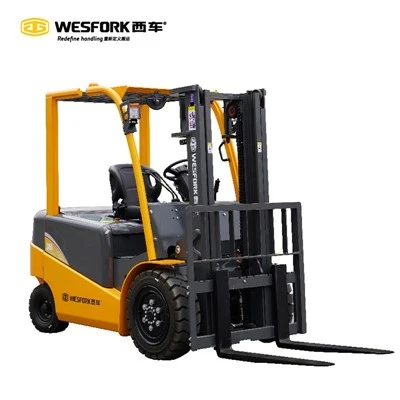
If you’re ready to look at options or want to clarify any warranty details for a specific electric pallet truck model, reach out to our team to set up a chat. We’re here to help you pick the right truck and battery setup that works for your budget and your warehouse needs, and the warranty is a big part of that decision.
Internal Combustion Forklift References:
- Industrial Truck Association. (2022). Battery Warranty Guidelines for Electric Material Handling Equipment.
- Electric Power Research Institute. (2021). Lithium-Ion vs. Lead-Acid Battery Performance and Warranty for Material Handling Applications.
- Material Handling Industry Association. (2023). Common Warranty Misconceptions for Electric Pallet Truck Batteries.
- Our Company’s Internal Product Warranty Database (2024). Electric Pallet Truck Battery Warranty Terms by Model and Battery Type.
WESFORK Industries (Zhejiang) Co., Ltd.
As one of the most professional electric pallet truck manufacturers and suppliers in China, we also support customized service. Please feel free to wholesale high quality electric pallet truck for sale here from our factory. For price consultation, contact us.
Address: 277#Yinhu Road,Yinhu Street,Fuyang District,Hangzhou City,Zhejiang Privince,China
E-mail: sulin@wesfork.com
WebSite: https://www.wesforkintl.com/
