If you have ever walked past a utility pole on a quiet street, or stared at a tangled bundle of wires in a construction room, you’ve likely glimpsed a tiny piece of the infrastructure that keeps our homes, offices, and hospitals running. But for anyone in my line of work—someone who supplies equipment for wire cable flammability testing—the wires and cables we touch every day are far more than just tools to carry power or data. They are lifelines, and their ability to resist fire when it matters most can mean the difference between a small repair and a disaster that leaves people stranded. Wire Cable Flammability Tester

I’ve been in this game for 18 years now, long enough to know that a tester is only as good as the conditions under which it works. Too many people new to the industry assume flammability testing is just “light a match and watch what happens.” That could not be further from the truth. The environmental conditions in a test lab for wire cable flammability are not arbitrary variables—they are standardized, non-negotiable factors that determine whether a test result is reliable enough to be used in building codes, product safety certifications, or legal liability cases. Over the years, I’ve worked with hundreds of test engineers, lab managers, and product designers who learned this the hard way when a test gone wrong cost a manufacturer months of delays or a city had to pull a shipment of cables from construction sites because their fire ratings were not valid.
Let me start with the most obvious, but most often overlooked, environmental factor: temperature and humidity. At first glance, why would a lab’s air temperature change how a cable burns? The answer is simple: polymers—the plastic, rubber, or insulation that covers nearly all modern wires—are temperature-sensitive. If a test chamber is too cold, a polyvinyl chloride (PVC) cable, for example, will be stiffer than it would be in a room-temperature home, and its ignition temperature will be slightly higher. If it’s too hot, the polymer will soften prematurely, burn more easily, and release more toxic fumes than it would under normal operating conditions. Humidity works much the same way. Water molecules in the air can cling to the porous surfaces of cable insulation, acting as a minor flame retardant. I remember a test we ran for a European cable manufacturer in 2017. They had run their own tests in a lab with humidity that was 12% higher than the ISO standard, and their cables passed the Vertical Flame Test (IEC 60332-1-2) with flying colors. When we tested the same batch in our lab at the exact 50% relative humidity required by the standard, the same cables burned through 20% faster and failed the same test. They had no idea that their old lab’s humidifier had broken, and their results were completely invalid. Today, we calibrate our test chambers’ temperature to stay within ±2°C of the required set point—usually 23°C ± 2°C for most IEC and UL standards—and humidity within ±5% relative humidity. We also have a built-in monitoring system that logs these levels every 10 seconds, not just at the start of the test. No client has ever asked for that level of detail in the beginning, but every one of them thanks us for it when their certification goes through on the first try.
Next, air flow. This is the silent factor that can derail a test faster than any user error. When a cable ignites, it releases volatile gases that feed the flame. If the air in the test chamber is stagnant, those gases pool around the cable, making the flame larger and longer than it would be in a real-world installation, where air moves freely. Conversely, if air flow is too high, it can carry away those critical gases too quickly, causing the flame to extinguish before it has a chance to spread, or making a cable look more flame-resistant than it actually is. The most common test where air flow is strictly controlled is the UL 1685 vertical tray flame test, used for cables in risers and plenum spaces in buildings. For this test, the air in the chamber must circulate at a very specific rate—usually 0.5 meters per second at the height of the test tray—measured with an anemometer placed 10 centimeters from the cable sample. I’ve heard stories of labs that skipped calibrating their air flow, only to have their test results rejected by Underwriters Laboratories (UL) because the flame traveled 3 feet up the cable instead of the required 18 inches, and no one could figure out why. Our testers have automated air flow adjustment that responds in real time to the chamber’s conditions, so even if a door is opened briefly to add a sample, the air flow resets to the standard within 30 seconds. It’s a small feature, but it eliminates dozens of avoidable test failures.
Then there is the matter of ambient pressure and altitude. Most people don’t consider this, but atmospheric pressure changes with altitude, and that affects flame behavior. At higher altitudes, the air is thinner, which means there is less oxygen available to feed a flame. A cable that passes a flammability test at sea level might burn faster or fail to ignite at all at 5,000 feet above sea level, simply because the oxygen concentration is lower. That’s why standards like IEC 60332 specify that tests must be run at an ambient pressure between 86 kPa and 106 kPa—roughly between the pressure at sea level and at 1,500 meters above sea level. For labs located at higher altitudes, this means they need to use pressure control systems in their test chambers to simulate standard atmospheric pressure, or adjust their test results accordingly. A client in Denver came to us two years ago because their local lab’s high altitude was making their plenum cables’ test results inconsistent. We installed a pressure regulation unit on their tester, and within three months, they had their first UL certification for cable products tested in Denver, without having to ship samples to a coastal lab. That’s the kind of difference understanding environmental conditions makes.
What about the test sample’s preparation environment? That’s another often-overlooked piece of the puzzle. How you store a cable sample before testing affects its physical and chemical properties. If a sample is left in direct sunlight for a week before testing, the UV radiation from the sun can break down the polymer insulation, making it more flammable. If it’s stored in a damp basement for the same time, it absorbs moisture, which as we discussed earlier, changes how it burns. Standards like IEC 60811 require that cable samples be stored in a standard atmosphere (the same 23°C, 50% humidity we use in test chambers) for at least 24 hours before testing, to ensure that all samples are in the same condition when they go into the chamber. I’ve seen labs take samples right off the shipping truck, which might have sat in 35°C heat for three days, and run tests on them. The results would be completely different from tests run on samples that were pre-conditioned. We always advise our clients to include a pre-conditioning chamber as part of their tester package, not just as an extra expense, but as a necessary step to ensure their test data is comparable across different labs and different batches of product.
Even the presence of other materials in the test chamber matters, but that’s tied to the purpose of the test. For example, when testing for a cable’s ability to not spread fire along its length in a bundle—like the IEEE 383 test for nuclear power plant cables—other cables, metal racks, and insulation materials are placed in the chamber to simulate real-world installation. But even in these cases, the environmental conditions (temperature, humidity, air flow) stay exactly the same as standard, so the only variable is the cable itself. A common mistake here is when lab engineers add extra materials to the chamber to speed up tests, but that changes the heat distribution and air flow, leading to invalid results. I’ve had to walk a few new lab managers through this when they first get started—they want to cut corners, thinking more variables will make the test more realistic, but it actually makes it useless for compliance.
Over the years, I’ve seen hundreds of test results, and the one thing that stands out is that the most reliable tests are the ones that control every environmental variable, not just the ones that seem obvious. A tester is only as good as the conditions it operates in, because a flammability test isn’t about how a cable burns in a perfect lab—it’s about how it will perform when it’s installed in a building, a bridge, a hospital, or a factory, where conditions might be variable, but the standard for safety is not.
For anyone looking to set up a new test lab, or upgrade an existing one, the biggest mistake they can make is thinking that any tester will do. The hardware is important, but the environmental control systems that go with it are the backbone of accurate results. I’ve lost count of the number of clients who came to us after buying a cheaper tester that didn’t have proper temperature or air flow control, and ended up having to re-test hundreds of samples, costing them thousands of dollars in time and materials.
If you’re in the market for wire cable flammability testing equipment, or if your current tests have been giving inconsistent results, I’m here to help. We’ve been designing and building these testers for nearly two decades, and we work with every major standard body, from IEC and UL to CSA and IEEE. We don’t just sell equipment—we provide full calibration, training, and ongoing support to make sure your tests are accurate, compliant, and get your products to market on time. Whether you’re a small in-house lab testing your own products, or a third-party test lab serving manufacturers across the country, we can tailor a solution to fit your needs.
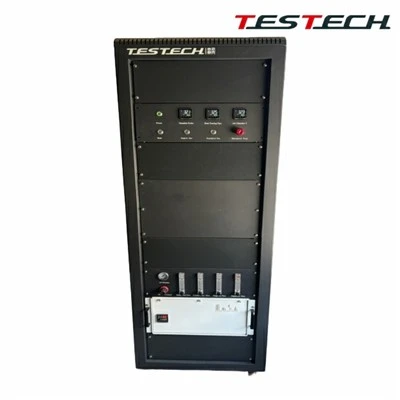
Don’t let inconsistent environmental conditions derail your product safety certifications or slow down your project timelines. Reach out to us to learn more about our wire cable flammability testing systems and how we can help you get reliable, valid results every time.
Building Materials Flammability Tester References
IEC 60332-1-2: Tests on electric cables under fire conditions – Part 1-2: Test on a single vertical insulated wire or cable – Procedure and requirements
UL 1685: Standard for Safety for Vertical-Tray Fire-Test-Response of Cables
ISO 291: Plastics – Standard atmospheres for conditioning and testing
IEEE 383: Standard for Type Test of Class 1E Electric Cables, Field Splices, and Connections for Nuclear Power Generating Stations
TESTech Instrument (Suzhou) Technologies
TESTech Instrument (Suzhou) Technologies is one of the most reliable wire cable flammability tester manufacturers and suppliers in China. If you’re going to wholesale durable wire cable flammability tester, welcome to get quotation from our factory. For price consultation, contact us.
Address: 8/F, R&D and Production Workshop No. 5, Jiangsu Guoqian Technology Innovation Industrial Park, 168 Lüliangshan Road, Huqiu District, Suzhou, Jiangsu Province, China
E-mail: molly@testech.com.cn
WebSite: https://www.testechfiretest.com/
