Hey there, fellow motor nerds, DIYers, and industry folks! If you’ve ever stared at a brushless DC (BLDC) motor and thought, “How much does this actually weigh?”—you’re not alone. I’m Jake, and for the last 8 years, I’ve run a BLDC motor supply shop, so I get that question probably 10 times a day. It’s not a one-size-fits-all answer, and let’s be real—if you’re building a drone, a robot arm, or an electric bike, that weight could make or break your whole project. No fancy jargon, just straight talk from someone who’s shipped hundreds of these motors out the door. Brushless Dc Motor
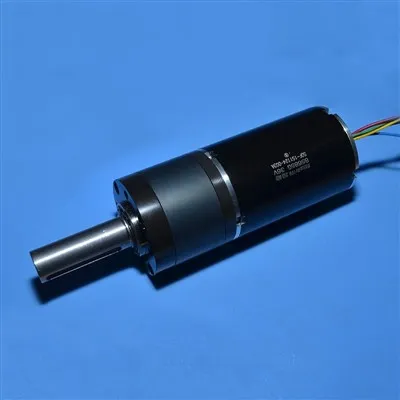
First off, let’s cut through the confusion. A lot of people mix up “dry weight” vs. “wet weight” when they ask about BLDC motors. Dry weight is just the motor itself—no wires, no mounting brackets, no gearboxes. Wet weight adds those extras. That’s a huge difference, right? A 500W motor might weigh 0.8 lbs dry, but throw on a metal gearbox and mounting plate, and it jumps to 1.2 lbs. That’s the sort of detail that trips up people designing tight, lightweight setups like racing drones or portable e-bikes.
Let’s break it down by power rating, since that’s the easiest way to group them. I see this all the time: a customer asks for a “light motor,” and when they don’t specify power, they end up with something too wimpy or way heavier than needed. Here’s the real, no-BS range based on the motors we stock at the shop.
Starting with the tiny ones—think drones, small robots, or RC toys. These are usually 100W to 500W BLDC motors. Dry weight here? We’re talking 0.3 lbs (about 136 grams) up to 0.9 lbs (408 grams). Wait, that’s a wide range? Yeah, because even in this power bracket, there’s a big gap between budget, mid-range, and high-performance models. For example, our budget 2204 drone motor (230W) is 0.35 lbs, while the high-torque 2204 for FPV racing is 0.5 lbs—just enough extra copper windings to handle the stress, but not a crazy weight gain. If you’re building a long-range drone, even that 0.15 lbs difference can add an extra 5 minutes of flight time. That’s why customers will pay a little more for the lighter one here—every gram counts.
Next up, mid-sized motors: 500W to 2000W. These are for things like electric scooters, small robot arms, or e-bike hub motors. Dry weight here runs from 1 lb (454 grams) to 3.2 lbs (1.45 kg). Let’s take the 1000W e-scooter motor we supply—dry weight is 1.8 lbs, and with the wheel hub and wiring, it’s around 4.5 lbs. A lot of people underestimate this: if you’re replacing a broken scooter motor, you can’t just grab any 1000W motor. The weight of the old one is a big clue—if your old motor was 4 lbs, a 4.6 lbs motor might fit, but a 3 lb one probably won’t have enough torque. We once had a customer buy a cheap 1000W motor online that was only 2.2 lbs, and it burned out in a week—no extra copper and magnets meant it couldn’t handle the load.
Then there’s the heavy hitters: 2000W and up. These are for electric bikes, go-karts, industrial conveyor belts, even small boat trolling motors. Dry weight here can jump from 3.5 lbs (1.59 kg) all the way up to 25+ lbs (11.3 kg) for the big industrial ones. Our 3000W mid-drive e-bike motor is 4.2 lbs dry, which is why it’s popular—riders don’t want a motor that’s so heavy it throws off the bike’s balance. But if you’re doing a go-kart build, you might go for a 5000W motor that’s 12 lbs, because the extra weight means more torque to get that heavy go-kart moving fast. Industrial motors for conveyor systems? Yeah, those can be 30 lbs easy—they’re built to run 24/7, so they have thicker steel casings and stronger magnets.
Wait a second—why is there so much variation even within the same power rating? That’s the question I get next, and it’s all about design choices, not just power. Let’s list the big factors that add or subtract weight, because that’s what matters most when you’re picking a motor.
First, magnet type. BLDC motors use neodymium magnets, right? But not all neodymium is the same. High-grade N52 magnets are way stronger than lower grades like N35, and they’re smaller and lighter for the same power output. For example, a motor with N52 magnets might weigh 10% less than one with N35, all else equal. But higher grade magnets cost more, so budget motors use lower grades and have to make up for it with extra material—more copper windings, thicker steel casing. That’s why the budget 1000W motor I mentioned earlier was lighter, but flimsy. The extra steel in the high-quality one adds a little weight, but it lasts 5x longer.
Then there’s the casing material. Most motors have either aluminum or steel casings. Aluminum is lighter—for the same size, an aluminum casing is about 30% lighter than steel. But steel is sturdier, better for industrial or off-road use. Our aluminum-cased e-bike motor is 4.2 lbs, while a steel-cased version of the same power is 5.1 lbs. So if you’re building a lightweight road e-bike, aluminum is the way to go. If you’re building a mountain bike that hits roots and rocks, the steel is worth the extra weight for durability.
Gearboxes and mounting accessories also play a huge role. If you need a geared BLDC motor (which gives more torque, lower speed), the gearbox adds weight. A 500W geared drone motor might be 0.7 lbs, while an outrunner (no gearbox) of the same power is 0.5 lbs. For industrial applications, we often add custom mounting brackets—those can add 0.2 to 1 lb, depending on how big they are. It’s not just the motor itself, it’s the parts that go with it.
Let’s talk about real-world examples from the motors we ship every week, to make this concrete. Last month, a customer built a custom RC boat and asked for a 1500W BLDC motor. They wanted it as light as possible, so we grabbed our high-performance outrunner with N52 magnets and aluminum casing. Dry weight: 1.9 lbs. Total weight with prop mount and wiring: 2.3 lbs. That worked perfect—they got the speed they needed without weighing down the boat. Another customer, a small robotics shop, was building a warehouse sorting robot and needed a 3000W motor for a conveyor belt. Durability was key, so we went with our steel-cased, IP65-rated motor. Dry weight: 8.7 lbs. With the custom mounting bracket, it hit 9.5 lbs. It runs 12 hours a day, no issues.
Wait, what about people who care about weight for efficiency? A lot of folks think a lighter motor is always more efficient, but that’s not entirely true. There’s something called “power-to-weight ratio,” which is how much power you get per pound. A high-power-to-weight ratio motor is better for applications where weight is critical—drones, racing bikes. A lower ratio is better for heavy-duty stuff, where reliability and torque matter more than a few extra ounces. For example, a drone motor might have a power-to-weight ratio of 500W per pound, while an industrial conveyor motor is 300W per pound. That’s a big gap, and it’s by design.
I also get a lot of questions about “does the weight matter if I’m not worried about portability?” Yeah, even then. If a motor is too heavy for its power, it has to work harder to move itself, which wastes battery life or uses more electricity. That adds up over time, especially for commercial customers running fleets of e-scooters or robots. One of our long-term clients, an e-bike rental company, switched to our higher power-to-weight ratio motors a year ago. They cut battery costs by 15% because their scooters run longer on a single charge. That’s not just a hobbyist thing—weight affects bottom lines for businesses.
Let’s bust a common myth, too. Some people think BLDC motors are always lighter than brushed DC motors of the same power. That’s mostly true, but not always for super high power. A 10,000W industrial brushed motor might be 50 lbs, while a BLDC of the same power is 45 lbs—so 10% lighter, but not a game-changer. For smaller motors, the difference is way bigger: a 500W brushed motor is usually 1.5 lbs, while a BLDC is 0.5 lbs. That’s why BLDC took over so many applications—less weight, more efficiency.
So, what should you actually look for when picking a BLDC motor’s weight? First, nail down your power needs. Don’t guess—calculate how much torque or speed you need. A drone needs enough power to lift its frame, camera, and battery, so underpowered = too much weight on the motor, which crashes. An e-bike needs enough torque to go up hills, so a motor that’s too light might not have enough pulling power. Second, decide if you need extra parts: gearboxes, mounting brackets, waterproof casings. Those add weight, so factor them in before you buy. Third, don’t just go for the lightest one. If a 1000W motor is half a pound lighter than another, but costs twice as much and only lasts half as long, it’s not a good deal.
Here’s where I can help you out. I don’t do one-size-fits-all selling—when a customer reaches out, I ask about their project, not just “how much does the motor weigh?” If you’re building a drone, I’ll point you to our light, high-power models. If you’re building an industrial robot, I’ll hook you up with the durable, moderate-weight ones. We’ve got motors for every use case: from tiny 100W ones for hobby projects to 15,000W heavy industrial models. We test every motor before it ships, so you know exactly what you’re getting—no surprises when it shows up to your door.
Wait, let’s wrap this up with a quick recap to make sure you’re not leaving confused. BLDC motor weight isn’t a fixed number—it depends on power rating, magnet grade, casing material, and extra parts like gearboxes. Tiny hobby motors (100-500W) are 0.3-0.9 lbs dry. Mid-sized ones (500-2000W) are 1-3.2 lbs dry. Big industrial/e-bike motors (2000W+) are 3.5 lbs and up, with some hitting 25+ lbs. The sweet spot is balancing power, weight, and durability for your specific project.
If you’re working on a build right now—whether it’s a drone, e-bike, robot, or industrial setup—and you need to know the right BLDC motor weight for your needs, hit me up. I’m here to answer questions, share specs, and help you pick the perfect motor that fits your project, no fluff, no hidden fees. We ship fast, offer warranties, and have been in this game long enough to know what works.
Brushless Dc Motor References
- Electric Motor Technology Association. (2022). BLDC Motor Weight and Performance Characteristics for Consumer and Industrial Applications.
- Robotics Industries Association. (2021). Power-to-Weight Ratio Guidelines for Small Electric Motors.
- International Electrotechnical Commission. (2023). Standard Test Methods for BLDC Motor Dry and Wet Weight Measurements.
- U.S. Department of Energy. (2022). Efficiency and Weight Tradeoffs in Electric Propulsion Motors for Light Electric Vehicles.
Shenzhen HengDrive Technologies Co., Ltd.
Shenzhen HengDrive Technologies Co., Ltd. is one of the most professional brushless dc motor manufacturers and suppliers in China, specialized in providing high quality customized service. We warmly welcome you to buy the newest brushless dc motor in stock here from our factory.
Address: Building A & F, FuNing Hi-Tech Park, XinTian Road, FuHai Street, BaoAn District, ShenZhen, GuangDong Province, China.
E-mail: Marketing001@hengdrive.com
WebSite: https://www.hengdrivemotor.com/
