Hey folks, if you’re in the industrial heat game, you’ve probably caught yourself Googling “types of heat treatment furnaces” more than once—whether you’re a production manager figuring out your next line upgrade or just curious about how metal parts get tough enough to last. As someone who’s been selling heat treatment furnaces for over a decade, I’ve lost count of how many times customers come to me saying, “I don’t know if I need a batch or a continuous unit—I just know my parts keep breaking after a month.” Today, I’m breaking down the most common types out there, straight from the floor, no stuffy jargon, and why you might pick one over the other. Heat Treatment Furnace
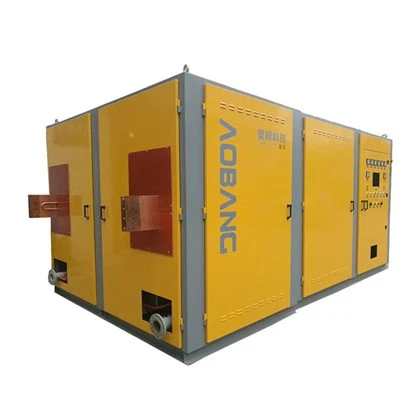
First off, let’s cut to the basics: heat treatment furnaces aren’t one-size-fits-all. They’re built for specific jobs—like hardening steel bolts, tempering tool bits, or annealing copper wires so they don’t crack when bent. Each type has its perks, and if you pick the wrong one, you’re wasting time, money, or even ruining parts. Let’s start with the big ones.
Batch furnaces are the workhorses for small to mid-sized runs. Think of them like a giant oven you load parts into and shut the door on, one batch at a time. There are a few sub-types here, too. Box furnaces are the most basic—great for low-volume, varied jobs, like a machine shop making custom gear shafts or a tool and die shop heat-treating hammers. You can tweak the temp (usually up to 2,400°F) and hold parts for however long you need, and they’re pretty easy to maintain. The downside? If you load a batch that’s too full or unevenly spaced, some parts might heat slower than others. We see this a lot with new customers—they try to cram 500 small bolts into a box furnace meant for 300, and half end up under-hardened. Then there’s car-bottom furnaces, which are basically box furnaces but the whole bottom is a cart that rolls in and out of the furnace. This is perfect for huge, heavy parts—like railroad rails or large turbine blades—you can’t fit those through a regular box door. I’ve sold a dozen of these over the years to power plants that need to heat-treat massive metal components, and the best part is you don’t have to lift parts by hand (thank God for that, those cart loads can weigh tons).
Next up, pit furnaces. These are the ones that sit in a hole in the floor, so you don’t have to stack parts high—they’re vertical, deep, and ideal for long, cylindrical parts like pipes, drill bits, or shafts. You lower parts into the furnace from the top, which keeps them straight while heating, so they don’t warp. A lot of metal forging companies swear by these because they handle long runs without warping issues. The trick here is making sure the pit’s insulation is good—we’ve had a customer once skip adding a proper ceramic lining, and they were wasting 20% of their energy every month heating the ground around the pit. Lesson learned.
If you’re doing high-volume, consistent production, continuous furnaces are where it’s at. These aren’t batch—parts move through the furnace nonstop on a conveyor or a mesh belt. So every part gets the exact same heat time, temp, and atmosphere, no guesswork. There are a couple flavors here: mesh-belt furnaces are for small, tiny parts—like fasteners, springs, or small machine screws. The belt moves slow enough that parts heat evenly, and you can control the atmosphere (no oxygen, so parts don’t rust while heating) which is key for things like carburizing. Then there are pusher furnaces, which push carts full of parts through the furnace in a straight line. These are for mid-to-large parts, like engine valves or axles, and they’re way faster than batch—you can process thousands of parts a day instead of hundreds. I remember a customer who switched from batch to a pusher furnace and doubled their production in six months, no extra staff. That’s the kind of win we love to see.
Wait, let’s not skip atmosphere furnaces—this is a big one people miss. A lot of heat treatments (like hardening, carburizing, or nitriding) need a controlled atmosphere, not just air, because air has oxygen that causes scale (that rusty, flaky stuff on metal) and uneven heating. Vacuum furnaces are the cool kids here—they pull all the air out, so parts stay super clean, no scale. They’re used for high-end stuff like aerospace parts or medical implants—you can’t have impurities there. I sold a vacuum furnace last year to a company making hip replacements, and they told me the quality of their parts went up 30% because no more surface defects. The only catch is vacuum furnaces are pricier, so they’re not for everyone—if you’re doing basic bolt heat treatment, a batch furnace works just fine. Then there’s salt-bath furnaces, which use molten salt as the heating medium. This heats parts super fast, and it’s great for processes like quenching (cooling metal quickly to harden it). A lot of tool makers use these because it prevents distortion better than air cooling. The downside? You have to handle the salt carefully—it’s corrosive if you’re not trained, and you have to dispose of it properly. We always make sure to train our customers on safety for these, no exceptions.
Another type I get asked about a lot: tempering furnaces. Wait, is tempering a separate furnace? Kind of—sometimes it’s a sub-type, because after you harden steel, you need to temper it to make it less brittle. Tempering furnaces run at lower temps (usually 300°F to 1,300°F) than hardening furnaces, and they’re often batch-style, but some continuous ones too. A lot of our customers buy a hardening furnace and a separate tempering one, because you don’t want to mix those temps. I had one guy try to use his hardening furnace for tempering and ended up ruining a $10k batch of tool bits—oops. Moral of the story: stick to the job the furnace’s design is for.
Now, let’s talk about how to pick the right one, since that’s why you’re here, right? It’s not just about price. If you’re a small shop doing 500 parts a week, a box batch furnace is way better than a continuous one—you won’t fill the belt, so you’re wasting energy. If you’re doing 10,000 parts a day, continuous is a no-brainer. Also, consider your part size: if you’re making parts longer than 6 feet, a pit furnace is way easier than a box. And don’t sleep on safety and maintenance—furnaces need regular checks, so pick a type that fits your team’s ability to maintain it. I always tell customers: if your crew can’t handle a vacuum furnace’s controls, don’t buy one—you’ll end up with broken parts and downtime.
Now, here’s where I come in. If you’re not sure which furnace fits your operation, we’re not just sales guys—we’ve been in your shoes, worked with small shops and big manufacturers alike, and we can help you figure it out. We don’t push the most expensive unit; we push the one that works for your production, your budget, and your parts. Whether you need a basic box batch furnace for a startup, a pit furnace for your forging line, or a vacuum furnace for aerospace components, we’ve got you covered. We even offer training and maintenance plans to keep your furnace running smooth, so you don’t have to worry about that.
Before I wrap this up, let’s recap the key types to keep it simple:
- Batch furnaces (box, car-bottom, pit): Best for low-to-mid volume, custom or large parts.
- Continuous furnaces (mesh-belt, pusher): Best for high-volume, consistent parts.
- Atmosphere furnaces (vacuum, salt-bath): Best for clean, precision parts or specialized treatments like hardening.
- Tempering furnaces: Post-hardening for reducing brittleness.

At the end of the day, heat treatment is all about making your parts last, and the right furnace makes that job easy. If you’ve got questions, or you’re ready to look at options, reach out—we’re here to help you find the perfect fit for your operation. Don’t overcomplicate it, just tell us what you’re making, how much, and we’ll walk you through it.
Induction Heating Furnace References:
- ASM International. (2019). Heat Treater’s Guide: Practices and Procedures for Iron and Steels.
- Campbell, F. C. (2012). Manufacturing Technology for Aerospace Structural Materials. Elsevier.
- Groover, M. P. (2020). Fundamentals of Modern Manufacturing: Materials, Processes, and Systems. John Wiley & Sons.
- Davis, J. R. (1998). Heat Treating of Carbon and Low-Alloy Steels. ASM International.
- Tosi, R. (2015). Industrial Heat Treatment: Equipment and Process Design. Taylor & Francis.
Xi’an Aobang Technology Co., Ltd.
As one of the most professional heat treatment furnace manufacturers and suppliers in China, we’re featured by quality products and good price. Welcome to buy durable heat treatment furnace for sale here and get quotation from our factory. Customized orders are welcome.
Address: No.268, Caotan 6th Road, Economical and Technological Development Zone, Xi’an, Shaanxi, China.
E-mail: alicezhang@xaabfurnace.com
WebSite: https://www.xaabfurnace.com/
