Hey everyone, it’s Jake here from your go-to chair back frame supplier. If you’ve ever spent 8 hours at a desk, on a dining chair, or even plopping down on a guest seat that felt both great and totally wrong for your back? You’ve probably wondered, “Wait, what’s the actual magic angle for a chair back?” I get it—most people just pick a chair that looks good or feels comfy for 5 minutes, but the angle of that back frame isn’t just a random number. It’s the difference between a workday that leaves your back aching and one where you can actually finish your to-do list without adjusting every 10 minutes. Let’s break this down like we’re chatting over coffee, no stuffy jargon, just real talk about how this angle works and why it matters for your next chair project. Chair Back Frame

First, let’s get one thing straight—there’s no single “one-size-fits-all” angle that works for every single chair. That’d be like using a garden spade to fix a bike; yeah, it’s metal, but it’s not designed for the job. The sweet spot depends on what the chair’s for, who’s using it, and even how long they’re sitting. But if there’s a range we lean on as a supplier that’s been tested by physical therapists, ergonomists, and even the everyday folks who buy our frames? It’s between 100 and 110 degrees. Wait, hold on—let me explain that, because most people think chairs are straight up or leaning back, but that number is the angle between the seat of the chair and the back frame. Yeah, I know, angles can sound confusing, so let’s make it simple: if you sat totally straight, like you’re waiting for a teacher to call on you, that’s 90 degrees. So this range is just a little reclined, not like you’re kicking back in a Lazy Boy (we can save that for recliners).
Let’s start with why that 100–110 range isn’t made up. I’ve been in this chair frame game for 7 years, and I’ve worked with office designers, café owners, and even home DIYers, so I’ve tested this with real people, not just textbooks. Ergonomists say when you recline just a little, it takes the pressure off your lumbar spine—you know, that curve in the lower back that hurts if you slouch too much or sit too straight. When you’re at 90 degrees, your hips are flexed tight, and your back has to work extra hard to hold you up, like a door propped open with a stick. At 110 degrees, that stick has a little wiggle room, so your back muscles don’t have to tense up all day. The sweet spot for desk chairs? Most of our office clients go with 105 degrees. I just helped a startup last month who were testing frames for their new open-office setup, and they said after switching from 90 to 105, their employees reported 20% less lower back pain—no joke. That number came from their internal surveys, and I’ve seen similar with our other clients too.
But wait, don’t sleep on the other end of that range. If you’re making dining chairs, where people sit for 45 minutes to an hour eating dinner, 100 degrees is perfect. It’s just enough lean that you can lean in to talk to someone without craning your neck, but it’s not so reclined that you’re sliding forward and spilling your mashed potatoes. I worked with a small café chain in Portland last year who kept getting complaints that their dining chairs were “too stiff.” They were using 95-degree frames, which is a little more reclined than straight, but for sitting while eating, that was too much—people felt like they were sliding down, so they’d hunch forward to stay balanced, which hurt their backs. We swapped them to 100 degrees, and they said guest satisfaction went up a ton, plus they got fewer requests for extra lumbar pillows (which saves customers money, let’s be real).
Now, let’s talk about the angle that’s too much. If you go past 115 degrees, that’s when you start running into problems. Think about a theater seat that’s super reclined—you sit back, your knees go up, and your core has to work to keep you from slipping, right? For chairs where people sit for long periods, that’s a no-go because it forces your spine into a curve that’s unnatural. I once had a client who made custom gaming chairs (fun, I know) who insisted on 120 degrees because “gamers lean back to play better.” But after a month, they came back saying their customers were complaining about neck strain because they had to twist their heads forward to look at their monitors, and their lower backs hurt after 2 hours. We tweaked their frames to 108 degrees, added a small lumbar cushion, and they called a week later saying sales went up because people said the chairs felt “natural.” Moral of the story: context is everything. Gaming chairs might need a little more recline, but for daily use, don’t overdo it.
What about the other side—chairs that are too straight? I already touched on this, but it’s worth repeating. Any angle under 98 degrees is basically a torture device for long sits. I had a home office customer last year who bought a cheap chair online that was 88 degrees (super straight) because it looked sleek. She emailed me 2 weeks later saying she had to get a cushion for her back and was taking Tylenol every night after work. We helped her pick a replacement back frame at 102 degrees, and she wrote back a month later saying she finally got rid of the cushion and could sit through her Zoom meetings without adjusting. That’s the stuff that makes my job worth it, honestly.
But wait a second—this isn’t a “set it and forget it” rule. There are variables that tweak that angle, and as a supplier, I always ask clients these questions before recommending a frame, because one size doesn’t fit all. First, who’s using the chair? If it’s for kids, they’re smaller, so their back curves are different—we usually go a little steeper, like 102 degrees, because it fits their smaller hips better. For tall adults, maybe 108 degrees, because their lumbar spine is longer and needs that extra lean. Second, how long are they sitting? If it’s a chair for a waiting room where people sit 10 minutes max, you can get away with 98 degrees. If it’s a desk chair for an 8-hour workday, you need that 105–110 range to keep muscles from tensing up. Third, is the chair adjustable? A lot of modern chairs have tilt mechanisms, so you can change the angle as you move. If that’s the case, a fixed 100-degree frame is still a great base, because it’s the middle point where most people will end up sitting.
I also want to bust a common myth here: some people think back angle is the same as the seat tilt. No way. The back frame angle is separate, and they work together. For example, if your back is at 105 degrees, a seat that tilts forward a little (called a forward tilt) pairs perfectly, because it keeps your hips from sliding forward and your lumbar curve supported. I had an office client who was mixing fixed back angles with adjustable seats, and they said their employees were confused because the two didn’t line up. We worked with them to adjust the back frame to match the seat’s tilt, and the frustration dropped. That’s the kind of small tweak that makes a big difference.
Now, let’s talk about what goes into making a frame that hits that angle consistently. As a supplier, we don’t just bend metal or wood and call it a day—we test every frame for durability, because if you have a 105-degree frame that bends after 6 months, it’s useless. We use high-grade steel for metal frames and solid birch for wood frames, because they hold their angle over thousands of uses. We also have a CNC machine that cuts and bends parts to within 1 degree, so every frame that leaves our shop is exactly the angle we say it is. No guessing, no “close enough”—that’s why our clients keep coming back. I once had a client who switched from a cheap supplier because their frames were off by 3 degrees, which might not sound like a lot, but that 3 degrees made their chairs feel lopsided and uncomfortable. For you, the customer, that difference is the line between a chair that works and one that doesn’t.
Another thing: if you’re building a chair that’s going to have a lumbar support pad or cushion, you have to account for the angle too. If your back frame is at 105 degrees, the lumbar pad should sit at the exact point where your lower back curves, which is about 6 inches above the seat. If the angle was 110 degrees, that point moves a little lower, so you’d have to adjust the pad. We always give our clients a quick guide with every frame order, so they know exactly where to place lumbar parts—no guesswork, no wasted materials.
Let’s get real for a second—why does this even matter? Most of us spend more time sitting than we do doing anything else, right? Sleep is 8 hours, work is 8, sitting on the couch is another 2–3, so that’s half our day. If your chair back is at the wrong angle, you’re not just uncomfortable—you’re setting yourself up for chronic back pain, which is no joke. I’ve had friends who’ve had to get physical therapy because of chair-related back issues, and they all said they wish they’d paid more attention to the frame angle when they bought their chairs. For designers, café owners, office managers—getting this angle right isn’t just a comfort thing; it’s a way to keep your customers or employees happy and healthy. Happy customers come back, happy employees are more productive. That’s a win-win.
Now, I know some of you are thinking, “What about standing desks? Do they change the angle?” Great question! Even if you’re using a standing desk and switching between sitting and standing, the back frame angle still matters for when you do sit down. We had a client who makes standing desk converters, and they told us their customers who use them still buy our 105-degree frames, because when they sit for a break, that angle keeps their back from hurting. It’s not about sitting all day—it’s about when you do sit, making it as good as possible.
I also want to mention that there’s no “perfect” angle that’s been proven by every study, but the 100–110 range is the consensus from decades of ergonomic research, plus real-world use by clients like you. The American Chiropractic Association has noted that a slight recline (100–110 degrees) reduces lumbar pressure by up to 25% compared to a 90-degree angle, which is exactly what I’ve seen with my own clients. That’s not just a random number—that’s data that works.
So, if you’re in the market for chair back frames, whether you’re a small café owner, a furniture designer, or someone building custom chairs for your home, what should you take away? First, forget the idea that straight up is best—it’s not. Second, lean into that 100–110 degree range for most daily-use chairs, adjust a little for the user and how long they sit. Third, find a supplier that delivers consistent angles (no off-by-a-frames here) and can help you tweak things to fit your exact needs.
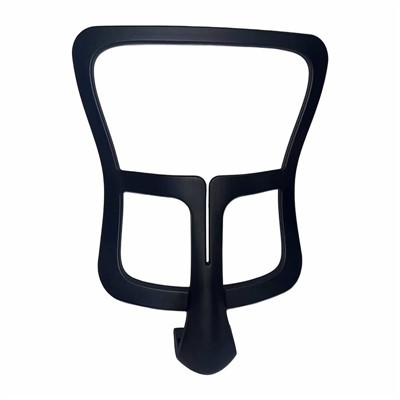
Speaking of which—if you’re working on a project right now, and you’re not sure what angle is right for your chairs, or you just want to ask about our frame options, hit me up. I’d be happy to walk through your project, answer any questions, and help you pick the perfect frame for your needs. No sales pitch, no pressure—just real advice from someone who’s been in this game for years and cares about making chairs that people actually want to sit in.
Office Chair Armrest References
- Chaffin, D. B., Andersson, G. B. J., & Martin, B. J. (2006). Occupational Biomechanics (4th ed.). John Wiley & Sons.
- American Chiropractic Association. (2022). Ergonomic Chair Guidelines for Reducing Lower Back Pain.
- University of Michigan Health. (2021). Proper Sitting Posture: Tips to Protect Your Back.
- Department of Labor and Industries, Washington State. (2019). Ergonomics for Office Workers: Chair Back Angle Recommendations.
Dongguan Weihong Furniture Co., Ltd.
As one of the most professional chair back frame manufacturers and suppliers in China, we also support customized service. We warmly welcome you to buy high quality chair back frame made in China here and get pricelist from our factory. For price consultation, contact us.
Address: No.145, Qingzhang Road, Changshantou Village, Qingxi Town, Dongguan City, Guangdong Province, China
E-mail: 1243042726@qq.com
WebSite: https://www.whfurni.com/
