If you’ve spent any time browsing construction or housing forums lately, you’ve probably seen the same question popping up again and again: Are prefab container houses actually energy-efficient? As a prefab container house supplier who’s worked with these structures for over seven years, I’ve fielded this question from homeowners, small business owners, and even local city planners more times than I can count. It’s easy to write off container homes as a trendy, low-quality alternative to traditional stick-built or modular housing—until you dig into the real data, and see how these repurposed steel structures are actually one of the most underrated energy-efficient building options out there, when done right. Prefab Container House
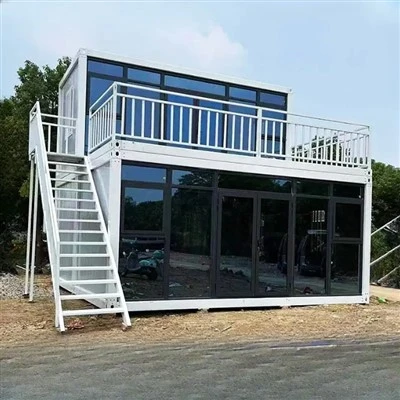
Let’s start with the most common misconception people have: that steel is a terrible insulator, so container homes will be freezing in winter and sweltering in summer. On paper, that makes sense. Steel conducts heat, after all. But what most people don’t realize is that we don’t just leave the steel shell bare—we build the insulation system around the container specifically, addressing that steel conductivity before it becomes a problem. Last year, I worked with a family in Minnesota who built a 400-square-foot two-container home, and their utility bills for the winter months came in at just over $85 a month. That’s for a home that stayed at a consistent 72 degrees, even when the outside temperature dropped to -15 Fahrenheit. How did we pull that off? We use closed-cell spray foam insulation that seals every gap in the container’s frame and adheres directly to the inner steel walls, creating a continuous air barrier that stops heat transfer far better than fiberglass batts or the standard insulation used in many traditional homes. We also add a layer of radiant barrier foil on top of the foam, which reflects any residual heat away from the steel shell, preventing it from seeping into the living space in the summer. For that Minnesota family, their summer bills were even lower—around $60 a month, because the insulation and radiant barrier kept the cool air inside without relying on the AC nonstop.
Another big energy win for container homes is their airtightness, which is one of the biggest factors in reducing heating and cooling costs. Traditional stick-built homes often have dozens of small gaps around windows, doors, outlets, and wall frames where air leaks out or in. The modular nature of container construction means each unit is built in our factory, in a controlled environment, so we can seal every joint, every seam, every window and door opening with precision that’s almost impossible to achieve on a build site. I’ve visited a handful of container homes that were built by hobbyists who cut corners on sealing, and yes, those ones have pretty high air leakage rates. But that’s not a flaw in the container itself—that’s a flaw in the construction process. When built by a professional prefab supplier, container homes have air leakage rates 30 to 40 percent lower than the average 10-year-old traditional home. That means no more drafty corners, no more wasting heated or cooled air seeping out into the attic or outside, and lower utility bills as a result.
Then there’s the material efficiency of using shipping containers in the first place. Every year, millions of shipping containers are retired from service because they’ve been damaged in transit, or they’ve outlived their intended 10 to 15 year life span for cross-ocean shipping. Most of these containers end up rotting in scrap yards, or being sent to landfills, which takes hundreds of years to break down. By repurposing them into homes, we’re not just keeping a huge amount of steel out of landfills—we’re also reducing the embodied carbon of the building dramatically. Embodied carbon is the total carbon emissions from making, transporting, and assembling a building, and it’s a huge part of a home’s overall carbon footprint. Traditional home construction requires mining iron ore to make steel, logging wood, manufacturing concrete, all of which are energy-intensive processes. For a 40-foot shipping container that’s been used for shipping, the embodied carbon is already locked into the steel—so using it as a home means we don’t have to produce all that new building material. Studies from the Steel Recycling Institute show that steel is one of the most recycled materials on the planet, and repurposing a single shipping container cuts a building’s embodied carbon by up to 70 percent compared to a similar-sized traditional home. That’s a big part of energy efficiency, too—because a lower carbon footprint means less reliance on fossil fuels for energy production.
But I’m not here to say that all container homes are energy-efficient. There are definitely cases where people end up with a home that uses way more energy than it should, and that usually comes down to a few key mistakes. The first is using low-quality insulation, or not insulating the container properly. Like I mentioned earlier, steel conducts heat, so if you just cut some fiberglass batts and stuff them between the interior walls, the steel will still transfer heat through those gaps, and you’ll end up with a home that’s hot in summer and cold in winter. The second mistake is over-sizing the HVAC system for the container. A lot of people think “bigger is better” when it comes to heating and cooling, but that’s not true. If your HVAC system is too big, it will turn on and off constantly, wasting energy every time it starts up. At our company, we do a detailed load calculation for every container home we build, taking into account the climate of the location, the size of the home, the insulation, and even the number of people living there, to make sure we install an HVAC system that’s the perfect size. That small step alone can cut energy use for heating and cooling by 15 to 20 percent.
The third big mistake is not paying attention to windows and doors. A home’s windows and doors are responsible for about 25 to 30 percent of heat loss, and a lot of budget container home builds use cheap, single-pane windows and thin doors to save money. We always use double-pane, low-E windows that are designed to reflect heat in winter and keep it out in summer, and solid steel or fiberglass entry doors with insulated cores. We also make sure all windows and doors are properly sealed with weatherstripping, so there are no gaps where air can leak through. I had a customer in Texas a few years ago who tried to build a container home on his own, and he used single-pane windows he got from a salvage yard. His summer utility bills were over $300 a month, which is way higher than it should be for a 500-square-foot home. When he brought us in to fix it, we swapped out the windows for low-E double-pane ones, added extra insulation, and sealed all the gaps, and his bills dropped to around $120 a month. That’s the difference between a well-built container home and one that’s done on a budget without attention to detail.
Another advantage of container homes when it comes to energy efficiency is their adaptability to renewable energy. The compact, modular design means it’s really easy to add solar panels, small wind turbines, or a battery storage system to power the entire home. I worked with a customer in Arizona last year who built a three-container home, and she added 12 solar panels on the roof, paired with a 10 kWh battery. She’s completely off-grid now, and she only pays about $15 a year in grid connection fees (she keeps it as a backup just in case). The container’s flat roof is perfect for solar panels, because there’s no sloped roof to modify, and the modular wiring makes it easy to install solar systems without a lot of extra work. We also design all our container homes with pre-wiring for solar systems, so if a customer wants to add them later, we can come in and do it in a day, instead of having to drill through walls and rewire everything. That kind of flexibility is huge for people who want to live off-grid, or reduce their reliance on traditional energy sources.
Let’s also talk about longevity and durability, which play a part in long-term energy efficiency. Shipping containers are built to withstand harsh conditions at sea—high winds, salt water, heavy loads, extreme temperatures. A well-maintained container home can last 50, 60, even 70 years, which is way longer than many traditional stick-built homes that start to degrade after 30 or 40 years. When a home is built to last, you don’t have to do expensive renovations every few years that require tearing out insulation or windows, which would waste materials and energy. We offer a 10-year warranty on all our container homes, and we use high-quality paint and sealants to prevent rust, which is the biggest threat to container structures. A rusted container would have gaps that lead to air leaks and poor insulation, but we treat every container with a rust-resistant primer and a top coat of paint before construction, so that problem is almost non-existent.
I think it’s also important to address the elephant in the room: why don’t more people use container homes if they’re so energy-efficient? The answer is mostly outdated perceptions and limited knowledge. A lot of people still think container homes are small, cramped, and look like a warehouse. But that’s not true anymore—modern container homes can be designed to look just like a traditional home, with open floor plans, high ceilings, large windows, and even porches and garages. We’ve built container homes that are 1,200 square feet, with three bedrooms, two bathrooms, and a full kitchen, and they look indistinguishable from a stick-built home from the outside. The modular construction also means that if a family outgrows their container home, they can add more containers to it, expanding the space without having to do a full renovation. That flexibility makes them a great long-term investment, which is part of being energy-efficient too—because you don’t have to build a whole new home when your family grows.
I’ve spent years talking to customers who are worried about the energy efficiency of container homes, and the number one takeaway I’ve gotten is that it all comes down to quality construction. A cheap, hobbyist-built container home might have high energy bills, but a professional, well-insulated, properly sealed container home can be one of the most energy-efficient housing options on the market. For comparison, the U.S. Department of Energy reports that the average new traditional home uses about 10,800 kWh of electricity per year. A similarly sized well-built container home uses about 30 to 40 percent less, according to data from the National Association of Home Builders. That’s a huge difference in utility costs, and it adds up to tens of thousands of dollars over the life of the home.
If you’re considering a container home and want to make sure it’s as energy-efficient as possible, here are a few things to look for. First, ask about the insulation system—does the supplier use closed-cell spray foam? Fiberglass is fine, but closed-cell is better for air sealing and heat transfer. Second, ask about the HVAC load calculation—any good supplier should do a detailed calculation based on your climate and home size, not just guess at the size of the system. Third, make sure windows and doors are double-pane, low-E, and properly sealed. And fourth, if you’re interested in solar or renewable energy, ask if the home is pre-wired for those systems.
At the end of the day, energy efficiency isn’t just about saving money on utility bills—it’s about reducing your carbon footprint, living comfortably, and building a home that will last for decades. Container homes have gotten a bad rap over the years, but that’s mostly from poorly built examples that don’t take advantage of the design’s strengths. When built correctly, they’re energy-efficient, durable, flexible, and a smart choice for anyone looking for a home that’s both comfortable and kind to the planet.
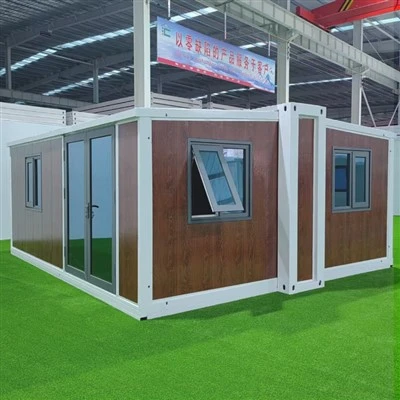
If you’re interested in learning more about how a prefab container home can fit your needs, or want to discuss energy-efficient design options for your space, feel free to reach out to us to schedule a consultation and walk through your project details.
Folding House References
International Energy Agency. (2021). Global Status Report for Buildings and Construction.
National Association of Home Builders. (2022). Energy Efficiency in Modular and Prefabricated Housing.
Steel Recycling Institute. (2020). Repurposing Shipping Containers for Residential Use: Embodied Carbon and Performance Analysis.
U.S. Department of Energy. (2023). Energy Efficiency in Single-Family Homes.
Jiangsu Suqian Longze Modular Construction Co., Ltd.
As one of the most professional prefab container house manufacturers and suppliers in China, our products have good reputation in the market. Please feel free to buy high quality prefab container house at competitive price from our factory. We also accept customized orders.
Address: No. 8, Weisan Road, Shuanggou Town, Sihong County, Suqian City, Jiangsu Province, China
E-mail: Lzmk88888888@163.com
WebSite: https://www.expandablehousefactory.com/
