When I first started working in the industrial chiller space over 12 years ago, I’d sit in on client meetings where every decision came down to upfront cost. A shop would pull out their calculator, run the numbers, and pick the compressor that cost a few hundred dollars less, no matter the long-term use case. More often than not, six months later they’d be calling us in to fix a broken system or replace a part that cheap compressor couldn’t handle. That’s when I learned to stop talking about “chillers” and start talking about screw industrial chillers—because they’re not just another piece of equipment; they’re a solution built for the kind of consistent, heavy-duty work that keeps manufacturing, food processing, plastic molding, and many other industries running around the clock. Today, I want to break down why screw chillers have become my go-to recommendation for clients looking for real, long-term value, and why the old “cheaper is better” mindset rarely holds up. Industrial Chiller
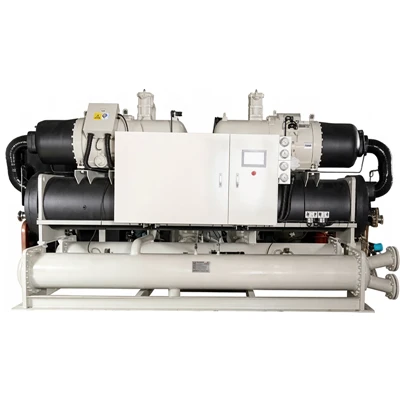
Let’s start with the compressor, because that’s the heart of any industrial chiller. Screw compressors operate on a simple, rotating screw mechanism—two helical rotors that mesh together to compress refrigerant vapor. Unlike reciprocating compressors, which use pistons that move up and down, or scroll compressors that work with smaller, circular scrolls, screw compressors deliver a continuous, smooth flow of refrigerant. That might sound like a minor detail, but it’s what makes screw chillers ideal for applications that don’t have time for downtime. A plastic molding plant, for example, runs 24/7 to meet product demand. If a reciprocating compressor fails, you could be looking at hours of lost production, wasted raw materials, and delayed orders. Screw compressors, on the other hand, have far fewer moving parts than reciprocating models. No piston rings to wear out and break, no valves that can stick from constant back-and-forth motion. That reduces the number of parts that need replacement, which directly translates to less maintenance and fewer emergency service calls. I’ve seen clients switch from reciprocating to screw chillers and cut their annual maintenance costs by up to 30% in the first year alone—those numbers stick with you when you’re staring at a monthly equipment budget.
Next up is energy efficiency, which is a big one for every industrial operation. Energy costs make up a huge portion of a facility’s monthly expenses, and any edge you can get there adds up quickly. Screw chillers have a unique advantage here: they maintain consistent efficiency across a wide range of load conditions. Most industrial processes don’t run at full capacity 100% of the time. A food processing plant might run at full load during peak harvest season, but scale back during off-peak months. A plastic molder might have 10 machines running at once on a busy week, but only 5 during a lull. Screw chillers use something called capacity modulation to adjust their output to match the actual cooling load. Instead of cycling the compressor on and off (which wastes a lot of energy, by the way), they can adjust the speed of the rotors using variable frequency drives (VFDs) or unloaders that control how much of the refrigerant is compressed. That means when your process only needs 50% cooling, the chiller doesn’t have to work as hard—no more wasting energy to cool more than you need. I recently worked with a plant that switched to screw chillers and saw a 22% drop in their monthly energy bills. For a facility that spends $15,000 a month on cooling, that’s an extra $3,300 in their pocket every month—money they can put toward expanding their operations, upgrading other equipment, or even giving their team a bonus. That’s not a small win; that’s a game-changer.
Reliability is another advantage that can’t be overstated, especially for operations that run around the clock. I once had a client in the automotive parts industry who had a reciprocating chiller that failed during a critical production run. They were molding plastic bumpers for a major car manufacturer, and if they missed the delivery deadline, they’d lose a $2 million contract. The chiller repair crew couldn’t get to them for 8 hours, and by the time the compressor was fixed, they’d wasted 10 hours of production time and hundreds of pounds of raw plastic. When they called me a month later to replace that old system, they had one requirement: it had to run 24/7 for at least 5 years without major issues. We recommended a screw chiller. Today, 7 years later, that chiller is still running strong, with only routine maintenance (like changing the filter and checking the refrigerant levels) done quarterly. Why is reliability so high with screw chillers? It’s all about the design. The rotating screw mechanism has fewer points of friction than a reciprocating compressor, which means less wear and tear over time. There’s no contact between the rotors (they have a small, precise gap), so there’s almost no metal-on-metal friction that causes parts to break down. That design also means screw chillers can handle higher loads and higher pressure ranges, which makes them suitable for larger facilities or processes that require consistent, high-capacity cooling. I’ve seen screw chillers installed in facilities with 50,000 square feet of production space, running 24/7 for over a decade with just regular check-ups. That kind of reliability translates to peace of mind for plant managers—they don’t have to lie awake at night worrying about a chiller breaking down at 2 a.m.
Flexibility is another big plus. Not every industrial process is the same, and screw chillers can be customized to fit almost any need. Some processes require very precise temperature control—like pharmaceutical manufacturing, where drugs need to be kept at a specific temperature to maintain their efficacy. Screw chillers can maintain temperature within a fraction of a degree, which is critical for industries where even a small temperature fluctuation can ruin products. Other facilities might need to add more production lines down the line, and screw chillers can be scaled up easily. You don’t have to replace the entire system if you add more equipment; you can adjust the capacity of the chiller or add additional modules to meet the new demand. That’s a huge advantage for growing businesses. A small plastic molder might start with a single screw chiller, then expand and add a second unit a few years later without having to overhaul their entire cooling system. I also work with clients that have special environment requirements—like facilities in hot, humid climates, or locations with limited space. Screw chillers are designed to operate efficiently in high ambient temperatures, so even if the outside temperature is 100 degrees Fahrenheit, they can still deliver consistent cooling without overworking. And because they’re compact compared to some other large industrial chillers, they can fit into smaller spaces without taking up valuable production floor space.
Wait, let’s talk about noise levels too—this is something I don’t see a lot of people mention, but it matters more than you think. Older reciprocating chillers can be very loud, sometimes reaching 80 decibels or more, which is about as loud as a lawnmower. That’s not just a nuisance; it can also be a safety issue for workers, who might have to wear ear protection around the clock. Screw chillers operate much quieter, often at 60 to 70 decibels. That’s a huge difference in workplace comfort. I had a client in a food processing plant that worked in a busy, open floor plan. Their old reciprocating chiller was so loud that workers had to shout to each other across the room, which led to miscommunication and even a few minor safety incidents after hours. When we replaced it with a screw chiller, the noise level dropped significantly. Workers said they could actually have a normal conversation while working near the chiller, and the number of miscommunication incidents went down by almost half. That’s not just a comfort factor; it’s a safety factor, which is a big deal for any industrial facility.
Of course, I know that no piece of equipment is perfect, and screw chillers do have upfront costs that are higher than some other types of chillers. But here’s the thing: when you factor in the energy savings, lower maintenance costs, and reduced downtime, the total cost of ownership over the life of the chiller is actually lower. Let’s do a quick breakdown. Suppose you have two chillers: a reciprocating model that costs $10,000 upfront, and a screw model that costs $15,000 upfront. The reciprocating chiller uses $2,000 a year in energy, $1,500 a year in maintenance, and has an average of 2 days of downtime a year (costing $10,000 a day in lost production). The screw chiller uses $1,500 a year in energy, $1,000 a year in maintenance, and has 0.5 days of downtime a year (costing $10,000 a day). Over 5 years: Reciprocating total cost = $10,000 + ($2,000 x 5) + ($1,500 x 5) + (2 x $10,000 x 5) = $10,000 + $10,000 + $7,500 + $100,000 = $127,500. Screw total cost = $15,000 + ($1,500 x 5) + ($1,000 x 5) + (0.5 x $10,000 x 5) = $15,000 + $7,500 + $5,000 + $25,000 = $52,500. That’s a massive difference. The upfront cost is $5,000 more, but over 5 years, you save $75,000. That kind of return on investment is hard to ignore, especially for businesses looking to cut costs and improve efficiency.
I’ve been in this industry long enough to know that change can be hard. Plant managers are busy, they have budgets to stick to, and they don’t want to switch to a new type of equipment unless they’re sure it’s worth it. But every time I show a client these numbers, every time I tell them about the plant that lost $20,000 in production because of a broken chiller, every time I hear about the workers who can now communicate safely around their equipment, they start to see the value. Screw industrial chillers aren’t just a better piece of equipment—they’re a partner in keeping your business running smoothly, efficiently, and safely. They’re built for the long haul, for the days when you need 100% cooling and the days when you only need half, for the busy seasons and the slow ones, for the hot climates and the tight spaces. If you’re tired of dealing with frequent breakdowns, high energy bills, and endless maintenance, maybe it’s time to talk about a screw industrial chiller. We work with facilities of all sizes, from small local manufacturers to large multinational corporations, and we can help you find the right chiller for your specific needs. Whether you’re in plastic molding, food processing, pharmaceuticals, or any other industry that relies on consistent cooling, we’re here to help you find a solution that works for you. To learn more about how a screw industrial chiller can benefit your business and discuss your specific cooling needs, get in touch with our team to arrange a consultation and walkthrough. We’ll provide you with all the details, answer all your questions, and help you make the best choice for your operations.
Refrigeration Unit References
- ASHRAE Handbook. 2022. HVAC Systems and Equipment. American Society of Heating, Refrigerating and Air-Conditioning Engineers.
- Industrial Chiller Maintenance Best Practices. 2021. Global Industrial Equipment Association.
- Energy Efficiency in Industrial Cooling Systems. 2020. U.S. Department of Energy, Industrial Technologies Office.
Shanghai Soouney Refrigeration Equipment Co., Ltd.
As one of the most professional industrial chiller manufacturers and suppliers in China, we offer a wide range of products with superior quality. Please feel free to wholesale customized industrial chiller from our factory. Also, quotation is available.
Address: 1st Floor, Office Building, No. 15 Tongxin East Road, Wanping, Wujiang District, Suzhou City, Jiangsu Province (Shuni Company)
E-mail: shkt@souney.com.cn
WebSite: https://www.soouneyrefrigeration.com/
