Hey everyone, if you’re a contractor, painter, or just someone sprucing up a property, you’ve probably stared at two cans of architectural emulsion on your workbench at some point—one from Brand A, half-empty, and a new, unopened one from Brand B. The question hits you: Can I mix these? I get it; wasting half a can is a pain, and nobody wants to run to the store at 7 PM for one last gallon. But as a supplier of architectural coating emulsions (the actual backbone of those paint cans, fyi), I’ve fielded this exact question a hundred times. Let’s break this down like we’re chatting over a coffee, no jargon, no stuffy whitepapers—just real, actionable stuff. Architectural Coating Emulsion
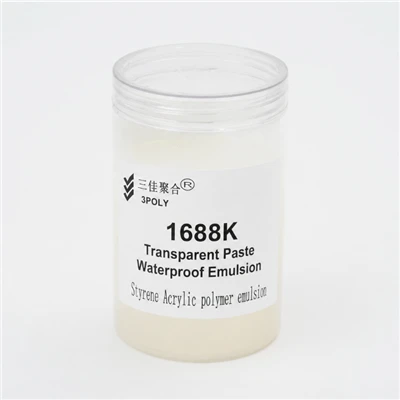
First, let’s get the basics straight: architectural emulsion is a water-based polymer dispersion, right? It’s what binds all the pigments, fillers, and additives into a film that sticks to walls. Different brands use different polymer formulations. That’s not a dig at any brand—they all have their own recipes tailored for specific jobs. Some are super flexible for exterior stucco, others are harder for high-traffic interior walls, some have mildewcide built-in, others are low-VOC for sensitive areas. So why would mixing be a problem?
Let’s start with the science part, but keep it simple. When you mix two emulsions, their polymers have to “play nice” (technical term). If their polymer chemistries clash, you get what’s called coagulation—think lumpy yogurt instead of smooth milk. That’s not just a texture issue; it ruins the paint’s performance. For example, if Brand A uses an acrylic polymer and Brand B is a vinyl acrylic, their molecules might repel each other instead of bonding, leading to a film that cracks, peels, or even doesn’t dry evenly.
Then there are additives. Every brand tosses in their own mix: thickeners to adjust consistency, surfactants to help it spread, biocides to keep the can from going moldy, maybe anti-foamers. These aren’t universal. One brand might use anionic surfactants, another cationic—those two react like oil and water, even if it’s water-based. Mixing them can cause the paint to separate mid-job, or your roller to drag like crazy. I’ve seen guys mix a half-can of interior matte from Brand X with a exterior satin from Brand Y, and by the time they rolled the second wall, the paint was streaky and had to be scraped off. Not a good look for a client.
But wait—this isn’t a flat “never mix” rule. There are exceptions. Let’s say you’re using two emulsions from the same chemical family, and both are labeled “interior matte eggshell” or something close. How do you tell? Here’s the trick: check the technical data sheet (TDS) that comes with every can. It’s not just a boring piece of paper—it’s your cheat code. Look for the “polymer type” line. If both say “100% acrylic,” you’re in the clear, mostly. Even then, test a small amount first. Scoop a tablespoon of each, mix them in a paper cup, and let it sit for an hour. If it stays smooth, no lumps, no separation, then it’s safe to mix. If it looks weird? Toss it. No exceptions.
I’ve had a few contractors come to me after mixing two 100% acrylic emulsions, just to be safe. One time, a local painter told me he mixed a half-gallon of leftover interior semi-gloss from Brand C with a new gallon from Brand D, both 100% acrylic, and it turned out great for a closet renovation. He tested it first, watched it dry, and no issues. But another guy tried mixing a 100% acrylic interior with a styrene-acrylic exterior, and ended up with a mess that cost him a full day of rework. That’s why testing is non-negotiable.
Another thing to consider: pigment loading. Each brand has a different amount of pigment (the color stuff) in their emulsion. If one is high-pigment (more color, cheaper to cover) and the other is low-pigment, mixing them can throw off the color. You’ll end up with a weird mid-tone that’s not what you wanted. I once had a homeowner call me panicking because he mixed two beige emulsions from different brands, and one wall was a different shade. He didn’t test the color first, just guessed. Lesson learned—always test the color mix on a spare piece of drywall before rolling the whole room.
What about if you’re in a pinch? Like, you’re halfway through a wall and run out of emulsion. Don’t just grab the nearest brand. Here’s what I recommend: first, check if both are the same type (interior/exterior, sheen, polymer family). If yes, do the cup test. If not, head to the store for a single can. It might be a hassle, but it’s way better than fixing a peeled or streaky wall later. I’ve seen contractors cut corners here and end up eating the cost of a full re-paint. That’s a bigger waste than a half-can of paint.
Wait, what about specialty emulsions? Like low-VOC, stain-resistant, or anti-mold? Those have extra additives that are super specific. Mixing a low-VOC emulsion with a regular one can mess up the low-VOC properties, making the room smell more than it should (or even not meet regulatory standards in some areas). Same with anti-mold—mixing with a non-mold emulsion can reduce the mildewcide concentration, leading to mold growth on the wall down the line. That’s a nightmare for clients, and a headache for you.
Let’s talk about why brands make their emulsions different. It’s not to be confusing—it’s because different jobs need different things. Exterior emulsions have to handle UV rays, rain, temperature changes. Interior ones need to be scrubbable, low-odor, safe for kids or pets. So when a brand formulates their emulsion, they’re balancing all these factors. Mixing two different formulations throws off that balance. It’s like putting a diesel engine in a gas car—it might run for a minute, but it’s not going to work right long-term.
Now, let’s clear up a myth: some people think all water-based paints are the same, so mixing is fine. Nope. Water is just the carrier—the polymer and additives are what make it architectural emulsion, not just paint. That half-can you have in the garage? It’s not just leftover paint; it’s a specific emulsion that was made for a purpose. Treat it like that.
What if you’re a DIYer, not a pro? Same rules apply, but maybe even more important. DIYers don’t have the TDS memorized or the experience to spot a bad mix. Stick to the cup test every time. If it doesn’t look right, don’t use it. It’s better to spend $30 on a new can than $100 on a paint job that has to be redone. I’ve had friends who tried mixing two DIY paints, and their bedroom wall cracked after a month. They were so mad, but it was totally avoidable.
As someone who works with architectural coating emulsions every day, I’ll be the first to tell you—we don’t want you wasting product or messing up your job. That’s why when we supply emulsions, we make sure to include clear notes about compatibility, and we’re always here to answer questions. If you’re not sure if two cans will mix, send us a photo of the cans (the labels, especially the TDS info) and we can help. No guesswork, just honest advice.
Wait, one last thing: storage. If you have leftover emulsion, don’t just leave the can open. Seal it tight, label it with the brand and date, and store it in a cool, dry place. If you need more later, you can check if that same brand is available, instead of grabbing a random one. That’s the best way to avoid mixing issues in the first place.
So to wrap this up: mixing different brands of architectural emulsion isn’t a hard yes or no. It’s a sometimes, but only if you do your homework. Check the polymer type, look at the TDS, do the small cup test, and never skip color testing. If it passes all that, you’re good to go. If not, bite the bullet and get a new can. It’s not worth the hassle of a botched job.

If you’re working on a project and need help figuring out which emulsion is right for you, or have questions about mixing your current stock, don’t hesitate to reach out for procurement chat. We’re here to make your job easier, not harder.
Textile Finishing Emulsion References
- Coatings Europe. (2022). "Polymer Compatibility in Water-Based Architectural Coatings." European Paint, Ink & Resin Association.
- American Coatings Association. (2021). "Best Practices for Mixing Architectural Emulsions for Residential and Commercial Applications." ACA Industry Guidelines.
- Singh, J. (2020). "Additive Interactions in Water-Based Coatings: Common Causes of Film Failure." Journal of Coatings Technology and Research.
- ASTM International. (2019). "Standard Guide for Compatibility Testing of Architectural Coatings." ASTM D7038-19.
- National Paint and Coatings Association. (2021). "DIY Contractor Tips: Avoiding Mixing Errors with Architectural Emulsions." NPCA Practical Resources.
Shandong Sanjia Polymer Material Co., Ltd.
As one of the most experienced architectural coating emulsion manufacturers in China, we also support customized service. With a professional production team, we are able to meet the needs of the majority of our customers. Please feel free to buy bulk advanced architectural coating emulsion from our factory.
Address: No.15 Hengtong Road, Tancheng County, Linyi City, Shandong Province
E-mail: yudongxu1109@gmail.com
WebSite: https://www.3emulsion.com/
