Hey everyone, let’s cut to the chase—if you’re a brand owner, packaging designer, or even a factory sourcing team looking into vacuum-metalized BOPET film, you’ve probably stumbled on a big question: does this stuff have FDA approval? As a supplier who’s been in this game for over 10 years, I get it. FDA stuff isn’t just a box to check—it’s make-or-break if you’re packaging food, meds, or even products that come into close contact with people. No one wants their line held up at customs because a material didn’t pass regulatory muster, right? Vacuum-Metalized BOPET Film
First off, let’s clarify: vacuum-metalized BOPET (that’s polyester film we’ve coated with a thin layer of aluminum, usually) isn’t a single “FDA-approved” product. Wait, hold on—let me explain that. The FDA doesn’t hand out one-size-fits-all approvals for specific materials. Instead, they set standards for what materials can be used in food contact, medical packaging, and other regulated sectors. So it’s more like: does your vacuum-metalized BOPET film meet the FDA’s regulations for those end uses? That’s the right way to frame it.
Let’s break down the key FDA rules here. The big one is 21 CFR Part 174, 175, 176, and 177, right? Those cover indirect food additives—because the metalized film isn’t the food itself, it’s a packaging material that might touch food. For our vacuum-metalized BOPET, the base film is BOPET, which is covered under 21 CFR 177.1520—specs for polyester resins and films. The aluminum layer? That’s under 21 CFR 175.105 for adhesives? No, wait, no—the aluminum coating as a metal contact material, that’s 21 CFR 178.3297, which is about aluminum for use in food-contact surfaces.
Here’s the thing: a lot of people mix up “vacuum-metalized” and “laminated” films. If you’re just vacuum-coating a thin aluminum layer directly onto BOPET, the main thing to check is that neither the BOPET nor the aluminum leaches stuff into food. At my company, we test every batch of our food-grade vacuum-metalized BOPET for total migration and specific heavy metals (lead, cadmium, mercury, arsenic—you know the ones). We do compliance testing per FDA’s methods, like the food simulants: water (for acidic foods, like soda or pickles), 10% ethanol (for alcoholic drinks), 3% acetic acid (for vinegar, salad dressings), and vegetable oil (for fatty stuff, like chips or frozen pizza). If migration levels are below the FDA’s limits (which are super low—like parts per million, basically), that’s when it’s good to go.
But wait—what about medical packaging? FDA has different rules there, mostly for Class I, II, and III devices. A lot of our clients use vacuum-metalized BOPET for blister packs for pills, or sterile barrier films for medical supplies. For that, we don’t just need food-contact compliance—we also need to make sure the film is compatible with sterilization methods (ethylene oxide, gamma radiation) and doesn’t release any residual chemicals during sterilization. Some of our metalized films are also cleared for use in medical devices under 510(k) pathways, but that’s dependent on how the film is used with other materials (like adhesives in lamination) too.
Now, the myths I hear all the time: “All vacuum-metalized BOPET is FDA-approved” and “None of it is, because the metal coating is risky.” Both are wrong. It’s all about formulation and testing. Our standard off-the-shelf roll stock? The non-food-grade stuff? That’s for things like labels, decorative packaging, or insulation—no food contact, so it doesn’t need FDA. But if you’re reaching out for food or medical use, you have to specify that upfront. Last year, we had a client order a batch of our standard metalized film because they thought it was “the same” as our food-grade line, and it failed migration testing when they ran their own audits. Big mistake. That’s why clear communication with your supplier is key.
Another thing: the thinness of the aluminum layer matters too. Some suppliers do ultra-thin aluminum (like 10 nanometers) for decorative uses, but for food contact, we use a slightly thicker layer (20-50 nanometers) to make sure there’s no pinholes that could let the metal leach. Wait, no—pinholes are more for barrier properties, right? Oh, right, barrier is why you use metalized BOPET in the first place: it keeps oxygen and moisture out, so food stays fresh longer. But if pinholes are too big, they can lead to higher migration? No, wait, migration is about the chemical extraction, not the physical holes. My bad—let me correct that. Pinholes are a barrier issue, but for food contact, the main test is migration. We run a pinhole test too for clients that need high barrier, obviously, but that’s separate from FDA compliance.
What about other regions? A lot of our clients are global, so they ask about EU food regulations too (EC 1935/2004, which is similar to FDA but has different test methods). But the question here is FDA, so stick to that. One common mix-up is that some metalized films made for other markets might not meet FDA’s specific migration limits for, say, certain additives in the BOPET. For example, if the BOPET uses a plasticizer that’s allowed in EU but not FDA, that’s a problem. Our company uses only BOPET resins that are explicitly listed in FDA’s 177.1520, so we don’t have that issue.
Now, how do you actually prove it? You don’t just take a supplier’s word for it. Legit suppliers will provide a Certificate of Compliance (CoC) that lists the test results for total migration, specific migration, and the applicable CFR sections. Some will even have a Food Contact Notification (FCN) with the FDA. Wait, what’s an FCN? That’s when a company notifies the FDA that a new food contact substance is safe, and the FDA doesn’t object within 120 days. We have FCNs for both the BOPET base film and the vacuum-metalized aluminum coating, so that’s a big plus for our clients in regulated industries.
I can’t stress enough: always ask for documentation, not just a vague “it’s FDA approved.” Last quarter, we had a new supplier reach out to poach one of our big food clients, saying their metalized BOPET was FDA-approved—but when we asked for their CoCs, they had test results from 5 years prior, and they were for a different coating material. That’s the kind of thing that gets you a product recall, or worse, a fine from the FDA.
So, to circle back: does vacuum-metalized BOPET have FDA approvals? The short answer is—yes, when it’s formulated, tested, and documented to meet FDA’s food contact (or medical device) regulations. It’s not a universal stamp, but there are plenty of vacuum-metalized BOPET films out there that check all the FDA boxes.
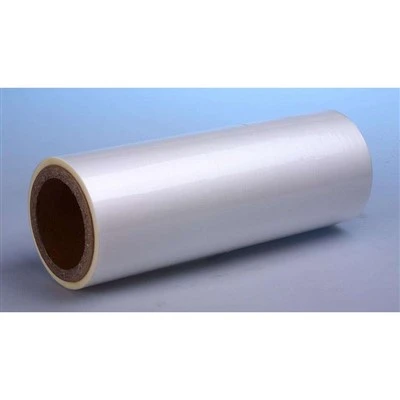
Now, if you’re sourcing vacuum-metalized BOPET for food packaging, medical packaging, or any regulated end use, we’re the team to work with. We’ve got 10+ years of experience in this, all our relevant FDA-compliant materials, and we can tailor the thickness, coating, and roll size to your exact needs. No runaround, no confusing jargon—just straight answers and test results you can trust. Reach out to our team today to chat through your project, get a sample, or clarify any FDA questions you’ve got.
Polyethylene Film References
- U.S. Food and Drug Administration. (2023). Indirect Food Additives: Polymers. 21 CFR Parts 174, 175, 176, and 177.
- U.S. Food and Drug Administration. (2023). Aluminum, Aluminum Alloys, and Aluminum Articles. 21 CFR Part 178.
- U.S. Food and Drug Administration. (2022). Food Contact Notifications (FCNs) and Threshold of Regulation Exemptions. FDA Guidance Document.
- American Society for Testing and Materials. (2021). Standard Test Methods for Simultaneous Determination of Migration from Food Contact Materials. ASTM D7002.
Qingzhou Huiyuan Packaging Materials Co., Ltd.
As one of the most professional vacuum-metalized bopet film suppliers in China since 1997, we’re featured by quality products and good service. Please feel free to buy cheap vacuum-metalized bopet film made in China here from our factory. For price consultation, contact us.
Address: Naoshan Industrial Park, Shaozhuang Town, Qingzhou City, Weifang, Shandong Province, China.
E-mail: 15864598133@163.com
WebSite: https://www.huiyuanfilms.com/
