If you’ve ever dug into an EV battery, a solar storage setup, or even a fancy power tool with a long-lasting rechargeable pack, you’ve probably glanced over the tiny, unassuming plastic and metal part tucked between the battery modules and the brain that keeps it all safe: the BMS connector. I’m the founder of a BMS connector supplier, and I’ve spent the last 8 years talking with EV engineers, solar installers, and tech startup teams who all ask the same basic question: “Why does this little part matter more than the wires soldered directly to my BMS?” Let’s break it down straight—no fancy jargon, just how this part turns static battery data into actionable, safe communication that keeps your gear running right. BMS Connector
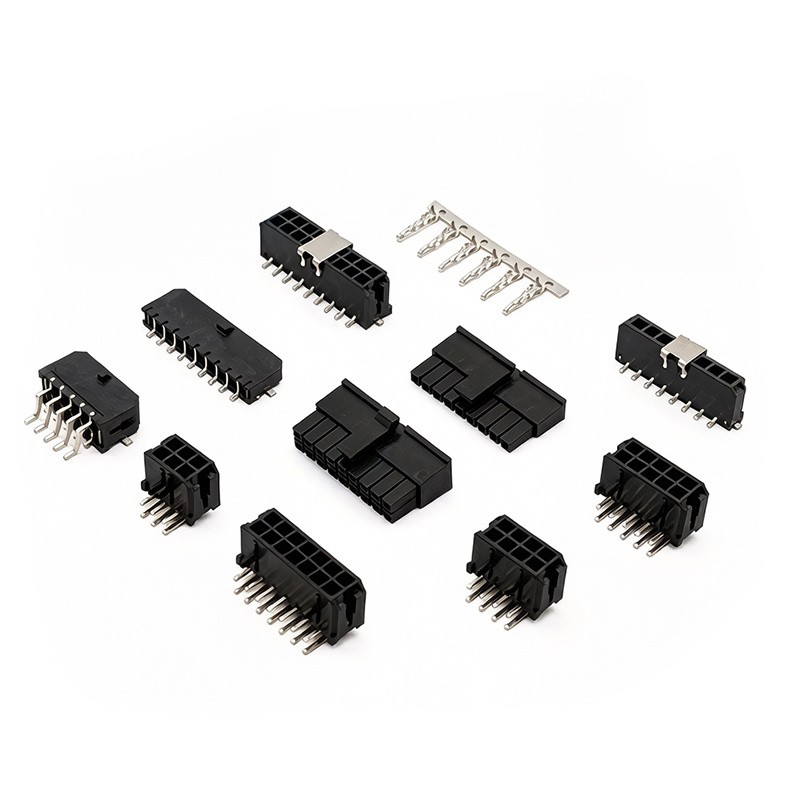
First, let’s set the scene. A BMS (Battery Management System) does a huge, non-negotiable job: it monitors every single cell in the battery pack, tracks voltage, current, temperature, and state of charge, and shuts things down if something goes wonky—like a cell overheating or drawing too much power. But none of that works if the BMS can’t get that data fast and reliably. That’s where the connector comes in. It’s not just a pair of plugs that click together; it’s the physical bridge between the battery’s sensing nodes and the BMS’s control unit. Without a good BMS connector, you’re basically trying to text a friend with a phone that only works half the time—some messages get through, some get garbled, and you have no clue when a critical alert gets lost.
Let’s start with the basics of data communication for BMS. When a battery is made, dozens (or even hundreds, for big EV packs) of individual lithium-ion cells are wired together in series and parallel. Each cell has a tiny sensor that reads its voltage and temperature. Those sensors don’t send their readings straight to the BMS—they first feed into a ribbon cable or harness, which ends at a set of pins on the BMS connector. When you plug the connector into the BMS, those pins form a physical circuit, letting data flow from the cells to the brain. The key here is consistency: every time, whether it’s a factory build or a replacement, the connector has to make the same tight, clean connection. If the pins are misaligned, or the plastic housing that holds them is flimsy, you’ll get intermittent data drops—something that shows up as a random error code on an EV dash, or a solar battery that incorrectly estimates its remaining charge.
Now, it’s not just about passing data—it’s about the right type of data. Most BMS setups use two main communication protocols, and the connector has to support both, depending on the application. The first is CAN (Controller Area Network), which is the standard for EVs and heavy machinery. CAN sends data in small, fast packets that prioritize critical alerts—like a cell overheating—over non-essential info. The second is UART (Universal Asynchronous Receiver-Transmitter), which is often used in smaller setups like e-bikes or home solar storage, where less data volume is needed. A good BMS connector isn’t one-size-fits-all; it’s designed with pin spacing and contact types that work for both protocols, so engineers don’t have to rework their entire harness just to swap a component. That’s a big win for time and cost, by the way—we’ve had customers tell us switching to our CAN/UART-compatible connectors cut their harness design time by 20% because they didn’t have to add extra wiring or adapters.
Wait, you might be thinking: why not just solder the harness directly to the BMS? That’s a fair question, and it comes down to two big reasons: modularity and reliability. First, batteries get serviced. If a single cell goes bad in a big EV pack, you can’t pull the entire pack apart to fix it if the harness is soldered to the BMS. The connector lets you unplug the pack, remove the bad module, plug a new one in, and get back on the road in an hour instead of a full day of soldering and testing. Second, connectors hold up way better to vibration and temperature swings than permanent solder. EVs drive over potholes, solar batteries sit in attics that swing from 0°F to 120°F, and even e-bikes get banged around on trails. Solder joints can crack after a few years of that, but a well-designed connector uses spring-loaded contacts that keep pressure consistent, so even with movement, the connection stays solid. We test our connectors to 1,000 mating cycles, and they still maintain 95% of their electrical performance—way more than a soldered joint, which would likely fail after a few dozen plug-ins.
But here’s the part most people don’t talk about: the connector also has to block noise. Data communication for BMS is super sensitive—you’re reading millivolt differences between cells, and a little electrical interference from a motor or a solar inverter can throw those readings off. A bad connector will let that noise seep into the data line, leading to false alerts or, worse, no alert at all when a cell is about to overheat. That’s why we design our BMS connectors with shielded shells, or pins that are positioned to separate data lines from power lines. For example, in an EV pack, the high-power lines that feed the motor run right next to the low-voltage data lines that carry cell info. If the connector’s pins aren’t shielded, the high power can induce a signal on the data line, making the BMS think a cell is at 4.2V when it’s actually at 3.8V. We test our connectors for EMI (Electromagnetic Interference) resistance to meet ISO 11452, the standard for automotive components, so our customers don’t have to add extra shielding to their harnesses to fix that problem.
Another key function: current carrying capacity. Wait, you might think that’s for power connectors, not communication— but here’s the twist. Some BMS connectors don’t just carry data; they carry small amounts of current for the cell sensors, or even power to the BMS itself. If the connector’s contacts can’t handle that current, they’ll overheat, which melts the plastic housing, damages the pins, and kills the data connection. For our high-current BMS connectors, we use gold-plated copper contacts instead of tin-plated ones, because gold resists corrosion and has lower resistance. That means the contact doesn’t heat up even when carrying 5A, which is common in many small EV and solar setups. We’ve seen competitors use tin-plated contacts to cut costs, and their customers end up with connector failures after 1-2 years in hot environments—something we avoid by testing every batch for current capacity at extreme temperatures.
Let’s tie this all together with a real example. Last year, we worked with a startup building electric delivery vans. They were using a cheap, off-the-shelf BMS connector from a generic electronics supplier, and they kept getting 10-15 warranty claims a month from vans where the BMS incorrectly shut off the battery mid-route. Turns out, the connector’s pins were too wide, so when they mated them, there was a gap that let EMI from the van’s motor seep into the data lines, leading to false “overcurrent” alerts. We switched them to our custom BMS connectors, which have narrow, shielded pins and meet their automotive EMI standards. The warranty claims dropped to zero in 3 months, and their assembly time went up because the connectors were keyed—meaning you can’t plug them in wrong, so they had no reworks from miswiring. That’s the difference a good connector makes: it’s not just a plug, it’s a part that prevents downtime, which for a delivery company translates to thousands of dollars a month in lost revenue.
Now, let’s clear up a common misconception: BMS connectors aren’t one-size-fits-all. A connector for a small e-bike has different needs than one for a heavy-duty electric bus. For e-bikes, you need tiny, lightweight connectors with low mating force, so a mechanic can plug them in without tools. For electric buses, you need heavy-duty connectors that can handle 10,000 mating cycles and extreme vibration. For solar storage, you need weather-sealed connectors that can handle dust and humidity if the setup is outdoors. That’s why a lot of our customers come to us instead of generic electronics suppliers: we don’t sell a single connector that works for everything. We work with their specific BMS model, their battery size, and their environment to design a connector that fits their exact communication needs.
So, to circle back to the original question: how does a BMS connector support data communication? It’s a multi-step job. First, it’s the physical link that connects the cell sensing network to the BMS, turning individual cell readings into a readable data stream. Second, it’s built to support the right communication protocol (CAN, UART, etc.) so the data is sent fast and reliably, without delay. Third, it blocks noise and handles current so the data isn’t corrupted or lost. Fourth, it’s modular, so batteries can be serviced easily without disrupting the data flow. Fifth, it’s durable enough to hold up to the harsh environments where most BMS systems live, so the data keeps flowing for years.

If you’re an engineer designing a battery pack, a solar installer building a storage setup, or a fleet manager looking to reduce warranty claims, you know that even the smallest part can make or break your system. A bad BMS connector doesn’t just cause minor errors—it can lead to safety risks, downtime, and lost money. We’ve spent years refining our BMS connectors to handle all the above, so you don’t have to worry about data dropouts, EMI, or failed connections in the middle of a job. If you’re looking to upgrade your current connector, test a custom design for a new product, or just chat through your BMS data communication needs, reach out to our team to discuss procurement.
FPC Connector References
- ISO 11452: Road vehicles – Component test methods for electrical disturbances from narrowband radiated electromagnetic energy
- Battery University. (2023). Battery Management Systems: Functions and Components.
- Society of Automotive Engineers (SAE) J1939: Vehicle Control Network (CAN) for Heavy-Duty Applications
- International Electrotechnical Commission (IEC) 62133: Secondary Cells and Batteries Containing Alkaline or Other Non-Acid Electrolytes – Safety Requirements for Portable Sealed Secondary Cells, and for Batteries Made from Them, for Use in Portable Applications
Wenzhou JKUN Connector Co., Ltd.
As one of the most professional bms connector manufacturers and suppliers in China, we’re featured by quality products and low price. Please rest assured to wholesale bulk customized bms connector from our factory. For quotation and free sample, contact us now.
Address: No.2667, Ningkang East Road, Yueqing City, Zhejiang Province, China
E-mail: sales@cnjkun.com
WebSite: https://www.jkunjcj.com/
