If you’ve ever stood next to our EDI Pure Water System units in a client’s manufacturing plant and watched the meter tick down to a tiny, precise number, you might’ve asked the same question our sales team gets all the time: What is the conductivity of EDI pure water, and why does it matter so much? As a supplier who’s installed these systems across pharmaceuticals, semiconductor fabs, and biotech labs for the last 12 years, I don’t just quote numbers— I explain how those conductivity readings tie directly to the product we deliver and the results our clients rely on. Let’s break this down like we would over a post-install site walkthrough, no jargon overload, just straight talk from someone who’s lived with EDI systems through hundreds of startup, troubleshooting, and upgrade projects. EDI Pure Water System

First, let’s ground this: conductivity is a measure of a substance’s ability to carry an electrical current. In water, that current comes almost entirely from dissolved ions— salts, minerals, metals, and other charged particles that you can’t see, but that throw everything off if they’re in the wrong amount. Tap water, for example, has conductivity in the range of 50 to 500 microsiemens per centimeter (µS/cm) because it’s loaded with calcium, sodium, and chloride ions. Reverse osmosis (RO) water, which most people use for simple cleaning or non-critical processes, usually lands between 1 and 10 µS/cm. But EDI (electrodeionization) pure water isn’t just RO water with extra steps— it’s a product that’s designed to strip almost every last ion out, which means its conductivity is drastically lower.
Here’s the key number we live by, and it’s not a random stat: EDI pure water’s conductivity at 25°C (the standard temperature for measuring purity, since water’s conductivity jumps as it warms) ranges from 0.055 µS/cm up to 0.5 µS/cm. Wait, let’s pause on that 0.055 number. That’s the theoretical minimum conductivity of “ultra-pure water” (UPW) at 25°C— and EDI systems are the only industrial-scale process that can consistently hit near that mark, without the chemical regenerants that older mixed-bed deionizers use. That’s why clients in semi fabs, where even a single ion can ruin a microchip, won’t touch any system that can’t get within a hair of that 0.055 baseline.
But let’s be clear: it’s not a one-size-fits-all number. A biotech lab making injectable drugs might be satisfied with 0.1 to 0.3 µS/cm, because their only contact with water is for final ingredient mixing, where even a tiny amount of residual ions won’t cause harmful reactions. A semiconductor fab building 7nm chips, though, needs that 0.055 number— because a single sodium ion left in the water can etch a circuit trace, ruining millions of dollars in wafers. A food and beverage plant, on the other hand, might only need EDI water in the 0.3 to 0.5 µS/cm range for rinsing packaging, so we size our systems to deliver exactly the conductivity they need, not more than they have to pay for. That’s a line we never cross at our company: we don’t sell a “one-size-fits-all” EDI unit, because over-engineering a system for a client that only needs middle-tier purity just wastes their money.
Now, let’s bust a common myth we hear all the time: “If conductivity is lower, the water is more pure.” That’s true, but only up to a point. Below 0.055 µS/cm, pure water starts to absorb carbon dioxide from the air, which forms carbonic acid (H2CO3), which splits into bicarbonate and hydrogen ions— and those ions raise conductivity again, even if there were no other contaminants. So that 0.055 number is the sweet spot for “true” EDI pure water, not some unattainable zero. We see clients try to chase that zero number, and it’s never worth it— you’ll end up with water that’s so reactive it will leach ions out of pipe walls or equipment holding tanks, defeating the whole purpose of low-conductivity water.
Another thing that impacts EDI conductivity, which we spend a lot of time explaining to clients who’ve had bad experiences with other EDI suppliers: temperature. If you measure EDI water at 15°C, its conductivity is only about 0.038 µS/cm, because colder water holds fewer dissolved gases and ions. If you measure it at 35°C, that number jumps to around 0.075 µS/cm. That’s why all our systems are calibrated to log conductivity at 25°C, and we train clients to use a temperature-compensated meter, not a raw reading. We’ve had clients call us panicking because their new EDI unit’s meter shows 0.08 µS/cm, only to realize they measured it in a hot storage tank, not at the standard 25°C. It’s a simple calibration trick, but it’s one that so many cut-rate suppliers skip, leading to headaches and unnecessary service calls.
Now, how does EDI actually get that conductivity, anyway? Because that’s what makes our systems different from the deionizers of the 1990s, which required dumping acid and caustic every few months to regenerate resin beds. EDI uses a stack of ion-exchange membranes, electrodes, and resin beads that are packed into modules. When you send RO water through the stack, the electrodes pull positively charged ions (like sodium) to the negative electrode, and negatively charged ions (like chloride) to the positive electrode. The resin beads act like a conveyor belt, catching ions from the water and then releasing them to the electrodes, so the process is continuous— no chemicals, no downtime for regeneration. That’s why EDI conductivity is so consistent, even over years of use, whereas mixed-bed systems will slowly degrade, leading to rising conductivity and more frequent replacements.
We recently installed a system for a pharmaceutical client that had been using a mixed-bed deionizer for 10 years. Their water conductivity was hovering around 1.2 µS/cm, which meant they were having to test their final drug product more often to make sure no residual ions had snuck in. After we swapped in our EDI system, their conductivity dropped to 0.18 µS/cm in the first week, and it’s stayed right around that number for 18 months. Their testing costs went down 22%, and they haven’t had a single downtime event for water quality since. That’s the kind of real-world impact we don’t just brag about— it’s what we see every single quarter with clients who make the switch from old, inconsistent deionization systems.
But let’s talk about when EDI might not hit that ideal conductivity range. It’s rare, but it happens, and it’s almost always a fixable issue, not a sign the system is broken. If your EDI water is coming in at over 0.5 µS/cm, that’s usually either a problem with the feed water (your RO system isn’t removing enough ions before sending it to EDI) or a membrane that’s fouled with minerals like calcium or iron. We train our service technicians to troubleshoot these issues in under an hour, but we also include a free 6-month service check with every system we sell, so clients don’t have to stress over small problems turning into big ones. On the flip side, if your conductivity is below 0.05 µS/cm, that’s a sign your system might be over-filtering, or that your pipework is leaching ions— we work with clients to test their plumbing to rule that out, too.
Another point that’s critical for anyone choosing an EDI system: conductivity vs. resistivity. A lot of people mix these up, especially when they’re new to pure water specs. Resistivity is the inverse of conductivity, so a higher resistivity means lower conductivity. EDI pure water has a resistivity of 18.2 megohm-centimeters (MΩ·cm) at 25°C, which lines up perfectly with the 0.055 µS/cm conductivity number. Tap water, by comparison, has a resistivity of around 18,000 ohm-centimeters, which is 0.018 MΩ·cm— so you can see how much cleaner EDI water is. This is non-negotiable for any EDI system worth installing, and we only sell units that can maintain that 18.2 MΩ·cm resistivity long-term. We’ve seen cheap EDI modules that only hit 15 MΩ·cm, which means their conductivity is three times higher, and they’ll need replacement in 2 to 3 years instead of 10— that’s a cost that adds up fast, and it’s why we refuse to cut corners on module quality.
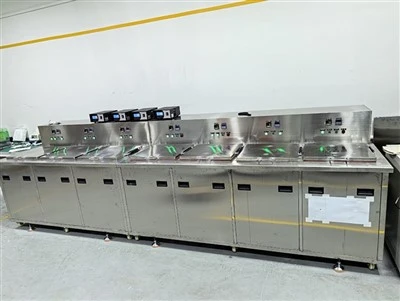
Let’s wrap this up with what it all means for you, as a potential client. If you’re reading this, you’re probably in the market for pure water for a process that can’t tolerate impurities— whether that’s manufacturing medical devices, brewing craft beer with zero off-flavors, or testing water for environmental studies. The conductivity of EDI pure water isn’t just a number on a spec sheet; it’s a promise that the water you’re using won’t ruin your product, waste your time, or add unnecessary costs to your operation. It’s consistent, it’s chemical-free, and it’s tailored exactly to the purity level you need, not a generic one-size-fits-all.
Industrial dm Plant If you’re curious to see how an EDI system would work for your specific application— whether you need a system that hits 0.1 µS/cm for pharma, 0.055 µS/cm for semiconductors, or something in between— we’re here to walk through your needs, answer any questions about conductivity or system specs, and put together a quote that fits your budget. We’ve worked with small labs and large manufacturing plants, so we know that every operation has unique purity requirements, and we build our systems to match, not the other way around. Don’t settle for a system that promises “pure water” but can’t back it up with consistent conductivity— let’s connect, and we can review your water needs, walk through what our EDI systems can deliver, and get you set up with a solution that works for your business.
References
- ASTM International. (2020). Standard Practice for Conductivity Measurement of Water. ASTM D1125-19.
- Lior, N. (2011). Pure Water Production by Reverse Osmosis and Electrodeionization. Water Research, 45(15), 4681-4700.
- Semiconductor Industry Association. (2018). Ultra-Pure Water Requirements for Advanced Semiconductor Manufacturing. SIA Technology Roadmap for Semiconductors.
- Kodama, A., & Wangnick, K. (2005). Electrodeionization: Principles and Industrial Applications. Desalination, 179(1-3), 287-296.
- U.S. Pharmacopeia. (2021). Chapter 643: Water for Pharmaceutical Purposes. USP-NF.
Shenzhen Jkon Environmental Protection Technology Co., Ltd.
As one of the most professional edi pure water system manufacturers and suppliers in China, we’re featured by quality products and good service. Please rest assured to buy customized edi pure water system made in China here from our factory. Contact us for more details.
Address: Shanghenglang Industrial park, Daloang Street, Longhua District, Shenzhen, China
E-mail: sales@jkontech.com
WebSite: https://www.jkontech.com/
