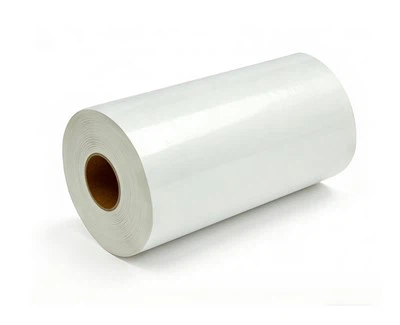
If you’ve ever pulled a leftover burrito out of the fridge that still tasted as fresh as it did when you wrapped it last Tuesday, or grabbed a pack of sliced deli meat that didn’t turn slimy two days early, you’ve probably used something made from polyvinylidene chloride (PVDC) film. As a supplier who’s spent the last 12 years working with this material—answering questions from small bakery owners about wrapping sourdough to large snack manufacturers looking to extend the shelf life of potato chips—I hear one question more than any other: Can PVDC film actually be safely used for food packaging? The short answer is yes, but there’s a lot more to it than a simple yes or no, and I want to break down what makes PVDC a workhorse in food packaging, why it’s still a top choice after decades of use, and what anyone considering switching to it needs to know. Polyvinylidene Chloride Film

Let’s start with the basics. PVDC is a polymer made by polymerizing vinylidene chloride, a process that creates a plastic material with unique barrier properties—properties that other common packaging plastics like polyethylene (PE) or polypropylene (PP) just can’t match. If you’ve ever heard the term “high barrier” in food packaging, that’s what we’re talking about. Barrier properties matter because food spoils when it interacts with oxygen, moisture, or light. For example, oxygen is the main culprit behind fats going rancid, dried fruits losing their flavor, and baked goods turning stale. Moisture, on the other hand, makes crispy snacks go soft and fresh produce wilt. Light can break down vitamins in food, leading to discoloration and nutrient loss. PVDC film blocks almost all of these: it has an oxygen transmission rate (OTR) that’s 10 to 100 times lower than standard PE film, and its moisture vapor transmission rate (MVTR) is equally impressive. That’s why it’s the go-to for packaging products that need long-term freshness: think cheese sticks, cured meats, frozen dinners, coffee, and even some baked goods.
But wait—there’s a common myth that’s clung to PVDC for years, and I get why it’s confusing. Back in the 1990s, some studies raised concerns about vinyl chloride, a monomer used in making PVDC, migrating into food. The thing is, those concerns mostly applied to older, unregulated PVDC formulations, not the ones we produce today. Regulatory bodies like the U.S. Food and Drug Administration (FDA), the European Food Safety Authority (EFSA), and Health Canada have all done extensive testing on modern PVDC film. They’ve set strict limits on how much residual monomer can remain in the finished product, and today’s manufacturing processes ensure those limits are almost never exceeded. In fact, the FDA has listed PVDC as “generally recognized as safe (GRAS)” for specific food contact applications, as long as it meets those strict purity standards. I can speak to this firsthand: every batch of PVDC film we produce goes through third-party testing to confirm it meets FDA and EFSA guidelines, because there’s no cutting corners when it comes to food safety.
Another point that often comes up is whether PVDC is better than newer, more “sustainable” packaging options. A lot of people I talk to these days are focused on switching to compostable plastics or recycled materials, and they ask if PVDC is still worth investing in. Here’s the honest truth: it depends on the product. For some items, there’s no alternative that matches PVDC’s performance. Take vacuum-sealed sliced ham, for example. To keep that ham from going bad in the fridge for two weeks, you need a packaging material that can pull a tight vacuum (which means it needs flexibility and puncture resistance) and keep oxygen out. A compostable PLA film might be compostable, but its oxygen barrier is so low that the ham would spoil in three days. Recycled PE film works for some applications, but not for high-fat, high-moisture products that need long shelf lives. That said, we’ve also adapted PVDC to meet sustainability demands. We now offer PVDC film made with 30% post-consumer recycled content, and we’re working on thinner formulations that use less material while still maintaining the same barrier performance. It’s not a one-size-fits-all solution, but it’s a solution that balances performance, safety, and even sustainability when used correctly.
Let’s talk about how PVDC is actually used in food packaging, because not all PVDC film is the same. There are two main types: monolayer PVDC film, which is used for applications like wrapping individual cheese slices or small snack bars, and co-extruded films, which layer PVDC with other plastics like PE or PP to combine barrier properties with flexibility. Co-extruded PVDC films are especially popular for frozen food packaging, because the PVDC layer keeps oxygen out while the inner PE layer provides heat sealability and resistance to moisture from freezer burn. I’ve worked with a lot of small food businesses that were using generic plastic wrap that would tear easily or let freezer air in, leading to frozen food that tasted like ice. Swapping that for a thin PVDC laminate cut their product waste by almost 20% in some cases, because less of their inventory was spoiled before it even hit store shelves.
Of course, no packaging material is perfect, and PVDC has its limits. It’s not ideal for high-temperature applications like boiling food, because it can melt or release fumes if heated above its melting point (around 200°C, which is way higher than most home cooking temperatures, so that’s rarely an issue for food packaging). It’s also more expensive than standard PE film, which is why it’s not used for every product—you wouldn’t wrap a bag of apples in PVDC, for example, because apples need to breathe, and PVDC is almost airtight. But for products that need extended shelf life and protection from spoilage, that small extra cost is usually worth it when you factor in reduced waste and longer product freshness.
I’ve seen PVDC evolve a lot over the 12 years I’ve been in this business. When I started, most of the customers were large multinational food companies that used PVDC for bulk packaging. Now, I work with everything from local craft breweries that use PVDC film to package fresh hop extract for their beer, to small artisanal cheese makers that need to wrap their aged cheddar to keep it from drying out. Last year, I had a conversation with a bakery owner who was struggling with their sourdough loaves going stale in transit to farmers’ markets. They were using standard bread bags, and by the time they got to the market, the loaves were dry and hard. We switched them to a thin PVDC liner inside their paper bread bags, and within a month, they were selling out of every loaf by 10 a.m.—customers commented that the bread tasted as fresh as it did the day it was baked. That’s the kind of impact PVDC makes that people don’t always talk about.
So, to circle back to the original question: Yes, polyvinylidene chloride film is safe and effective for food packaging, as long as you choose the right formulation for your product and work with a supplier that prioritizes safety and quality. The old fears about monomer migration are outdated, and modern PVDC meets the strictest global food safety standards. It’s not the only packaging option out there, but it’s one of the most reliable for products that need to stay fresh, safe, and appealing to consumers for longer periods.
If you’re a food producer looking to cut down on product spoilage, extend shelf life, or find a packaging solution that works for your specific products, I’d be happy to walk through your options with you. Whether you’re a small business just starting out or a large manufacturer scaling up, we can help you find the right PVDC film that fits your needs, budget, and sustainability goals. Don’t hesitate to reach out to our team to discuss your requirements and get a customized quote.
Polyvinylidene Chloride Inner Printing Film References
- U.S. Food and Drug Administration. (2023). Food Contact Substances: Polyvinylidene Chloride. Retrieved from FDA.gov
- European Food Safety Authority. (2021). Safety assessment of polyvinylidene chloride (PVDC) for food contact materials. EFSA Journal, 19(6), 6782.
- Robertson, G. L. (2020). Food Packaging: Principles and Practice (4th ed.). CRC Press.
- American Packaging Association. (2022). High barrier packaging materials for food applications. Packaging Technology and Science, 35(3), 145-162.
- Health Canada. (2022). Polyvinylidene chloride (PVDC) in food packaging. Health Canada Product Safety Division.
Sinosealed Packaging Solutions Limited
With a professional production team, we are one of the most experienced polyvinylidene chloride film manufacturers and suppliers in China. Please rest assured to buy high quality polyvinylidene chloride film for sale here from our factory. For price consultation, contact us.
Address: Luohe City, Henan Province, China
E-mail: contact@barrierpackage.com
WebSite: https://www.barrierpackage.com/
