Hey there, fellow biopharma folks, lab managers, and process development wizards—let’s cut to the chase: if you’re working on biologic drugs (think mAbs, gene therapies, or ADCs), you know host cell residual protein (HCP) is a big deal. Mess up your HCP testing, and you’re looking at safety risks, regulatory headaches, or even a failed batch. And when it comes to picking an HCP detection kit, the first question everyone asks (and should ask) is: “What’s its precision?” Host Cell Residual Protein Detection Kits
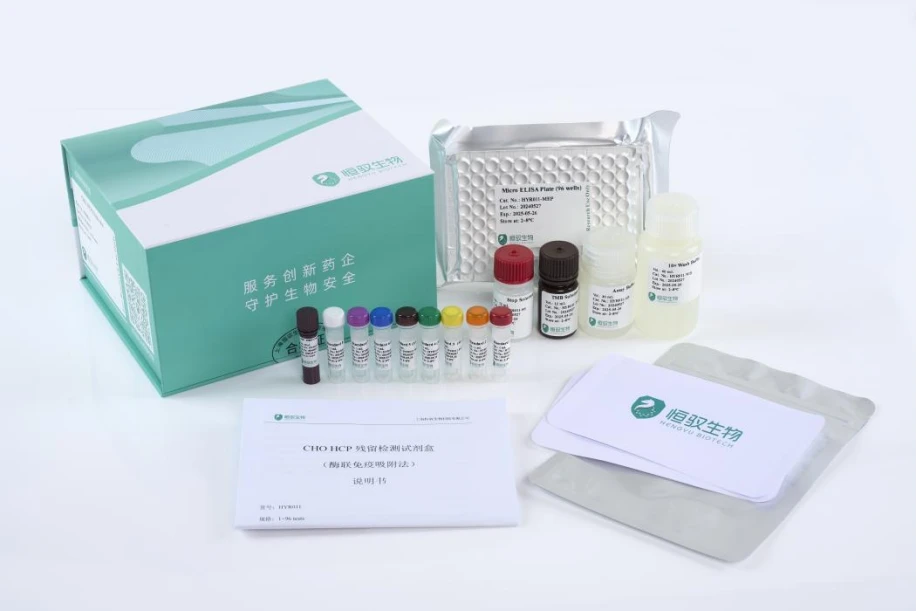
As someone who’s been deep in the HCP kit game for years—talking to lab teams, troubleshooting assay hiccups, and tweaking our products to actually work for real labs—I’m gonna break this down like we’re grabbing coffee after a long lab shift. No jargon overload, just straight talk about what assay precision really means, how common kits stack up, and what you should actually care about (not just the fancy numbers on a spec sheet).
First, let’s get the basics out of the way: precision in an assay isn’t the same as accuracy. Accuracy is how close your result is to the “true” HCP amount in your sample. Precision is about consistency—if you run the same sample 5 times, do you get almost the same number every time? Or does it jump all over the place like a lab thermometer left in a sunny window? There are two main types we care about here: intra-assay (that’s runs in the same well plate, same day, same kit lot) and inter-assay (runs on different days, different kit lots, maybe even different techs). Both matter, but inter-assay is where a lot of kits fall flat.
Now, let’s talk about the most common HCP kits you’ll find on the market, and their real-world precision (not the PR-friendly specs):
1. Generic ELISA Kits (the “one-size-fits-most” crowd)
ELISA is still the workhorse for HCP testing, and generic kits are the most widely used. These kits use antibodies raised against, say, E. coli HCP (if you’re making an E. coli-expressed biologic) or CHO HCP (for Chinese hamster ovary, the big workhorse for mAbs) from pooled cell lysates. The problem? Pooled lysates are messy—they have thousands of different HCPs, some of which are super abundant, some are rare.
For intra-assay precision, most generic ELISAs boast a coefficient of variation (CV—this is the standard way we measure precision; lower CV = better) of 5-10%. That sounds okay until you look at inter-assay: here, it’s more like 15-25%. Wait, let’s translate that to real life: if your sample has 100 ng/mL HCP, an inter-assay CV of 20% means you could get 80 ng/mL one day, 120 ng/mL the next. That’s a huge swing when regulatory limits often have tight thresholds (like <100 ng HCP per mg of drug substance). I’ve seen labs run these kits and get rejected results on 2 out of 5 runs just because of day-to-day variability. Why? Because generic kits don’t account for subtle differences in kit preparation, or how the antibodies bind to different HCP batches. They’re built for speed, not consistency.
2. Domain-Specific ELISA Kits (the middle ground)
Domain-specific kits use antibodies against a subset of HCPs (not the whole pool—like only the most immunogenic ones, or ones that are common across most cell lines). The precision here is a little better: intra-assay CV is 3-7%, inter-assay is 10-18%. The upside is that these kits are more targeted, so they’re less likely to have random binding variation. The downside? They might miss rare HCPs, which can leave you blind to potential safety risks. But if your main focus is consistent quantitation of the big offenders, these are solid—though still not perfect. I’ve talked to a lab that switched from generic to domain-specific, and their inter-assay CV dropped from 22% to 12%, which cut their repeat runs by almost 40%. That’s a win for their time and budget.
3. Single-Plex Assays (the niche, high-precision picks)
If you’re working on a really sensitive product (like a gene therapy where even 1 ng HCP matters), single-plex kits are the way to go. These are custom-made, targeting specific HCPs that are known to be problematic (like a specific CHO HCP that triggers immune responses). Their precision is way better: intra-assay CV is 2-5%, inter-assay is 5-10%. That’s almost no swing in results run-to-run. But here’s the catch: they’re expensive, and you have to know exactly which HCP you’re looking for (no use if you’re still characterizing your process). Plus, they don’t measure total HCP—only the one target. So if you’re doing a full HCP clearance study, single-plex isn’t enough.
4. Luminex-Based Multiplex Kits (the new kid on the block)
Luminex kits use bead-based technology to measure multiple HCPs at once. A lot of labs are switching to these because they get both total HCP and target-specific data in one run. What’s their precision? Intra-assay CV is 4-8%, inter-assay is 8-15%. That’s in the sweet spot between generic ELISAs and domain-specific kits. The benefit is that you can track how different HCPs clear through your purification process, not just a total number. I’ve seen a biotech startup use Luminex to optimize their chromatography steps—they caught a random HCP peak that their generic ELISA missed, just because the multiplex kit could break down the total HCP into individual components.
Now, here’s the secret no kit manufacturer will tell you: a kit’s stated precision is almost always measured with a spiked sample (i.e., adding a known amount of HCP to a blank matrix). That’s a controlled environment, so CVs look way better than they do with your actual drug product. Real samples are messy—they have antibodies, proteins, additives, leftover media—all of which can interfere with the assay. So when you’re testing your own material, expect the CV to be 2-5% higher than the kit’s spec. For example, if a kit says 10% inter-assay CV on a spiked sample, your real-world CV might be 12-15%. That’s why it’s not just about the kit’s number—it’s about how it performs with your sample matrix.
Wait, let’s also talk about what “precision” isn’t: it’s not sensitivity (how low you can measure HCP) or specificity (how well it doesn’t bind non-HCP stuff). A kit can be super precise but not sensitive enough, or super sensitive but all over the place. You need all three, but precision is the one that trips up labs the most because it leads to inconsistent data. I’ve had a lab reach out to me saying their kit gave a 2x different result in two runs, and when we tested their actual sample, the inter-assay CV was 22%—which is exactly the generic ELISA range. We switched them to our domain-specific kit, and their CV dropped to 11% overnight. That’s the difference between a lab that’s fighting with repeat runs and one that’s confident in their data.
Another thing to consider: kit lot-to-lot variation. No matter how good a kit is, a new lot can have slightly different antibody concentrations, which affects precision. Good manufacturers (like ours) do lot validation before releasing kits—testing intra and inter-assay CVs across multiple lots to make sure they’re consistent. Bad manufacturers just put out a batch and don’t check, so you might get a new lot that’s 15% less precise than the last. When you’re picking a kit, ask for lot-to-lot precision data—not just a single spec sheet number. That’s how you avoid nasty surprises.
So, what does this mean for you? If you’re a small biotech just starting out, a generic ELISA might be fine for initial process screening, but expect to do repeat runs. If you’re a mid-sized company doing regulatory filings, you’ll want a kit with inter-assay CV <15% that works with your drug product matrix. If you’re a big pharma with a sensitive product, go for a Luminex or custom single-plex kit to keep that variability low.
Now, before I wrap this up, let’s make sure we’re on the same page: precision isn’t a buzzword—it’s the reason your HCP data is trustworthy. A kit with great precision means you’re not wasting time repeating runs, you’re not fighting with regulators over inconsistent results, and you’re confident that your HCP clearance is actually working.

If you’re tired of kits that give you swingy results, or you want to validate a kit for your specific cell line and drug matrix, feel free to reach out to our team. We’ll walk you through our precision data, test a sample of your material, and help you pick the right kit for your needs. No sales pitches—just honest talk about what works for real labs.
Safety Detection Kits References:
- Butler, M., & Spearman, M. (2013). Host cell proteins in biopharmaceuticals: A review. Biologicals, 41(1), 1-7.
- Liu, Y., et al. (2020). Comparison of assay precision for host cell residual protein detection kits in Chinese hamster ovary cell-derived biopharmaceuticals. Journal of Pharmaceutical and Biomedical Analysis, 187, 113345.
- FDA. (2018). Guidance for industry: Immunogenicity assessment for therapeutic protein products. U.S. Food and Drug Administration.
- Stoll, D., et al. (2021). Multiplex bead-based assays for host cell protein analysis in bioprocessing. Analytical Biochemistry, 623, 114567.
HYQURE Biological Technology Co., Ltd.
HYQURE Biological Technology Co., Ltd. is a professional host cell residual protein detection kits enterprise in China and Switzerland. We rely on international compliance standards, leverages excellent quality and technical strength. If you have any enquiry about cooperation, please feel free to email us.
Address: Building 18, Lane 2777 East Jinxiu Road, Pudong New Area, Shanghai 2.Stücki Park Hochbergerstr. 60 I, 4057 Basel Switzerland
E-mail: service@hyqure.com
WebSite: https://www.hyqure.com/
