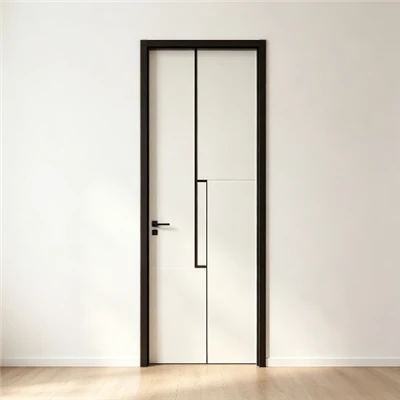
Hey there, if you’ve ever shopped around for interior doors, you’ve probably stumbled on white primer doors at some point. They’re the blank canvases of the door world, right? Perfect for painting to match your trim, walls, or whatever aesthetic you’re going for. But here’s the thing I get asked all the time—like, at least twice a day, honestly: “Are white primer doors hollow core or solid core?” It’s such a common question, and it’s easy to get confused because not every brand labels them clearly, and a lot of sales folks don’t make it straightforward. As a supplier that’s been doing this for years, I figured I’d break this down real simply, no fancy jargon, just what I tell every customer that walks (or emails) through our door showroom. White Primer Door
First, let’s get the basics out of the way. Hollow core vs solid core—what’s the actual difference? Hollow core doors are, well, hollow on the inside. Usually, they’re made with a thin wood or fiberboard frame, and then a honeycomb-style cardboard or fiber grid in the middle to keep the panels from bowing, plus a thin veneer on both sides. Solid core doors, on the other hand, have a solid, dense core—usually wood particles, pressed fiber, sometimes a mix of wood and recycled material—all the way through, so they feel way heavier and more substantial.
Now, back to white primer doors specifically. Here’s the part that trips people up: white primer doors aren’t a separate door type—they’re a finish. A primer door is just a door that’s been pre-treated with a thin coat of primer ready to paint, instead of being stained or finished with a topcoat already. So that means white primer doors can be either hollow core or solid core. Wait, why is that a thing? Because people want to customize the color once they install, so both types get primed. But that doesn’t mean they’re interchangeable, and that’s where I see a lot of mistakes happen for buyers.
Let’s talk about when hollow core primer doors make sense. Most of our hollow core white primer doors are the budget-friendly pick. They’re lightweight, easy to install—especially if you’re doing it yourself, no need to haul a heavy door up stairs alone. They’re also cheaper, so if you’re renovating a whole house on a tight budget, swapping out every interior door with hollow core primed ones is a no-brainer. But here’s the catch: they’re not as durable. If you’re putting a door in a high-traffic area—like a front bedroom that kids run in and out of, or a bathroom—hollow core primer doors can ding or dent super easily. The thin veneer on the outside means a hard impact (like a bike falling into it, or a doorknob slamming too hard) can poke right through, and because the inside is hollow, patching that is a pain. Also, they don’t block sound at all. If you have a bedroom next to a home office, you’ll hear every little tap of the keyboard through a hollow core door.
Then there are solid core white primer doors. These are the sturdier option, and a lot of people pick them because they feel like a real, high-quality door. The solid core means they’re heavier, so they swing smoothly, don’t slam as hard, and are way more scratch and dent resistant. They also block sound way better—great for bathrooms, home offices, or any room where you want privacy. Oh, and if you’re hanging heavy hardware, like a decorative door knocker or a pet door, solid core doors are the only way to go—hollow core just can’t support that weight without pulling the hardware right out. The primer on solid core doors is usually a better quality too, since the surface is more stable; you don’t get as many brush marks or peeling paint once you finish it. The downside? They’re more expensive, and they’re heavier—so if you’re replacing doors yourself, you might need two people to hang them, and you’ll want a sturdier frame to support the weight.
Wait, but here’s something a lot of customers don’t know: not all hollow core primer doors are the same. Some cheap ones use super thin fiberboard veneer, and the honeycomb inside is just flimsy cardboard that can get warped if it gets wet (like, if you accidentally splash a lot of water when cleaning). The mid-range hollow core options we sell use a denser fiber grid instead of cardboard, so they’re a little more durable, and the primer is applied evenly so paint adheres way better. Same with solid core—some are just pressed wood particle core, which can swell if exposed to too much moisture (like near a bathroom without proper ventilation), while our solid core white primer doors use a moisture-resistant core blend that holds up better in damp areas.
I’ve seen so many people make the wrong call here. Last year, a guy came in wanting to redo his kids’ bedroom doors on a budget. He picked hollow core primed doors, and a month later he was back—his oldest had kicked a soccer ball into the door and put a big dent right through the veneer. We ended up switching him to a mid-range solid core primer door for half the cost of replacing all of them, and he’s been happy ever since. Another customer, a renter, just wanted to swap out the cheap white doors in his apartment to match his decor, so he went with hollow core—he didn’t need soundproofing or heavy hardware, and he was fine with the lower price. That made total sense for his situation.
So, how do you tell the difference between a hollow and solid core white primer door if you’re looking at them online or in a showroom? First, check the weight. Pick the door up (if you can)—solid core doors will feel way heavier, like at least twice as heavy as a hollow core one. Another trick: knock on the door. Hollow core will sound really hollow, like a thud that echoes. Solid core will sound deeper, more like a solid thud that doesn’t echo as much. If you’re shopping online, look at the product description—reputable suppliers will label it clearly. If it just says “white primer door,” it could be either, so shoot us an email or call, we’ll tell you exactly what core it is.
Wait, and let’s talk about common myths. Some people think hollow core doors are flimsy and cheap, which they can be, but they’re not always a bad choice. If you’re using them in a low-traffic area, like a closet door in a guest room, they’re perfect—you don’t need a heavy, expensive door for something that only gets opened a few times a year. Solid core doors aren’t just for fancy homes, either—they work great for renters, small families, anyone who wants a door that lasts. The best part about white primer doors, no matter the core, is that you can paint them any color you want. We’ve had customers paint our white primer doors bright blue, sage green, even black—they turn out so clean because the primer creates a smooth base for paint to stick to.
I get it, it’s easy to overcomplicate this. At the end of the day, the right white primer door for you depends on what you need it for. If budget is your top priority, and it’s going in a low-traffic area, hollow core is fine. If it’s a high-traffic room, or you want privacy, solid core is worth the extra cost. Don’t fall for the trap of thinking all white primer doors are the same—there’s a huge difference between the two, and picking the wrong one can lead to headaches down the line, like dents you can’t fix or doors that don’t close right.

Here’s the thing, as someone who’s worked with these doors for years: we don’t push hollow core or solid core, we just tell customers what they’re getting. We want you to be happy with your door, not stuck with something that doesn’t fit your needs. If you’re still not sure which one is right for your space, just reach out—we can walk you through your options, answer any questions you have, and help you pick the perfect white primer door for your project. Whether you’re renovating a whole house, just replacing a few doors, or even building a custom closet, we’ve got you covered.
WPC Door References:
- National Association of Home Builders. (2022). Door Material Selection for Residential Construction.
- U.S. Department of Energy. (2021). Sound Transmission Through Interior Doors: Performance and Applications.
- Woodwork Manufacturers Association. (2023). Primer Door Finishing and Core Composition Guidelines.
Yongkang Phipulo Smart Home Co., Ltd.
As one of the most professional white primer door manufacturers and suppliers in China, we also accept customized orders. We warmly welcome you to buy discount white primer door from our factory. If you have any enquiry about quotation, please feel free to email us.
Address: Phipulo, 22nd Floor, Jinbi Building, Headquarters Center, Yongkang City, Jinhua City, Zhejiang Province
E-mail: door@phipulodoors.com
WebSite: https://www.ppdwooddoors.com/
