Hey there, if you’re here because you’re digging into limestone slurry pumps, odds are you’ve been sifting through project specs, scratching your head over what flow rate you actually need, and maybe even confused why it’s not a one-size-fits-all number. Full transparency: I’m part of the team that builds and sells these pumps, so I’m gonna break this down like I would in a shop chat—no stuffy engineering jargon that makes your eyes glaze over, just real talk from someone who’s dealt with every kind of limestone slurry scenario, from small wastewater treatment units to big power plant flue-gas desulfurization (FGD) lines. Limestone Slurry Pump
First off, let’s get one thing straight: there’s no single “typical flow rate” for a limestone slurry pump. Wait, before you throw your hands up, hear me out— I’ve seen pumps moving 10 gallons a minute (gpm) for a tiny industrial polishing system, and others cranking 15,000 gpm for a big FGD plant. The “typical” number? It depends entirely on what you’re using the slurry for, how much limestone you’re mixing with water, and how far you gotta push that goopy stuff. Let’s start with the basics of limestone slurry itself, because that’s the root of everything.
Limestone slurry isn’t like water—this is a mix of crushed calcium carbonate (limestone) particles and water, usually a 20% to 40% solids mix by weight, sometimes even up to 50% if you’re running a super dense FGD setup. The solids are gritty, abrasive, and they love to slam into pump impellers, which means flow rate directly ties to not just moving the stuff, but making sure you don’t burn out your pump prematurely. If you pump too fast, you wear out the impeller and liner way quicker; too slow, and the slurry settles in the pipe, clogs everything up, and you’re doing emergency maintenance at 2 a.m. We’ve had customers call us at 3 a.m. over a clogged slurry line, so trust me, flow rate is non-negotiable.
Now, let’s talk about the actual typical flow rates you’ll run into across different common uses, because that’s what most people are here for. First up, FGD systems—this is the big one for limestone slurry, right? Power plants use it to scrub sulfur dioxide out of their smoke, so they mix limestone with water to make that slurry. For a small to medium power plant (think 500 MW or less), you’re looking at pumps in the 2,000 to 8,000 gpm range. Big utility-scale plants (1,000 MW and up) might need two pumps running at 10,000 to 15,000 gpm each, since they gotta move way more slurry to keep up with scrubbing all that exhaust. We supplied a pump last year to a 1,200 MW plant that’s churning 12,500 gpm at 35% solids, and it’s been running smooth for 18 months now—no issues yet, which is a win.
Next, there’s the water treatment side, not just power plants. A lot of municipal wastewater facilities use limestone slurry to adjust pH levels, neutralize acidic wastewater. For a small municipal plant (serving like 50,000 people), you’re looking at way smaller pumps—100 to 500 gpm, tops. Even mid-sized municipal plants (200,000 people) are in the 1,000 to 2,500 gpm range. I recently helped a small town in Ohio size a pump for their new pH adjustment system, and they ended up going with a 300 gpm unit, which has worked perfectly for their needs. No overkill, no underperformance—just exactly what they needed.
Then there’s the mining and aggregate side, where limestone is crushed for concrete, asphalt, or road base. If you’re moving limestone slurry from a processing plant to a storage tank or loading dock, that flow rate usually lands between 500 and 3,000 gpm, depending on how much material you’re pushing. I’ve seen a quarry in Texas run a 2,200 gpm pump for their processing line, and they rotate two pumps so one’s always running while the other’s being serviced—smart move, by the way, no downtime during peak mining season.
Wait, but hold on—why do these numbers vary so much? Let’s get into the factors that actually change flow rate, because if you’re sizing your own pump, you can’t just grab a number off a chart. First, solids concentration like I mentioned earlier: if your slurry is 20% solids, you can pump at a higher flow rate without as much wear, but if it’s 45% solids (super dense), you gotta slow it down a little to keep the grit from tearing up the parts. We usually tell customers to expect a 10-15% drop in maximum flow rate when moving slurry at 40%+ solids, compared to water.
Then there’s pipe size and distance. If you’re moving slurry 100 feet through a 3-inch pipe, you can go faster than if you’re pushing it 1,000 feet through a 6-inch pipe—more pipe means more friction, so flow rate has to be lower to keep from straining the pump. We had a customer once who tried using a 4-inch pump meant for 1,000 gpm on a 1,500-foot line, and it couldn’t keep up—we swapped it out for a slightly larger unit, slowed the flow a bit, and it’s been working fine ever since.
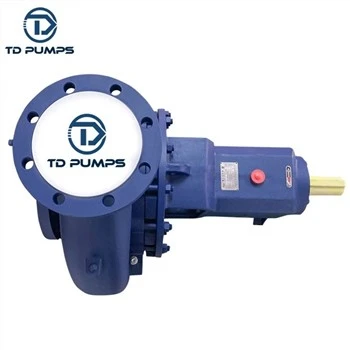
Also, pump type matters. We build centrifugal slurry pumps, which are the most common for limestone slurry, but even among those, there are different impeller designs—open, closed, semi-open. Open impellers are better for high-solids slurry, so they can handle a bit higher flow without clogging, while closed impellers are more efficient for lower solids. That’s why we never just tell a customer a flow rate—we ask about all those details first.
Wait, let’s bust a common myth here. A lot of people think “higher flow rate = better pump,” but that’s not true for limestone slurry. Because the abrasive particles, if they’re moving too fast, will erode the pump’s internal parts (impeller, liner, volute) way faster, leading to costly replacements and downtime. We usually recommend sizing a pump to operate at 70-80% of its maximum rated flow rate for limestone slurry— that sweet spot where it moves enough material without wearing out too quick. A pump rated for 5,000 gpm moving at 4,000 gpm will last 2-3 times longer than the same pump running at 5,000 gpm nonstop, easy.
Let me give you a real example from our shop, to make this concrete. Last quarter, we had two different customers ask for limestone slurry pumps: one was a FGD unit for a 400 MW power plant, the other was a small limestone processing plant in Alabama. The FGD customer needed a pump that could handle 3,800 gpm at 32% solids, 150 feet of head. The processing plant needed a pump for moving slurry from the crusher to storage, 1,200 gpm at 38% solids, 200 feet of head. Both pumps are from our standard line, but we tweaked the impeller size a little for each, and both are hitting exactly what they need. The FGD pump has been running for 10 weeks, and we’ve only had to do a routine check—no leaks, no wear issues. The Alabama pump’s been running 24/7 for 12 weeks, same thing. That’s exactly the kind of flow rate we work with every day.
Now, if you’re wondering how to figure out your own typical flow rate, here’s the quick checklist we give every customer: 1) What’s the solids percentage of your limestone slurry? 2) How far are you moving it, and what pipe size are you using? 3) What’s the end use (scrubbing, pH adjustment, processing)? 4) Do you need backup capacity for peak times? We also offer free, no-obligation sizing consultations—no sales pitch, just us walking through your numbers and giving our honest take on what you need. No pressure, ever.
I get it, when you’re in the middle of a project, you just want a number you can plug into your specs and move on. But the thing is, that number’s not universal—what works for one plant might be garbage for yours. That’s why we don’t just sell pumps; we work with you to get the right flow rate, the right pump, so you don’t end up with something that’s too small (clogs, downtime) or too big (wastes energy, over-pays for capacity you don’t need). We’ve all seen that mistake—customer buys a pump rated for twice what they need, uses more electricity, and wears it out faster because it’s not operating at that sweet spot.
At the end of the day, the “typical flow rate” for a limestone slurry pump is whatever works for your specific setup. But if you’re ballparking it, here’s a rough cheat sheet: small FGD or processing units (under 500 gpm), medium (500-5,000 gpm) for mid-sized plants, large (5,000-15,000 gpm) for big utility or quarry operations. But again, that’s just a ballpark—actual numbers depend on your slurry, your piping, your space.

If you’re gearing up for a new project, or your current pump is acting up (clogging, wearing out too fast, not moving enough slurry), hit us up to chat. We’ll walk through your needs, answer any questions, help you nail down the right flow rate and pump setup that fits your budget and your timeline. No fine print, no pushy sales talk, just real advice from people who work with limestone slurry pumps every single day.
Sand Pump References:
- American Water Works Association. (2020). Slurry Pumping for Water and Wastewater Treatment. AWWA Manual of Practice.
- Power Engineering Magazine. (2021). FGD System Design and Operational Best Practices. Power Engineering International.
- Slurry Pump Industry Association. (2019). Guidelines for Sizing and Selecting Centrifugal Slurry Pumps. SPIA Technical Bulletin.
- Texas Aggregates and Quarry Association. (2022). Handling Abrasive Limestone Slurry in Quarry Operations. TAQA Operational Guide.
Hebei Tongda Pump Co., Ltd.
Hebei Tongda Pump Co., Ltd. is well-known as one of the leading limestone slurry pump manufacturers and suppliers in China. Our factory offers high quality limestone slurry pump made in China with competitive price. Welcome to contact us for pricelist.
Address: No.158, Bo Ming Xi Lu, Boye County, Baoding City, Hebei Province
E-mail: wendy@hbtdby.com
WebSite: https://www.waterpumpmanufacturer.com/
