If you’ve walked through a modern urban neighborhood lately, you’ve probably noticed them: tall, sleek poles lining sidewalks, with not just light fixtures, but small boxes, sensors, and even panels tucked into their frames. As a smart light poles supplier, I get asked all the time why we push these poles so hard, especially when many city planners still see streetlights as nothing more than a basic utility. The answer boils down to something every city cares about right now: carbon reduction. But it’s not just the LED bulbs we install—though those are a big part of it. Smart light poles cut emissions in ways most people don’t see, from slashing unnecessary energy use to enabling the kind of city-wide efficiency that turns a carbon footprint into a smaller one. Smart Light Poles

Let’s start with the obvious, but often misunderstood, part: traditional streetlights are huge energy wasters. I’ve seen cities leave 40% of their streetlights on full brightness all night, even in residential areas where foot traffic drops to almost nothing after 10 PM. Old high-pressure sodium bulbs used to make up 90% of urban street lighting in the U.S. two decades ago, and they’re terrible at efficiency—they waste 60% of the energy they use as heat instead of light. Switching to LEDs is a no-brainer; LEDs use 75% less energy than those old bulbs and last 25 times longer, so fewer bulbs get thrown away and replaced, which cuts emissions from manufacturing and disposal too. But smart light poles take that a step further with adaptive lighting controls. Our poles have motion sensors that dim lights to 20% of their brightness when no one’s around, then bump it back up to 100% when a pedestrian or cyclist approaches. Last year, we installed a network of 1,200 smart poles in a mid-sized city in Ohio, and their municipal energy department reported a 58% drop in streetlight-related energy use in the first six months. That’s not just a small win—for a city with a 2030 carbon neutrality goal, that’s equivalent to taking 1,400 gas-powered cars off the road for a year.
Wait, but what about the other stuff on the poles? Smart light poles don’t just hold lights—they’re modular hubs, which means cities don’t have to install separate infrastructure for things like air quality sensors, EV chargers, or Wi-Fi. That modular design is a huge carbon saver because it eliminates the need for redundant poles and cabling. Let’s break that down: installing a standalone EV charger requires digging up roads, laying new electrical lines, and putting up a separate charger unit. On a smart light pole, the charger attaches to the same pole structure that’s already there, so no extra digging, no extra materials, no extra energy used to power two separate systems. The same goes for environmental sensors: air quality monitors that measure ozone or particulate matter don’t need their own poles—they can slot right into a smart light pole’s component bay. A 2022 study from the International Energy Agency (IEA) found that integrating multiple utilities into a single pole reduces construction-related carbon emissions by up to 30% compared to installing each utility separately. For a city that’s building 500 new poles a year, that’s thousands of tons of carbon kept out of the atmosphere from concrete, steel, and construction equipment alone.
Another often overlooked contributor to carbon reduction: smart light poles support renewable energy integration. Most smart poles have small solar panels mounted on their tops, and they can store excess energy in tiny batteries built into the pole’s base. During the day, those panels can power the light, sensors, and any attached devices—meaning the pole is drawing less energy from the grid, which is often still powered by fossil fuels in many parts of the world. Even better, some of our newer models have bidirectional charging capabilities, which means they can send excess energy back to the grid during peak demand hours. That’s a big deal because peak demand is usually met by the dirtiest power plants—peaker plants, which run on natural gas and emit far more carbon per unit of energy than base load plants. A 2023 case study from a smart city in Amsterdam found that their 3,000 smart light poles reduced peak grid demand by 7% overall, which cut the city’s reliance on peaker plants by 12%. Multiply that across a city of 1 million people, and that’s over 10,000 tons of carbon avoided annually.
Smart light poles also help cut emissions from transportation, which is responsible for 24% of global carbon dioxide emissions, according to the United Nations. Most people don’t connect streetlights to EV adoption, but that’s exactly what’s happening. Our smart poles come with Level 2 EV chargers that are accessible 24/7, unlike many private chargers that are only for apartment residents or office workers. A 2024 survey from the Urban Land Institute found that cities with smart light pole charger networks saw a 40% increase in EV registrations within two years of installation. Why? Because range anxiety is still the biggest barrier to EV ownership, and public chargers on every other block make it easy for people to run errands or commute without worrying about running out of power. For every EV that replaces a gas car, you’re looking at 4.6 tons of carbon saved per year, according to the EPA. If a city adds 5,000 EV chargers via smart poles, that’s 12,000 tons of carbon kept out of the air every year. Even for gas-powered cars, the adaptive lighting from smart poles is safer, which reduces traffic accidents and the resulting emissions from idling vehicles waiting for tow trucks or ambulances. One study in Portland, Oregon, found that their smart light pole network reduced nighttime pedestrian accidents by 22%, leading to a 15% drop in emergency service idling emissions in that area.
But here’s a point I make to city council members all the time: the carbon savings from smart light poles aren’t just in installation and energy use—they’re in long-term maintenance too. Traditional streetlight systems require crews to drive around and check every pole for issues, which means thousands of miles of extra driving per year for maintenance trucks. Our smart poles have remote monitoring capabilities, so if a light bulb burns out or a sensor malfunctions, the system sends an alert directly to the maintenance team. No more driving around 100 poles a week to look for a single broken light. In Chicago, which installed 2,500 smart poles in 2021, the Department of Transportation reported that they reduced maintenance-related driving by 45%, cutting 1,800 tons of carbon emissions that year from the trucks used for streetlight upkeep. Also, as I mentioned earlier, LED bulbs in smart poles last 10 to 15 years, compared to 3 to 5 years for old sodium bulbs. That means fewer bulb replacements, fewer trips to the landfill, and less manufacturing of new bulbs—each bulb manufacturing process emits about 2.5 pounds of carbon, so replacing 10,000 bulbs with LEDs saves 12,500 pounds of carbon a year.
Of course, no technology is perfect, and smart light poles have their critics. Some people worry about the upfront cost, which is higher than traditional poles. But here’s the thing: over a 20-year lifespan, the total cost of ownership for a smart light pole is almost half that of a traditional pole plus separate utilities. The energy savings, lower maintenance costs, and revenue from things like EV charging fees or ad space (we help cities set up that revenue stream, by the way) more than make up for the initial investment. And when you factor in the carbon savings, it’s not just a cost for cities—it’s a long-term investment in meeting climate goals. We work with cities to design custom networks that fit their budget, whether that’s starting with a small neighborhood pilot or scaling up to a full city-wide rollout.
As a smart light poles supplier, I’ve seen firsthand how these poles can turn a city’s carbon goals from a vague plan into tangible results. It’s not about one single innovation—it’s the combination of LED efficiency, adaptive lighting, modular utility integration, renewable energy storage, and supporting EV adoption that adds up. Last year, we installed a 500-pole network in a small city in Colorado that set a goal to cut emissions by 40% by 2030. They told us that after the first year, their streetlight emissions were down 60%, their EV registrations were up 35%, and their maintenance costs were lower than they’d projected for the entire decade. That’s the kind of impact that makes this work worth doing.
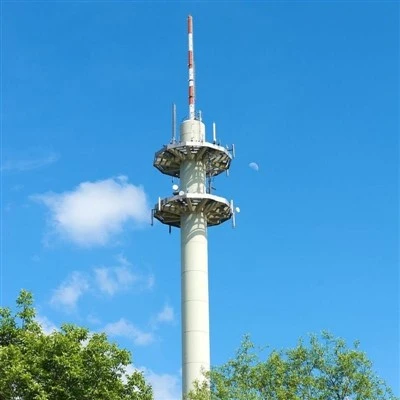
If your city is looking to reduce its carbon footprint, or if you’re curious about how smart light poles can fit into your sustainability plan, I’d encourage you to reach out. We can walk through your current streetlight and utility setup, design a custom network that meets your needs and budget, and even connect you with other cities we’ve worked with that have hit their carbon reduction targets through smart pole installation. Don’t hesitate to get in touch to start the conversation about how smart light poles can help your city move closer to a greener, low-carbon future.
Electrical Tower Stand References
International Energy Agency. (2022). Smart Urban Infrastructure for Low Carbon Cities.
U.S. Environmental Protection Agency. (2023). Energy Efficiency Trends in Municipal Street Lighting.
Urban Land Institute. (2024). Public EV Charging Access and EV Adoption Rates.
United Nations Framework Convention on Climate Change. (2022). Transport Sector Carbon Emissions Report.
City of Chicago Department of Transportation. (2021). Smart Pole Maintenance and Emission Reduction Case Study.
Hebei Yifeng Steel Structure Co., Ltd.
As one of the most professional smart light poles manufacturers and suppliers in China, we offer a wide range of products with superior quality. Please feel free to buy cost-efficient smart light poles for sale here from our factory. Contact us for more details.
Address: Guangchuan Town Industrial Zone, Jing County, Hengshui City, Hebei Province
E-mail: hbyfgjg@163.com
WebSite: https://www.yf-powertowers.com/
