If you’ve ever ordered bulk HDPE bags for your business—whether it’s for retail packaging, food distribution, agricultural products, or industrial parts—you know that a crisp, recognizable logo can turn a plain roll of plastic into a sales driver, a brand identifier, and even a walking advertisement for your company. As someone who’s been an HDPE bag supplier for over a decade, I’ve fielded hundreds of calls from buyers asking, “Why does my logo look smudged on my last order?” or “What’s the difference between the logos that hold up in rain vs. ones that fade in two months?” Today, I’m pulling back the curtain on how we print logos on HDPE bags, the science behind why some methods work better than others, and what to ask for when you place your next order. This isn’t just theory—this is the real-world process we’ve refined over thousands of customer orders, designed to balance durability, cost, and visual clarity, so you don’t waste time or money on logos that let your brand down. HDPE Bag
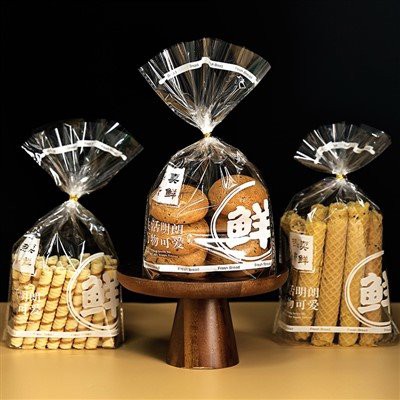
First, let’s get one thing straight: HDPE isn’t like paper or fabric. High-density polyethylene is a thermoplastic with a non-porous, low-surface-energy finish, which means ink doesn’t stick to it easily if you just spray it on like you would a t-shirt or a flyer. That’s the biggest mistake new buyers make—they assume logo printing is one-size-fits-all, but the material itself dictates almost every step of the process. When I first started in this industry 12 years ago, we had a lot of returns from clients whose logos peeled off as soon as their bags were loaded with heavy goods, or faded after being stored in a sunny warehouse for a month. We quickly learned that skipping the critical prep steps for HDPE is a one-way ticket to bad brand representation.
Let’s break the process down step by step, starting with the foundation: the HDPE resin itself. Before we even touch a printing press, our team works with our resin suppliers to source HDPE pellets that are formulated specifically for printing applications. Not all HDPE is created equal—low-grade resin often has impurities, which create uneven surface tension, meaning ink will bead up instead of laying flat. We use linear low-density polyethylene (LLDPE) blended into our HDPE (usually a 90/10 mix) for printable applications because it has a slightly higher surface energy, which is key for ink adhesion. Some suppliers will even add a small amount of a slip agent to improve the flexibility of the bag, but too much slip agent is a problem—we have to make sure the resin has less than 0.05% slip agent, because excess slip will prevent ink from bonding. We test every batch of resin for surface tension using a dyne pen before it even goes to production; if it’s below 38 dynes/cm, we adjust our pre-treatment process to bring it up to the 42–46 dynes/cm sweet spot needed for crisp, long-lasting logos. That’s the kind of attention to detail that separates a supplier who cuts corners from one who stands behind their product.
Next up: the pre-treatment step, which is non-negotiable for HDPE. This is what we do before any ink hits the plastic, and it’s the reason our logos don’t peel. HDPE is non-polar, so it repels polar inks (almost all commercial printing inks are polar, for good adhesion). To make it receptive, we use corona treatment—this is the most common and effective method for HDPE bag printing, and it’s something we control in-house to ensure consistency. Here’s how it works: we pass the HDPE film through a high-voltage electrical charge that ionizes the surface molecules of the plastic, turning non-polar hydrogen bonds into polar hydroxyl and carbonyl groups. It’s like giving the plastic a tiny, invisible “sticky” coating that the ink can grip onto without altering the flexibility or clarity of the bag. Some cheaper suppliers will skip this step, or cut the treatment time short to save a few pennies, leading to logos that rub off after a few uses. Last year, we had a customer switch to a competitor who skipped corona treatment for a bulk order of grocery store produce bags; within two weeks, half the bags had their store’s logo rubbed off by handling with produce, and they returned 20,000 bags. We don’t take that risk—our corona treatment stations are calibrated daily, and we track dynes levels on every roll of film that comes through the line. For specialty applications, like food-grade bags, we also test a tiny sample of treated film for chemical residue, to make sure it’s safe for packaging food products.
Now we get to the printing method itself, and this is where most buyers get confused. There are three main methods for printing logos on HDPE bags, and each is suited for different needs, budgets, and order volumes. As a supplier, we guide customers to the right method based on their specific use case, and I’ve seen firsthand how choosing the wrong one can lead to disaster. Let’s go through each one, so you know what to expect.
The first, and most common, method for small to medium orders is flexographic printing—we call it “flexo” for short. This is the workhorse of HDPE bag printing, and it’s what we use for 70% of our customer orders. Flexo uses flexible rubber or photopolymer plates that are shaped to your logo; ink is applied to the raised parts of the plate, then pressed onto the HDPE film as it runs through the press. The beauty of flexo for HDPE is that it works with the quick-drying, flexible inks we use (called plastisols or water-based HDPE inks), and it’s cost-effective for orders as small as 5,000 bags. For logos with simple shapes and solid colors, flexo delivers sharp, consistent results. But there’s a catch: flexo isn’t great for fine details. If your logo has tiny text, intricate lines, or gradients, flexo can blur those details, because the plate can only hold so much ink. We usually tell customers to avoid flexo if their logo has text smaller than 8 points, or fine lines thinner than 0.5mm. Also, the number of colors matters for cost—each additional color adds to the setup time of the press, so a 1-color logo will be much cheaper than a 5-color logo for the same order.
The second method, used for larger orders or more detailed logos, is rotogravure printing (or “gravure” for short). Gravure uses engraved copper cylinders instead of rubber plates—tiny, recessed cells are etched into the cylinder, each holding a specific amount of ink. As the cylinder presses onto the HDPE film, the ink transfers from the cells, creating extremely sharp, detailed logos. Gravure is ideal for logos with fine text, gradients, or complex graphics, and it holds up really well to heavy use, like bags that are stacked in warehouses or transported across the country. The downside? Setup costs are high—engraving a single gravure cylinder can cost hundreds of dollars, so this method only makes sense for orders of 50,000 bags or more. If you’re a small business ordering 10,000 custom bags, gravure will be way more expensive than flexo, so we almost never recommend it for smaller runs. Last year, we had a startup e-commerce business come to us wanting 12,000 custom poly mailers with their fine, detailed logo; they initially pushed for gravure, not realizing the $800 setup fee would add $0.06 to each bag, making their total order over $1,500. We explained that flexo could deliver almost the same result for $200 in setup, cutting their per-bag cost in half, and they ended up going with flexo and were thrilled with the outcome. That’s the kind of practical advice we give—we don’t push the most expensive method just to make a bigger margin, we match the method to the customer’s needs.
The third method, which is growing in popularity for high-end, food-safe applications, is digital printing. Digital printing is exactly what it sounds like: we use large-format digital presses to print your logo directly onto the HDPE film, without any plates or cylinders. This is perfect for very small orders (as few as 100 bags), and it can print extremely detailed logos, gradients, and even full-color images. The biggest downside of digital printing for HDPE is durability—digital inks tend to be less flexible than flexo or gravure inks, so if your bags are going to be handled roughly, stretched, or stored for long periods, the digital logo can crack or peel. We only recommend digital printing for small, low-use orders, like sample bags for trade shows or small retail packaging where the bag won’t be subjected to heavy wear. It’s also more expensive per unit than flexo for orders over 500 bags, so it’s not ideal for bulk needs.
Once the logo is printed, we have a curing step that’s just as important as the printing itself. The inks we use for HDPE need to be cured to form a strong, flexible bond with the film. For flexo and gravure inks, curing is usually done with heat—we pass the printed film through an oven that’s heated to 180–200°F, which evaporates the ink’s carrier solvent and fuses the pigment to the HDPE surface. We monitor the temperature of the oven every hour, because if it’s too hot, it can warp the HDPE film, and if it’s too cold, the ink won’t cure properly and will scratch off. For digital inks, we use UV curing, which uses ultraviolet light to solidify the ink on contact—this is faster, and better for food-safe bags because there’s no residual solvent, but as I mentioned earlier, it’s less flexible. We also do a scratch test on every batch of printed bags: we take a metal scraper and rub the logo 10 times, and if any ink comes off, we re-cure the batch. That’s our quality control check—no exceptions.
Beyond the method, there are a few tips we give customers to make their printed logos look as good as possible, and last as long as their bags. First, keep your logo simple. We’ve had customers come to us with extremely complex logos with 10 colors, tiny text, and intricate shapes, which drive up cost and can lead to printing errors. A well-designed logo doesn’t need to be complicated—most of the most recognizable brands in the world use simple, solid-color logos that print beautifully on HDPE. Second, choose colors that contrast well. If your bag is natural (clear or white HDPE), a dark logo like navy blue or black will stand out. If your bag is black, a bright color like yellow or red will be easier to read. We always recommend color proofs before printing the full order—we send a small sample of the printed logo on the exact HDPE you ordered, so you can see exactly how the color will look, not just a digital mockup. Digital colors can be misleading; for example, a bright red on your computer might look dull on natural HDPE, so seeing a physical sample is critical. Third, think about where your bags will be used. If you’re making bags for outdoor use, like farmers market produce bags, we recommend adding a UV stabilizer to the HDPE resin, which will make the logo fade-resistant. If you’re making bags for frozen food, we use low-temperature resistant inks, because regular inks can crack at freezing temperatures. One of our long-time customers is a frozen pizza brand that’s been ordering 500,000 bags a year from us for the last 8 years—we use low-temperature resistant flexo inks and UV stabilizer in their HDPE, and their logos don’t fade or crack even after sitting in freezers for months.
Let’s talk about common mistakes we see customers make all the time, because knowing these will save you a lot of hassle. The first is ordering logos that are too small or too thin. A logo that’s less than 1 inch wide or has lines thinner than 0.5mm will almost always blur, even with gravure printing. We recommend a minimum logo size of 1.5 inches for flexo, and 0.75 inches for gravure, to ensure it’s crisp. The second mistake is not accounting for bag size. If you order a small 4×6 inch poly mailer, a logo that takes up half the bag will look crowded, and a logo that’s too small will be unreadable. We help customers place their logo in the optimal position—usually 1–2 inches from the edge of the bag, so it doesn’t get cut off during the sealing process. The third mistake is skipping proofing. We have a no-questions-asked reprint policy if a customer approves a physical proof and there’s an error, but if they don’t ask for a proof, we’re not responsible for small color variations that come from digital vs. physical printing. It’s a simple step, but it prevents 90% of customer complaints about logo quality.
As an HDPE bag supplier, our job isn’t just to sell you a bag—it’s to help your brand look its best, whether that’s a small local bakery with 500 custom cookie bags or a national grocery chain with millions of produce bags. Over the years, we’ve built our business on trust, and that means being honest about what works, what doesn’t, and why. I’ve had customers come to us after a bad experience with another supplier, who said their logos peeled or faded within a month, and when we test their bags, we almost always find that the supplier skipped corona treatment, cut corners on resin quality, or used a cheap digital print method for a high-wear application. We don’t do that. Every order we process gets the same care: resin testing, calibrated corona treatment, quality-controlled printing, and a scratch test before it leaves our facility.
If you’re ready to order custom printed HDPE bags for your business, we’re here to help. We can walk you through every step: choosing the right printing method for your order volume, helping you refine your logo design for HDPE, sending physical color proofs, and making sure your bags meet your specific needs—whether that’s food-safe, UV-resistant, heavy-duty for industrial use, or anything in between. We work with businesses of all sizes, from startups just getting off the ground to large corporations with nationwide distribution. Don’t waste time and money on bags that let your brand down. Reach out to our team to discuss your custom HDPE bag needs, and we’ll help you create a product that’s durable, recognizable, and perfect for your business.
Plastic Bag References
Plastics Technology. (2021). “Surface Treatment of Polyolefins for Printing Applications.” Society of Plastics Engineers.
Packaging World. (2022). “Flexographic vs. Rotogravure Printing for Flexible Packaging.” Informa Markets.
Food and Drug Administration. (2020). “Guidance for Industry: Food Contact Substances, Polymers.” U.S. Food and Drug Administration.
Tongcheng Xurun Plastic Industry Co., Ltd.
As one of the most professional HDPE bag manufacturers in China, we offer a wide range of products with superior quality. Please feel free to wholesale bulk customized HDPE bag at low price from our factory. For quotation, contact us now.
Address: Shuanggang Town Industrial Park, Tongcheng City, Anqing City, Anhui Province
E-mail: 15955605705@163.com
WebSite: https://www.cnxurun.com/
