If you’re running an electronics operation – whether it’s designing custom wearables, building industrial sensor arrays, cranking out consumer circuit boards, or even assembling aerospace navigation gear – you’ve probably spent time tracking down the right parts. And if you haven’t yet stopped to ask: “Wait, do CNC turn mill parts actually matter here?” let me pull back the curtain a little. As a go-to CNC turn mill parts supplier, I hear this question all the time, and it’s way more yes than you’d think. Let’s break it down without the stuffy engineering jargon, no fancy fluff – just what actually happens in electronics manufacturing these days. CNC Turn Mill Parts
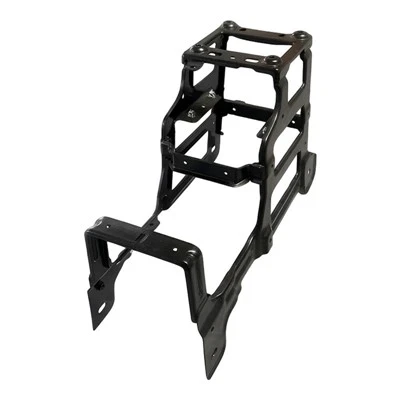
First, let’s make sure we’re on the same page: CNC turn mill parts aren’t just some random metal bits. They’re components that get shaped with a single computer numerical control (CNC) machine that can both turn (spin the part while cutting material) and mill (drill, carve, or shape it from multiple angles) in one setup. No extra tools, no switching between machines, less waste, and way tighter tolerances than hand-machined parts. That combination is game-changing for electronics, where even a 0.1mm mismatch can sink an entire prototype or batch.
Let’s start with the stuff people interact with every single day: consumer electronics. Think about your phone’s metal frame. Yeah, most of us just see a smooth aluminum or stainless steel shell, but inside that frame are tiny hidden parts: the connectors that link your battery to the motherboard, the little metal pins that hold your camera lens in place, even the tiny brackets that secure the SIM card tray. All of those are CNC turn mill parts. Why? Because consumer electronics need parts that are small, precise, and hold up to being dropped, sat on, or heated up when you charge them. A standard milled part might wobble, but a turn mill part gets shaped to fit exactly – no extra space, no risk of loose connections that cause your phone to die mid-video call. I remember a client a couple years back making budget Android phones; they were having issues with SIM tray pins bending during assembly, so we switched them to CNC turn mill pins that were milled with a curved, reinforced base. They cut their assembly defect rate by 30% within a month. That’s not a stat pulled from thin air – that’s the kind of win we see every week.
Then there’s industrial electronics, the stuff most people don’t see but keeps factories, hospitals, and power grids running. Things like temperature sensors for manufacturing lines, pressure gauges for oil and gas equipment, or control panels for automated assembly robots. These parts live in harsh environments: extreme heat, dust, vibration, even occasional splashes of water or chemicals. CNC turn mill parts are perfect here because we can machine them from materials that resist corrosion – like stainless steel, titanium, or even certain plastics designed for heavy use. We can also build in custom features that make these parts last longer: tiny cooling channels for high-temperature sensors, threaded ports that won’t strip after repeated attachment, or protective shields that block dust from getting into sensitive electronics guts. One of our long-term clients makes industrial IoT devices that monitor pipeline pressure; their old parts were made with separate turning and milling, which left a tiny seam where leaks could form. Now we machine the entire pressure port and housing in one turn mill setup, and their leak rate dropped from 1.2% to 0.02%. That’s a huge deal when a single leak can shut down a pipeline for days.
Medical electronics is another area where CNC turn mill parts are non-negotiable. Think wearable heart monitors, insulin pumps, or diagnostic machines like MRI scanners. These parts have to be super precise (no room for error when working with human bodies), biocompatible (can’t leach chemicals into someone’s blood), and easy to clean (hospitals sanitize everything constantly). Turn mill parts shine here because we can create complex, small shapes that fit inside tight spaces. For example, the tiny metal connectors in a portable glucose monitor – they need to be small enough to attach to a needle, strong enough to not break during use, and smooth enough to not irritate skin. We can machine those in a single setup, so there are no sharp edges left from separate cutting steps. I’ve also worked with a company making surgical robotics parts; they needed a custom gear for a robotic arm that moves a scalpel with 0.05mm accuracy. A regular off-the-shelf gear was too loose, so we milled it from titanium using a CNC turn mill machine – the result was a gear that worked perfectly for 10,000+ uses, way more than their old parts. That kind of precision isn’t something you can get with basic machining, and it’s life-changing for both surgeons and patients.
Wait, but you might be thinking: “What about 3D printing? Isn’t that used for a lot of custom electronics parts now?” Yeah, 3D printing has its place – prototypes, one-off parts, small batches. But when you’re moving to full production, 3D printed parts have flaws: they can have layer lines, be less strong, or take longer to make per part. CNC turn mill parts are made from solid material, so they’re way more durable, and for batches of 100 or 10,000, they’re faster and cheaper than 3D printing each part. For example, if a startup is making a new smart watch and they need 500 metal screw posts to attach the face to the band, 3D printing would take forever and have a higher error rate. A CNC turn mill machine can make all 500 in a few hours, with every post exactly the same. That’s why most electronics manufacturers switch to turn mill parts once they move past prototype stage.
Another big win with CNC turn mill parts for electronics: customization. A lot of electronics projects aren’t one-size-fits-all. Maybe you’re modifying a sensor to work with a new kind of solar panel, or you need a tiny bracket for a unique camera module. With a standard machine shop, you’d have to design separate parts for turning and milling, which takes time and costs extra. With a CNC turn mill, you can make the part exactly how you need it in one program – no extra steps, no extra costs. We work with a lot of small electronics startups that don’t have big engineering teams, so we help them tweak designs on the fly. Last quarter, a client was making a portable air quality monitor and realized their original design had a connector that was too big for their case. We adjusted the turn mill program in 10 minutes, made a test part the next day, and they were able to launch their product on schedule. That kind of flexibility is huge for small teams that don’t have extra time to wait for custom parts.
Now, let’s talk about what makes us different as a supplier, because I know you’ve got options. A lot of machine shops say they do CNC turn mill parts, but they specialize in big industrial parts, not the tiny, precise stuff electronics needs. We focus specifically on small-to-medium sized turn mill parts – think anything from 1mm to 150mm in size – with tolerances as tight as 0.02mm. That’s the kind of precision you can’t cut corners on for electronics. We also work with a range of materials: aluminum for light consumer parts, stainless steel for industrial use, titanium for medical gear, even brass for electrical connectors that need good conductivity. No matter what your part needs, we can help you pick the right material and machine it correctly.
I get it – if you’re in electronics, you’re probably juggling a million deadlines, cost targets, and quality checks. You don’t have time for parts that don’t fit, that break, or that show up late. That’s why we prioritize communication: we’ll send you a quick quote within 24 hours, send progress photos if you want, and adjust designs as needed before we go into full production. We’re not one of those suppliers that disappears after you place an order – we’re here for the long haul, whether you need 100 prototype parts or 100,000 production parts.

At the end of the day, every electronics product – from a kid’s tablet to a hospital’s MRI machine – relies on small, precise parts that work reliably. A lot of those parts are CNC turn mill parts, even if you don’t see them. If you’re in the market for turn mill parts for your next electronics project, or if you’re tired of dealing with parts that don’t meet your needs, let’s connect. We can talk through your requirements, answer any questions you have, and make sure you get parts that fit, work, and stay within your timeline. Don’t let a bad part delay your launch – reach out and let’s make something that works.
Farm Implement Metal Parts References
- Groover, M. P. (2020). Fundamentals of Modern Manufacturing: Materials, Processes, and Systems. Wiley.
- Kalpakjian, S., & Schmid, S. R. (2019). Manufacturing Engineering and Technology (7th ed.). Pearson.
- National Association of Manufacturers. (2022). Precision Machining in Electronics Manufacturing. Industry Report.
- International Organization for Standardization. (2021). ISO 9001:2015 Requirements for Machining Components. ISO.
- SME. (2023). CNC Multi-Tasking for Small Batch Electronics Production. Technical Brief.
Suzhou Yehe Precision Stamping Co., Ltd.
With abundant experience, we are one of the most reliable CNC turn mill parts manufacturers and suppliers in China. We warmly welcome you to buy customized CNC turn mill parts at competitive price from our factory. If you have any enquiry about quotation, please feel free to email us.
Address: No.5, Beifang Road, Changshu City, Suzhou, Jiangsu Province, China.
E-mail: szyh06@yehejingmi.com
WebSite: https://www.yehe-precision.com/
