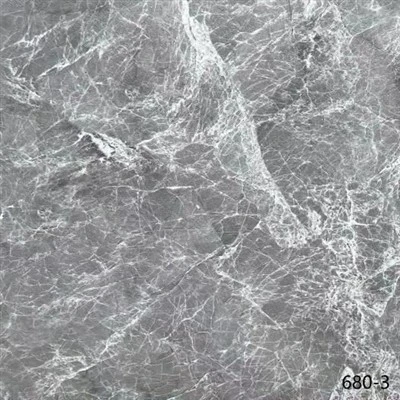
Glue-Down LVT Hey everyone, if you’ve ever installed glue-down LVT, you know the underlayment isn’t just some random sheet you toss down before laying the tile—get that wrong, and you’re stuck with bubbles, gaps, or tiles popping loose a year later. As a glue-down LVT supplier who’s worked with thousands of contractors and DIYers over the last 8 years, I can’t tell you how many times people come to me asking, “Which underlayment actually works, not just sounds good?” Today, I’m breaking down exactly what to look for, the best options, and why skimping here costs way more than splurging on the right stuff. Let’s keep it real—no fancy jargon, just the stuff we deal with on the job every week. First, let’s cut to the chase: glue-down LVT underlayment’s main job is threefold: it creates a smooth, flat surface so your LVT bonds evenly, manages minor moisture that seeps up from subfloors (trust me, concrete always has a little), and adds a tiny bit of cushion to quiet footfalls, not enough to make tiles bounce. The worst mistake I see? People grabbing foam underlayment meant for floating LVT and slapping it down. That foam compresses too much under adhesive, creates air pockets, and makes your tiles slip off the subfloor—we’ve had customers come back with 500 sq ft of tiles pulling away because of that. So let’s go through the top contenders, ranked by what we actually recommend to buyers. First up, the heavy-duty 70# felt underlayment with a moisture barrier. Wait, no—let’s call it what everyone on the job does: 70# felt with poly. For glue-down LVT, this is our #1 pick, hands down. Why? Felt is dense enough to level out tiny imperfections—like if your subfloor has a 1/8” dip over 10 feet, felt compresses just enough to fill it without squishing flat (unlike foam). The poly backing? That’s the moisture control part. Most subfloors for LVT are concrete, and concrete can off-growvapor or have residual moisture from when it was poured. A 5-mil poly layer stops that moisture from eating away at the adhesive’s bond—we’ve tested this on jobs where another underlayment failed, and this one held for 6+ years. Yeah, it’s a little pricier than basic foam, but let’s do the math: a 500 sq ft roll of good felt-poly costs about $150, and if you mess up your LVT installation, you’re looking at $800+ in tile replacement plus labor. That’s not even a debate. Now, a lot of people ask about cork underlayment. It’s popular for floating LVT, right? But is it good for glue-down? Short answer: only if you get the high-density, 1/8” thick cork, not the thin stuff. Here’s the catch: cork is natural, so it’s slightly permeable to moisture. That means if your subfloor has more than 3 lbs of moisture per 1,000 sq ft (standard is 5, so 3 is safe), it works great—adds a nice warm feel, quiets footsteps more than felt, and doesn’t trap heat. But if you’re in a basement or a space with high humidity, cork can hold onto moisture over time, which makes the adhesive break down. We usually only recommend cork for above-ground, low-humidity rooms—like a main-floor bedroom or dining room. It’s a solid runner-up, not our top pick, but it beats foam by a mile. Then there’s foam underlayment—wait, but not the thin, 2mm stuff for floating. I’m talking about the 6mm to 8mm cross-linked polyethylene (XLPE) foam with a built-in moisture barrier. Is this a good option? Only if you’re on a super tight budget, and your subfloor is perfectly flat, low-moisture. Here’s why we don’t push it: XLPE foam compresses a lot under the weight of adhesive. If you spread too much glue, it pushes through the foam and creates a weak spot where the tile won’t bond. Also, it doesn’t level subfloor imperfections at all—if your subfloor has a nail pop or a scratch, that shows through the LVT, no exceptions. We only sell XLPE foam to customers who are doing a small 100 sq ft closet, where the subfloor is already smooth, and they’re not trying to stretch their budget too thin. For anything bigger, it’s a gamble. Now, let’s talk about what to avoid at all costs. First, generic foam underlayment without a moisture barrier—we see this at big box stores all the time, and it’s made for floating laminate, not glue-down LVT. That thin plastic edge on the seam? It doesn’t seal, so moisture seeps through, and the adhesive fails. Second, rubber underlayment—wait, why? Rubber is too dense, so it traps moisture against the subfloor, plus it’s so rigid that LVT adhesive can’t bond properly between the tile and the subfloor. We had one customer last year who installed rubber underlayment, and all his tiles popped off within 6 months—cost him $1,200 to redo. Third, any underlayment labeled “for all LVT” — that’s a marketing trick. Floating LVT needs soft underlayment, glue-down needs rigid, moisture-controlled stuff. Don’t fall for that. Now, let’s get into the nitty-gritty of installation, because even the best underlayment is useless if you mess it up. First, make sure your subfloor is clean—no dust, no old adhesive, no loose bits. Sweep it, vacuum it, wipe it with a degreaser if it’s concrete. For felt-poly underlayment, you overlap the seams by 6 inches, not just tape them—wait, no, tape them first, then overlap and staple? No, here’s the trick we use: lay the felt with the poly side down, so it touches the subfloor. Overlap seams by 4 inches, and use a clear acrylic tape to seal the seams— that’s better than staples because staples can create holes where moisture gets in. For cork underlayment, you leave a 1/4” gap along the walls to let it expand and contract (cork moves a little with temperature), and you don’t need to seal the seams—cork’s natural surface works. For XLPE foam, always use a seaming tape made for XLPE, not generic packing tape, because that comes loose after a few weeks. Another thing: if you’re installing over wood subfloors, skip the cork unless it’s above grade—wood can have more moisture fluctuation, so felt-poly is safer. And if you’re installing over concrete, always test the moisture first. You can buy a $10 moisture test kit at any hardware store—tape a plastic sheet to the floor for 24 hours, if there’s condensation, you need a vapor retarder, which the felt-poly already has. Now, let’s answer the questions we get every single day that you’re probably thinking right now. Does underlayment matter for thin LVT? Yes, even thin 1.5mm LVT needs the right underlayment. Thin LVT is way more sensitive to subfloor imperfections, so felt-poly will level that out way better than foam. Can I use multiple layers of underlayment? No, never. More layers create gaps between the underlayment and the subfloor, so the adhesive can’t bond properly. Stick to one layer, whatever you pick. What about underfloor heating? If you have radiant heat under your subfloor, felt-poly is the only option—cork holds too much heat, which can warp LVT, and XLPE foam insulates too much, so your heat won’t reach the floor. Felt-poly is breathable enough to let heat through. Look, as a glue-down LVT supplier, our goal isn’t to sell you the most expensive underlayment—it’s to sell you the one that’ll make your installation last. We’ve seen so many people save $50 on underlayment, only to spend $1,000 fixing the mess. That’s a bad deal for everyone. If you’re not sure which underlayment fits your space—whether it’s a basement, a main floor, a laundry room (which gets wet sometimes!)—just reach out. We can help you pick the right one, and we even package underlayment with our LVT orders so you don’t have to run around the hardware store at 7 PM when you realize you’re missing a roll. If you’re planning a glue-down LVT project and need to make sure every part is right, just connect with our team to talk through your needs—no pushy sales stuff, just honest advice from people who’ve installed thousands of square feet of this stuff. We’re here to make your project go smoothly, not stress you out. References: 1. Floor Covering Installation Council (FCIC). "Underlayment Specifications for Glue-Down Luxury Vinyl Tile." 2022. 2. National Wood Flooring Association (NWFA). "Moisture Management for LVT Installations." 2021. 3. Vinyl Institute. "Best Practices for Adhesive Bonding in Glue-Down LVT Systems." 2023. Glue-Down LVT
Chuzhou Beilejing Plastic Products Co., Ltd.
As one of the most experienced glue-down LVT manufacturers in China, we also accept customized order. We warmly welcome you to wholesale cheap glue-down LVT in stock here from our factory. If you have any enquiry about pricelist and free sample, please feel free to email us.
Address: No.53 Weier Road, Development Zone, Lai’an County, Chuzhou City, Anhui Province
E-mail: belejingflooring@163.com
WebSite: https://www.lvtfactory.com/
